
Image by kairin via Flickr
After months of anticipation by the worldwide MS community, the results of the University at Buffalo's CCSVI imaging study were disclosed today (click here for report). While they may not be quite as dramatic as some patients had hoped, the results do show an unambiguous link between the vascular abnormalities known as CCSVI and Multiple Sclerosis. (For those readers unfamiliar with CCSVI, click here)
The Buffalo study of 500 subjects showed that 56.4% of the MS patients imaged suffered from a narrowing of their extracranial veins (CCSVI), while 22.4% of healthy test subjects also exhibited such narrowing. This contrasts markedly with the over 95% to 100% correlation found in the smaller unblinded studies previously reported on by the founder of the CCSVI theory, Dr. Paolo Zamboni, who also found no evidence of such abnormalities in healthy control subjects. There were several additional small studies done elsewhere that also had reported a CCSVI-MS correlation of over 90%.
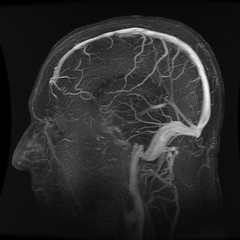
All participants in the Buffalo study underwent ultrasound (Doppler) scans of the head and neck, with some also being imaged with MR venograms. Of the subjects studied, 10.2% were borderline for CCSVI, which allows for some variance in the interpretation of the final numbers.
Upon first look, the much lower correlation between MS and CCSVI shown in the Buffalo study when compared to previous studies may seem disappointing, but in my opinion the less dramatic numbers may actually give the CCSVI theory greater scientific credibility.
MS is an extremely heterogeneous disease, meaning that the symptoms and clinical presentations exhibited can vary widely from patient to patient. This has led some researchers to conjecture that what we now call Multiple Sclerosis may in fact be a collection of different maladies that share common symptoms and markers. This could explain the wide variance in effectiveness seen in the current arsenal of MS treatments.
Furthermore, the diagnosis of MS is an inexact science, and in any large population of MS patients, as many as 10% to 15% could be misdiagnosed. The list of diseases that can be mistaken for MS is quite extensive, and some can be almost indistinguishable from Multiple Sclerosis. For a must read, comprehensive discussion of the many diseases that can be misdiagnosed as MS, click here.
Given the tremendous variance seen in MS patients, and the high level of misdiagnosis, the chances of finding any single trait common in upwards of 95% of MS patients is very unlikely. In fact, I participated in a "Natural History of MS" study at the National Institutes of Health, conducted specifically to identify clinically definite MS patients for use in future NIH studies, precisely because the institution was finding that the high percentage of misdiagnosed patients were skewing the results of the MS studies they were undertaking.
Moreover, unlike the anatomy of arteries associated with the CNS, which is well-known and displays uniformity from patient to patient, the CNS venous system is much less understood. Venous anatomy can differ markedly from patient to patient, making it difficult to define exactly what "normal" looks like.
For these reasons, the initial claims of an almost universal correlation between MS and CCSVI raised red flags for researchers when first presented with the CCSVI theory of MS. While these claims sparked tremendous fires of hope in community of MS patients around the world, they simultaneously cast doubt on the validity of the theory among many serious medical investigators.
The trial results released today by the University at Buffalo fall more in line with what would be expected of an MS breakthrough given science's current body of knowledge regarding the disease. While not the eye-popping numbers reported in the previous studies, the 2:1 ratio of CCSVI found in MS patients when compared to healthy subjects is still dramatic and exciting, and should give curious researchers much reason for continued and vigorous investigation of the theory.
If these early trial results findings hold up, the fact that over 50% of MS patients appear to display signs of a striking vascular abnormality raises a host of intriguing questions. Is the abnormality itself directly responsible for the neurologic symptoms and the damage being experienced by these patients, or does it work in concert with other factors to injure the CNS? Conversely, does the mechanism that is wreaking havoc on a patient's CNS also do damage to their vascular system? How does CCSVI fit with other mysteries associated with MS, such as the existence of "MS clusters", and the geographic distribution of MS? How does CCSVI relate to the signs of autoimmunity that are displayed even in MS patients with CCSVI, and what do we make of those patients who don't display signs of CCSVI? Are they suffering from a completely different disease, and is CCSVI simply a component in a much more complex totality?
Furthermore, we can't discount the anecdotal reports of the dozens of MS patients that have already undergone surgery to correct CCSVI, the majority of whom have reported notable improvements in their disease states. The patients who underwent Dr. Zamboni's Liberation Procedure, a type of balloon angioplasty, showed a significant decrease in relapse rates and a general overall improvement in their health status. The same can be said for the majority of patients treated by Dr. Michael Dake at Stanford University, and Dr. Marian Simka in Poland. While anecdotal reports are subjective rather than objective, and therefore not typically suitable for scientific scrutiny, they certainly can't be dismissed offhand, either.
Over the coming months, much intense research will be underway attempting to answer the many questions surrounding CCSVI. This report out of the University of Buffalo is only the first of many to come, and it would be a mistake to draw anything but preliminary conclusions from it. That said, CCSVI continues to intrigue and tantalize us with the possibility that it could reshape our fundamental understanding of Multiple Sclerosis. Unfortunately, patience will be necessary as we wait for further research results, and patience is a commodity in very short supply among people suffering from progressive, debilitating disease.
I urge all MS patients, and those who love them, to continue advocating strongly for further research into CCSVI, and to reach out to healthcare providers and let it be known that the status quo is unacceptable. Research into CCSVI and other "outside the box" theories must be dynamically pursued. Fixation on the autoimmune theory has yielded imperfect treatments but no cures, and in the unlikely event that CCSVI turns out to be nothing but a promising dead end, the time and effort spent researching it may yet yield discoveries that could finally unlock the mystery of MS. We must make our voices heard, and fight as if our lives depend on it. The excitement over CCSVI reveals the widespread discontent with current MS treatment strategies. We must channel that discontent into a force that will not be denied.
![Reblog this post [with Zemanta]](http://img.zemanta.com/reblog_e.png?x-id=7b5d5d8d-151f-4dd2-9da7-5d5f9ed922d5)


![Reblog this post [with Zemanta]](http://img.zemanta.com/reblog_e.png?x-id=3e5f40f7-2f4e-4bbc-ade2-0e94c47d7fa7)