Saturday, February 8, 2014
My New Ride
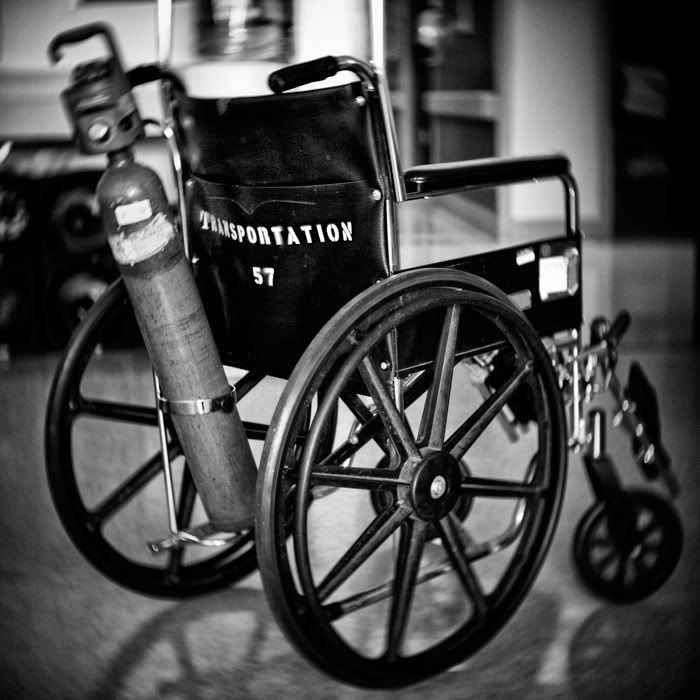
I find it almost impossible to believe that five and half years have come and gone since that old chair and I first made our acquaintances, but I guess that just goes to show that time flies even when all of your days are not exactly filled with wine and roses. Time definitely speeds up as you get older. These days, I’ll retire to the bathroom with a good magazine, and when I come out it seems several months have passed. I’m pretty sure Einstein noted this same phenomenon in his general theory of relativity, much of which I’m fairly certain he came up with while sitting on the throne. There’s a reason men spend so much time in the bathroom. Lots of heavy thinking going on in there. Trust me.
My new chair is the exact same model as my old chair, a Quantum Q6000Z (click here) with the high-speed motor package installed (hee hee). Unlike my trusty old friend, which had a static seat, my new mechanical wonder comes equipped with all the bells and whistles. The seat tilts, reclines, the leg rests extend and rise, and the seat can elevate 10 inches. With the seat reclined fully and the legs raised to their maximum height I can just about lie flat on the thing. It’s almost like having an easy chair on wheels.
All of this, of course, makes the chair much more comfortable for extended periods of use, but, alas, there’s the rub. Five and half years ago I didn’t need all of these fancy features because I was much more ambulatory than I am now. In fact, when I first got the old chair I didn’t even use it around the apartment, only employing it for outdoor excursions. These days my ability to walk has been reduced to attempting maybe five or six treacherous cane assisted steps, and I’m finding the new chair a much more hospitable environment in which to plant my backside for long stays. And although I do appreciate all of the new features, they also serve to remind me of the full-court press being put on by the disease, and just why they call progressive diseases progressive – they progress. I have a real bone to pick with whoever came up with this demented concept; I’d really like to give them a piece of my mind. Hey, hold on, thanks to MS, I already have. Dammit.
Naturally, the new chair is taking some getting used to. It’s a bit larger than the old chair, due to all of the extra seating motors and stuff, so it’s a lot trickier getting it around the tight corners in my apartment, and it’s not quite as responsive when trying to dodge pedestrians on crowded city streets. Hey, their problem, not mine. What’s a few ruptured Achilles tendons and smashed kneecaps amongst fellow New Yorkers? If pedestrians walking on the streets of New York insist on having their eyes glued to the screens of their cell phones, I refuse to take any responsibility whatsoever for whatever damage comes to them if they happen to crash into my speeding chair. I’m just a maniacal gimp gleefully careening through the streets of New York. I abdicate all culpability in the matter. After all, they’re the ones with working limbs. Or at least they were before running into me. Dammit.
This chair doesn’t seem to have the same range as my old chair, in which I could travel about 15 miles. Because of the very wintry conditions we’ve had lately, I’ve not taken the new chair out for an extended trek, but it looks like this chair’s range is significantly less than the old one. Of course, my body isn’t up to my marathon jaunts of old, as my “good” joystick controlling hand tends to want to stop working after shorter and shorter intervals, thanks to that whole progressive disease thing. Dammit.
Astoundingly, the list price of my new tricked out wheels came to an eye-popping $29,000. Yikes! I could buy a pretty decent car for $29,000, or even two economy cars for that same amount. I can only imagine the profit margins on power wheelchairs. How much could all of the parts cost? $10,000, max? I’d much rather have spent the money on a nice “preowned” five-speed convertible BMW, but these days I’d qualify more as luggage than driver, so that’s out. Dammit.
Thankfully, my wheelchair vendor got me a discounted price on the new rig, and my insurance company picked up the majority of the tab. Between the new chair, all of the diagnostic tests I’ve gone through to figure out the mysteries of my disease, and the myriad treatments I’ve tried in vain trying to tame it, I guess I could be the poster child for why healthcare costs in the US are absolutely insane. But hey, at 50 years old I think I’d be more a poster man than child, despite my hard fought battle to maintain my youthful demeanor. Thankfully, you’re only young once but you can be immature forever, and that’s exactly how I intend to continue to play it, with a hearty "hey diddle diddle and a nah nah nah" to boot. Perhaps I’m delusional, but looking at the new chair as a really slick shiny toy to play with makes the whole concept of “me in a wheelchair” much easier to swallow.
Hey, whatever it takes. Dammit.
.
Monday, June 3, 2013
Conquering Fears Through Photography
Well, it’s two weeks short of a year since I last posted new photos to the Wheelchair Kamikaze photo gallery. A long time between photo posts, so long, in fact, that relatively new readers might not even be aware of the specifics behind the WK photo gallery. For those who don’t know the photo gallery “back story”, here's a quick summation.
Back in my healthy days I was an avid amateur photographer, always snapping away with a variety of cameras. When I got sick my right side quickly weakened, making shooting photographs (along with a whole bunch of other things) increasingly difficult. I tried to keep at it, but within a few years, much to my great frustration, I was forced to set my cameras aside as shooting with them simply became too difficult, and quite frankly I didn’t have the stomach to come up with workarounds.
Several years passed with my never touching a camera, though I missed photography intensely, until my creeping paralysis crept to the point that my mobility needs required the assistance of a mechanical monster, my wheelchair. Once the beast became part of the family, my wife started bugging me to figure out a way to attach a camera to the thing, so that I could use my good hand to make photographs using a wheelchair mounted camera. Being an obstinate putz I steadfastly resisted her suggestions, although she did manage to wheedle out of me some ideas of how I might go about setting up such a rig. My wife's Christmas present to me that year was, as you might’ve guessed, all the components needed to make a wheelchair mounted camera a reality: a new digital camera with a flip out viewing screen and a little tripod with flexible legs that I could wrap securely around the arm of the wheelchair (to see the setup, click here. Though the gear has changed in the intervening years, the basic setup remains the same.)
Soon enough I was back in business, zooming around the city (mostly Central Park), a half paralyzed shutterbug on wheels. The resulting photos turned out surprisingly well, and in addition to shooting stills I also made some videos. Thus, the Wheelchair Kamikaze blog was born, more a place to showcase my photos and videos than the repository of written rants and raves that it has evolved into over the years.
So, why haven’t I posted any new photos in almost a year? The short answer is that I haven’t been doing much in the photographic department these last 12 months. The longer answer is that I haven't been doing much in the photographic department these last 12 months because my disease has continued to progress (as progressive diseases are wont to do), and my “good” left side is no longer so terrific, forcing me to question whether I could still manage certain activities that I had previously taken for granted.
For the first eight or so years after my diagnosis, my left side really wasn’t effected by the disease all that much, but the last year and a half or so have seen it noticeably and increasingly diminished. As it is with all of the insults dished out by the disease, the physical impacts of these new challenges have been accompanied by psychological hurdles as well. If I’m honest with myself the truth is that I haven’t shot any photos, or even processed a bunch that I shot last summer, because I was afraid to find out that I could no longer do so. Manipulating the wheelchair mounted camera takes a good bit of fiddling with dials and buttons and such, and processing photos through Photoshop, even for the minimal amount of image enhancements that I usually do, requires a fair amount of precise mouse work. Rather than try and fail, and then have to deal with the wreckage of that unpleasant new reality, I semi-consciously decided to not try at all, and thus avoid the situation altogether. In short, fear of failure took the wind out of my photographic sails, compounding the physical limitations imposed by the disease with some of my own making.
Lately, though, I’ve been feeling that old familiar yen, at least in part spurred on by the nicer weather as winter turned to spring. I’ve also grown more resigned to the fact that my left side is getting increasingly wonky, and sick of capitulating to the fear that I might no longer be able to do something (photography) that is so tied into my sense of self. The disease is crippling enough, and I resolved that I wouldn’t allow my fears to cripple me further. So, I grudgingly opened up Photoshop and started working on some of the photos that had been occupying my hard drive untouched for the last year or so.
Lo and behold, I found that I can still put Photoshop through its paces, certainly not as quickly and efficiently as before, and only for a couple of hours at a time before my hand becomes unresponsive enough to start freaking me out, but, dammit, once I shook the rust off the results weren’t all that bad. Spurred on by this minor triumph, I bit the bullet and took the camera on a couple of sojourns to Central Park, where I discovered that I can still manage the required twisting and pushing of camera and lens controls. Not for the unlimited hours upon hours as I had in the past, but I was able to shoot almost nonstop for about two hours, long enough to make it a very pleasant and productive afternoon. Sure, my arm and hand felt made of flimsy rubber bands on the way home, but the victorious feeling I felt more than made up for the increased danger I was to pedestrians, since my ability to manipulate the wheelchair joystick was noticeably diminished. I managed to make it home without taking out anybody’s shins or kneecaps, and not only had I been able to take some pretty good photos, but I’d stood up to a big fear and kicked it in the nuts.
So, I now know that I can still shoot photos and run them through Photoshop, at least for today and tomorrow, and for fuck knows how much longer. I’ll just have to take it as it comes. I’ve got some “outside the box” treatment options yet to try, some of which I’ve already written about on this blog. Given the state of the world, with lunatics shooting up parades, movie theaters, and grammar schools, with weather patterns seemingly more severe and deadly by the week, and with a geopolitical landscape that appears increasingly on the brink of widespread violent chaos, it could be that MS is the least of my worries. As somebody much wiser than I once said, “life is uncertain, eat dessert first.”
With that, I present to you my latest batch of photos, long overdue. About half were taken recently, but all have been processed within the last month or so. Most were taken with my wheelchair mounted camera, but a few were shot with an iPhone with a close-up lens attached, including the photos of the dragonfly and the ant in the flower. Though it’s a little tricky, I can handle the iPhone camera with my one clumsy hand, and I’m always surprised at the capabilities of that little device.
I’d welcome all feedback on the photos, positive and negative. Which ones do you like, and which ones suck? Please don’t hold back because of my “conquering fear” thing. Negative feedback is just as helpful as positive, maybe more so. Your honesty will be much appreciated…
Click on the thumbnail image for a larger version.
![]() | ![]() | ![]() | ![]() |
![]() | ![]() | ![]() | ![]() |
![]() | ![]() | ![]() | ![]() |
![]() | ![]() | ![]() | ![]() |
![]() | ![]() | ![]() | ![]() |
![]() | ![]() | ![]() | ![]() |
Wednesday, December 14, 2011
You Can't Be Too Strong
One of the great paradoxes of dealing with MS: it's a disease one of whose hallmark symptoms is weakness, yet it demands the utmost strength from those dealing with it. From the psychological impact of the debilitating nature of the disease itself, to the shifting landscape of compromises and adjustments the patient must make in an attempt to maintain some semblance of normalcy, to the frustrations of dealing with an often maddening medical infrastructure, to the well-intentioned but misguided efforts of friends and family, to the sometimes heart wrenching indifference of the world at large, MS presents hurdles and challenges that require a measure of fortitude, grit, and endurance that most suffering from it never imagined they possessed. And yet as a group MS patients soldier on, displaying quiet courage and the hearts of lions.
Those suffering from the relapsing forms of the disease must deal with an illness ever lurking in the background, waiting to strike once again and leave them reeling. When each new attack finally subsides, often left behind are lingering symptoms, some weakness here, a little cognitive dysfunction there, distressing calling cards serving as permanent reminders that, despite all outward appearances, trouble resides within. Patients bestowed with the wonderfulness of progressive disease get to experience the pleasure of watching themselves circle the drain, day by day, month by month, year by year. Like the gradual shortening of days from July to December, the change barely noticeable on a daily basis but quite dramatic over the long haul, the disease creeps along an almost imperceptible pace, molehills becoming mountains with the passage of time. The slow but steady drip of the disease can lull one into to a false sense of security, until the guttural realization strikes that some physical action done without a thought only last year has now become cumbersome at best, impossible at worst. Yes, you can't be too strong.
Despite the obvious mettle needed to meet such challenges, many patients castigate themselves for their inability to withstand the ravages of the disease, disgusted with the fact that sheer force of will cannot beat back the onrushing tides. I have a close MS friend who every day fights through crippling spasticity so excruciating it often literally brings him to his knees but still manages, using a variety of disability aids and mobility devices, to put in his day at the office, sometimes forced to drive by using his arm to physically lift his leg on and off the gas and brake pedals (not recommended, by the way), compelled by his overwhelming desire to provide for his family and not give in to the disease. By day's end he can barely make it back into his house and onto the couch, scarcely able to lift his head, but instead of acknowledging his extraordinary efforts, he beats himself up over his perceived lack of toughness, his powerlessness to simply put a stop to the beast that so insistently ravages his body.
I recognize this same tendency in many of the patients I'm in contact with, and at times in myself. I put off the purchase of a power wheelchair for far too long, unwilling to acknowledge my tremendously obvious need because of the complicated psychological interplay of ego, self-image, and sensitivity to how I might be perceived. I sentenced myself to house arrest in a foolhardy effort to maintain an inner illusion of strength, when in fact true strength was only achieved when I finally gave in and reconciled myself to my need and situation. In a kind of mental jujitsu, what I thought was strength was actually weakness, and in turn, the very symbol of weakness, the wheelchair, became testament to a moment of strength when I finally let go and accepted my new normal. Yes, you can't be too strong.
Apart from the strength needed to deal with the disease itself, navigating through the labyrinthine and often counterintuitive tendencies of the modern medicine machine can test the determination of even the most valiant among us. Instead of making things easier on those suffering from chronic disease, it sometimes seems like the deck has been intentionally stacked against us. Trying to make sense of the never ending stream of research and theories about the disease can be mindbending. MS is autoimmune! MS is infectious! MS is caused by faulty veins! It's all the fault of genetics, toxins, vitamin deficiencies, dietary imbalances! Why not throw in out of balance humors, or unfortunate astrological alignments? Does anybody know what the frack they're talking about? What seems crystal-clear one minute is thrown into doubt the next. Up is down, down is up, and all the while I still can't use my right arm and leg, dammit!
The human tendency to become emotionally wedded to a particular idea or orthodoxy often pits patients against patients, in never-ending circular arguments that ultimately may only serve those who are all too willing to make a buck from our compromised circumstances. We must deal with pharmaceutical companies mandated to be more concerned with the bottom line then with patient well-being, and with doctors who are very often under their sway. Never is it more evident that modern medicine is a business than when you realize that most of the MS research news is reported on the financial pages of the newspaper. Desperately searching for something, anything to hang our hope on, we can be easy prey for practitioners of "alternative" medicine, who may be charlatans or saviors, often indistinguishable when cloaked in the fog of the ongoing battle and blinded by increasingly desperate circumstances. The constant clutter of contradictory and conflicting information can seem impenetrable, yet precisely because of this information overload it is imperative that we attempt to keep ourselves informed and clear headed, in order to self advocate in an environment that demands it. Yes, you can't be too strong.
We suffer through the indignities heaped upon us by miserly insurance companies and incompetent practitioners. Can there be a more surreal experience than having to fight with an insurance company drone to try to get an approval for a drug that has the potential to kill you? When I finally capitulated and agreed that I needed a wheelchair, I was greeted by wheelchair vendors who quite blatantly tried to pawn off products that obviously did not suit my circumstances but would do the most to fatten their commission checks, and by insurance company rules and regulations clearly designed to win a battle of attrition in the expectation that a needful patient will simply weary of the fight and take whatever is offered. In order to get a chair with qualities that would enable it to hold up under the rigors of the streets of NYC, I had to repeatedly appeal insurance company decisions, and to whom do those appeals go? Why, the very same insurance company, of course! After months of constant screaming battles, and with the help of the physical therapy staff at my neurologists office, I was finally granted an approval for the appropriate chair, a device the thought of which, at the time, left me slightly nauseated. It might have been easier to try to part the Red Sea.
In closing, I'll relate a story that another dear MS friend of mine recently told me. She requires home health aides to help her through the day, and a few weeks ago asked one to fix her a can of soup. My friend directed the man to the cupboard that contained the soup can, and to a drawer that held a good old-fashioned manual can opener, the kind that clamps to the edge of the can and then opens it through the action of the user twisting a rotating handle. The aide picked up the contraption and held it in his hands, stupefied. Somehow, this middle-aged man had never before even seen such a can opener, a device I believe I learned how to use when I was about five years old. In startled disbelief, my friend had to instruct the aide, in step-by-step fashion, exactly how to operate the befuddling instrument. When he was done, the aide explained to my severely disabled friend that being a home health aide was only his "hobby", and that he was a financial planner by profession! Given the bang up job the financial wizards have done with the world's economy, it's little wonder a manual can opener fell far outside this man's power of comprehension. Geez, you think the guy might be better off taking up birdwatching or stamp collecting, benign pastimes in which his gaps in rudimentary knowledge might not negatively impact the day of a sick person?
Honestly, you can't be too strong…
Saturday, October 1, 2011
Some New Photos, With a Twist
Within two years of my diagnosis I was no longer able to hold a camera to my eye and had to sadly give up my yen for photography. I bitterly thought my photo days were over, until my disease progressed to the point where I needed a wheelchair. Once I got the electric beast, and embraced the freedom it allowed me, my wife insisted that I try to figure out a way to rig a camera to the chair, and pressed the point home by getting me a suitable camera and camera mounting equipment one Christmas. I was quite resistant to the idea at first, I think because I was afraid the results would not be up to snuff, and would only serve as evidence of just how much I'd lost to my illness. After a couple of goes at it, though, I found that the photos I took in my new, somewhat unwieldy manner actually weren't all that bad, and realized that once again I was back in business. Of course, the antique and toy camera fetish was out, as the only cameras suitable for my new set up were high-tech digital beasties, but, as they say, any port in a storm.
Lo and behold, a couple of months ago I discovered that there were some decidedly low-tech lenses available to be mounted on my high-tech digicam. I warily ordered one, called simply the "toy camera lens" (click here), from an outfit in Hong Kong, half expecting my money to disappear into the ether. Incredibly, three days later (!) a package arrived from Asia, containing my wonderfully cheapo new lens. It's a really strange creature, with an area of sharp focus in the center, surrounded by increasingly swirly and out of focus edges. It's kind of temperamental, and I'm still sussing out the best ways to utilize its eccentric charms. There's no autofocusing the thing, you actually have to focus it by hand, an old-school exercise that I somehow find very satisfying, even though it increases immensely the complexities of trying to take a photo with only one coopertive hand.
So, presented for your perusal are the following photos, all taken with my new toy camera lens. I'd really appreciate some feedback on these, as I'm pretty sure they won't appeal to everyone, but I think some will find their dreaminess appealing, and hopefully see something striking or compelling in them. If not, you have permission to tell me I'm nuts. Honestly, I'd love to hear all opinions, good or bad, so feel free to leave comments positive or negative, as all will be valued.
![]() | ![]() | ![]() | ![]() |
![]() | ![]() | ![]() | ![]() |
![]() | ![]() | ![]() | ![]() |
![]() | ![]() | ![]() | ![]() |
Monday, September 5, 2011
Say It Loud, I'm a Gimp and I'm Proud!
Apologies to James Brown for the title of this post, as his 1968 funk classic "Say It Loud, I'm Black and I'm Proud" (click here to listen) helped galvanize the civil rights movement in America, offering a joyous rallying cry to people who for far too long had suffered at the hands of racism and oppression. The song was not only a shout of protest, but an admonition to embrace the very thing that conferred minority status on an entire people and turn what for some had at one time been a mark of shame into a badge of honor. On top of all that, the song irresistibly generates the urge to get up and shake your groove thing. That is, of course, if you are able to get up at all.
Those of us whose disease has progressed to the point where shaking our groove things is a distant memory and has left us visibly disabled - reliant on canes, walkers, or wheelchairs - also find ourselves members of a minority group, the disabled, the inclusion in which leaves some feeling invisible, helpless, and diminished. Much of the world simply isn't designed for people who don't have full use of their limbs, and the fully functional folks who populate it can be insensitive, uncaring, ignorant, and sometimes even intolerant. Though much progress has been made in in the fight for the rights of the disabled, the struggle is closer its beginning than its end.
Throughout much of history, victims of chronic illness, particularly of the kind that deform or disable, have often been looked upon with scorn, as if getting sick was somehow a mark of shame, the afflicted somehow responsible for their own affliction. In some cultures it was considered bad luck to merely let your gaze fall upon such a person, and even in those societies with a somewhat more sophisticated purview, it was often thought best to sequester these people away, if only to keep the more fortunate from feeling uncomfortable and ill at ease. Even within the last hundred years, the Nazis saw fit to exterminate those with chronic or genetic illnesses, to keep their precious Aryan gene pool from being polluted by such wretchedness.
It's no wonder, then, that the sick can sometimes feel some vague sense of shame, wondering what on earth they'd done to deserve such a fate. The human mind seems programmed to search for reasons, yearning for clearly defined cause and effect connections in a futile attempt to make some sense of the world and our place in it. The sheer randomness of getting hit with a miserable disease is in itself unsettling; in some ways illness might be easier to deal with if we could discern some reason for our demise, if we could appease ourselves with the knowledge that our current sorry state was brought about by some heinous act we'd committed in the past. No dice, though, the truth is that in the giant poker game of life we were simply dealt a crappy hand. Remember, though, that played the right way, with just the right amount of bluffing, sometimes even a handful of rags can be turned into a winner.
As I whiz around the city in my wheelchair, I often encounter fellow members of the electric chariot club, and always attempt to give them a friendly nod and a hearty hello. Many eagerly return the favor, but others seem to fold into themselves, clearly wishing they could become invisible, embarrassed that any attention be shined on them. My heart goes out to these folks, particularly because I completely understand where they're coming from, and then some. I was once quite the prideful jackass, mortified at the thought that the wonderful me could wind up in a wheelchair, and when the day finally came and the damn thing was delivered, I stared at it for several hours feeling quite nauseated before working up the gumption to actually get in and give it a try.
I've never felt more acutely self-conscious than those first few minutes wheelchairing out on the streets of the city, thankfully with my wife by my side. Soon enough, though, I realized that most of the people on the street were so self-absorbed that they didn't even notice me, as was evidenced by their propensity to walk right into me and my mechanical monster, as if anything below chest level was invisible. Before long I chafed at the idea that some freaking wheelchair was going to define me. Screw it, I would define it. I am not a chair, a cane, a walker, or an ankle brace, I'm Marc, and maybe now an even better version than the old Marc, having survived and learned from the endless gauntlet of physical and emotional affronts so thoughtfully provided by my disease and the modern medicine machine into whose belly I've forcibly been thrust.
Chronic disabling illness provides quite the double whammy; not only must the patient deal with the sobering psychological realities of being sick, but also with the physical handicaps wrought by their affliction. I'd imagine that even for the most stalwart among us, the burden can sometimes be just about too much to bear. Despite always attempting to publicly put my best foot forward (ha ha), each landmark on the road to disability has caused me emotional turmoil and plain old heartache. I've stumbled down a path familiar to far too many, marked by a succession of assistive devices, each one more obvious and discomfiting than the last. The anticipation that preceded my needing each of these devices was undeniably gut wrenching, so much so that in retrospect I realize that I put off reluctantly accepting their help for far too long. Frantically holding on by my fingernails to a self-image that had simply ceased to be, when I finally relented and allowed these mechanical aids into my life, they brought with them much needed relief and liberation, rather than the shame and revulsion that I had been so fearfully expecting.
Overcoming the mental and physical hurdles represented by accepting my increasing vulnerability has certainly given me a new sense of perspective, and maybe even a pinch of wisdom. The strange truth is that although my disease has left me exceptionally weaker physically, it's also made me immensely stronger psychologically. Like each and every one of my fellow patients, I've overcome obstacles before which I thought I would simply shatter, and by so far surviving the raging battlefield of illness I've gained self-knowledge and an inner fortitude that I never previously could have imagined myself capable. I've witnessed bravery and guts in other patients that have oftentimes had me verging on tears, daily displays of strength often nonchalantly expressed with nothing more than a smile and a shrug. I tip my hat to all of you, and invite everyone to join me in raising a big middle finger to any thoughts of shame or self-doubt brought about by the random bad luck of being socked by a serious illness, to any notion that we as people have somehow been diminished by our disease, and to the goddamned disease itself. Having and living with MS sucks, but the challenges it presents give ample opportunity to display grace, courage, and powerful determination.
Say it loud, I'm a gimp and I'm proud!
Thursday, July 28, 2011
A Patient's Perspective on CCSVI, in Words and Pictures (Part Four)
On July 15, 2011 it was my honor to give a presentation at the Patient Information Day of the Second Annual CCSVI Update Symposium, held at the Crowne Plaza Hotel in Times Sq., New York City. The organizer of the symposium, Dr. Salvatore Sclafani, asked me to write an essay for oral presentation on "A Patient's Perspective on CCSVI", using some of the photographs I've taken from my wheelchair mounted camera to illustrate my talk. I've posted the resulting essay here in four parts, spaced a few days apart. Here's the finale, part four (click here for part one, part two, or part three):
This is one of my favorite photos that I've taken from my wheelchair. It was taken in Central Park, in an especially beautiful section called The Conservatory Gardens. The gardens are truly spectacular, and I'd urge anyone who has the chance to visit them to do so, especially in spring or autumn, when they are bursting with color.
For me, this photo embodies two key elements, freedom and patience. While the element of freedom may be easy to discern, the patience involved in taking the photo is probably harder to detect. When I first discovered this fountain, adorned with sculpted sparrows, I also saw real-life sparrows utilizing it as a birdbath, just as the artist intended. I found the juxtaposition of the inanimate and live birds striking, and hoped to capture a moment that would illustrate the coming together of nature and such a graceful example of the power of the human imagination. In order to capture the fleeting moment caught in this frame, I sat in one spot for about an hour and a half, taking literally hundreds of photos, systematically shooting pictures in rapid-fire mode every time a bird took off or landed. Luckily for me, one of those hundreds of photos turned out to be this one. Patience does have its rewards.
When it comes to the pace of CCSVI research and treatment, I completely understand how difficult it can be to be patient. Those of us suffering from chronic, progressively disabling disease know all too well that the clock is ticking. Any youthful notions of immortality or indestructibility were demolished the moment we were shown MRI images depicting holes in our brains and spinal cords. Stripped of such illusions, a certain desperation can set in, and the desire to do something, anything, to stave off a calamitous future takes hold. This desire can manifest in many forms, from outright panic to steely determination, but every self-empowered MS patient has their radar set to scan the horizon for any new development that might save them from a dreadful end.
CCSVI certainly holds the promise of potential salvation. This radical new approach to looking at MS, offering fundamentally new ideas about how to treat the disease, gives the afflicted a life ring to grab onto, a ring plainly inscribed with the word Hope. But we are yet in the early stages of our understanding of CCSVI and how best to treat it. The treatment procedure I underwent a little bit over a year ago is far different than the procedures being done today, and procedures being done a year from now will likely be more different still. Therefore, while no one could argue with any patient choosing to pursue treatment now, for some the decision to be patient and wait cannot be viewed as a terrible choice. Sometimes, the race does go to the swift, but there are times too that discretion is the better part of valor.
As for the other element prominent in this photo, freedom, well, that is what I wish for every MS patient, everywhere. Freedom from the fear that we wear as a second skin, freedom from the cognitive deficits that threaten to steal our very essence, freedom from the braces, canes, scooters, and wheelchairs that that we use to compensate for our damaged bodies, freedom from the grip of a medical establishment that all too often seems more designed to seek profits than cures. Let us all someday soon alight like birds from a fountain, our sweetest dreams come true, and our fondest desires realized.