Tuesday, October 8, 2013

Remembering Stella (Repost)

(Some good news and some bad news. First, the bad news. After trying a new drug (for me) to calm my mysterious  beast, I am instead caught in the throes of a struggle with it. Weaning off the drug now, so hopefully I'll be back to my "old normal" sooner rather than later. The good news is that all this should make for a pretty interesting blog post, including some outrageous pharmaceutical company shenanigans, the mysteries of my illness, and general adventures in medicine.. In the meantime, for your hopeful enjoyment, I'm reposting the below essay, written in January, 2010 about one of the best friends I've ever had. Thanks for reading, and a new essay will hopefully be up soon…)


My best buddy Stella passed away just a little over three years ago. She was a faithful friend with a huge heart who always knew just how to make me smile and often had me laughing riotously out loud. Stella was compassionate and sweet, and knew exactly how to live in the moment and seize every day. She was faithful, devoted and I knew that I could trust her entirely with my deepest darkest secrets. About the worst thing I can say about her is that she had the unshakable habit of loudly and vigorously chewing her paws in the middle of the night, while emitting strange noises that were impossible to sleep through.

stella%20action%20cu[1]Stella was, of course, my furry best friend, a yellow Labrador Retriever who came into my life in 1998, while I was still living in Fort Lauderdale. A coworker had just given birth to a baby girl and no longer had the time to care for Stella. I'd recently moved into a charming little 1940s Florida cottage with my then girlfriend, and was jonesing for a dog. So, the timing was perfect, and after two "meet and greets", during which Stella gave me the thumbs up, I was a happy new doggy daddy. Stella had just turned three years old when she came to me, and I was five years away from developing MS.

I hadn't had my own dog since I was a kid, but I had bonded with the canine companions of several friends and lovers that I'd met along the journey of my adult life. I was particularly close with a Dalmatian named Briar, whose owner unfortunately turned out to be a pathologically lying serial cheater who delighted in using my heart like a roll of Charmin. Quick life lesson: if you find out that your lover has cheated on every person they've ever been with, don't fool yourself into thinking you can somehow change them. Simply open your eyes to the truth, realize that once a person accepts such behaviors in themselves they will never change, and get as far away as possible, even if they have an adorable spotted four-legged creature with the most haunting eyes you've ever seen...

But, I digress. Stella and I quickly bonded, even as my girlfriend and I quickly unbonded. Turned out my Labrador friend enjoyed spending Sundays sprawled on the couch watching NFL games as much as I did, as long she could watch them while laying between my legs with her head nestled on my belly. We took long walks around the neighborhood together, although she wasn't much for jogging. The one time I took her out for a run, she made it about a block before squatting in the middle of the road and doing what dogs generally do when they squat. After completing that most natural of acts, Stella let me know that jogging just wasn't her thing. No harm, really, because jogging wasn't really my thing, either.

About six months after Stella joined me, the girlfriend and I decided to call it quits, and I decided to get the hell out of Florida, a place I never much cared for, even though I spent 10 years there. I think the tropical sun beating on your noggin causes some kind of dementia, because even though I felt like a stranger in a strange land the entire time I lived down there, for some reason I could never formulate actionable plans to leave. It was like, "gee, this place royally sucks, ooh, I think I'll go for a swim..."

Anyway, Stella and I were soon back in my hometown of New York City, living in a section of the city known affectionately as "Hells Kitchen". For a dog that was born and raised in Florida, Stella took to city life like a socialite. For some reason, she naturally curbed herself (if only the same could be said for socialites), and she loved the wonderful sniffing opportunities that the city streets offered up in droves. She also loved the take-out Chinese joint around the corner from our apartment, which always had partially eaten chicken wings discarded on the sidewalk in front of it. One of the few arguments Stella and I ever had were over her insistence on insanely gobbling down as many of those gnawed on chicken bones as quickly as she possibly could, but a few rounds of very stern "bad girls" helped her kick the habit. You see, she really was a "good girl", and my disapproval trumped the irresistible gristly remains of chicken wings, true testament of her feelings for me.

For about a year, Stella and I were strictly a duo, spending lots of time at neighborhood dog runs and in Central Park, where she'd occasionally take an ecstatic jump in the lake. She absolutely lost her mind during that winter's first snowfall, which was the first snow the native Floridian had ever seen. If pure joy could be embodied in flesh and blood, it would be Stella burying herself in mounds of freshly fallen snow and then wriggling on her back to make canine snow angels. Her glee was infectious, and soon I too was a snow-covered whirling dervish, joining Stella in her carefree frolicking, covered head to toe in the powdery white stuff blanketing the fields of Central Park.

After about a year back in the city, late one night in a neighborhood bar I met a girl named Karen, who, despite my best efforts, didn't seem very interested until I mentioned the fact that I had to get home to walk my Labrador Retriever. Turned out that Karen had grown up with Labradors, and, figuring that a single guy with a Labrador couldn't be all that bad, she gave me her number. Just about two years later, we were married. At first, Stella didn't exactly welcome Karen with open paws; after all, Karen had supplanted her place on the couch. But the two soon became buddies, and Karen even succeeded in getting Stella to lose a little weight (for a while, we referred to her as "Jabba the Pup"), much to the veterinarians delight.

For a year, everything was hunky dory, until one very cold day in March 2003, when I took Stella for a very long walk along the Hudson River. About 2 miles into our trek, I noticed that I'd started limping. I didn't think much of it, but in the following weeks, the limp in my right leg grew worse, and I felt my right arm starting to weaken. Several doctors visits and an MRI later, and I found myself sitting in a doctor's office listening to words like "multiple sclerosis" and "progression" and "spinal tap" somehow become associated with the words "me" and "holy shit".

Strangely enough, just about the same time, Stella also started having all kinds of health problems. I honestly believe that she was so empathic that she somehow shared my distress and manifested physical illnesses of her own. Between 2003 and 2006, Stella developed mast cell cancer and autoimmune hepatitis. She had multiple surgeries to get rid of the cancer, and was put on a variety of medications and a special diet to address the hepatitis. For a while, we were actually both on the same immunosuppressants, bought from the same pharmacist. On several occasions, it appeared that Stella was on death's door, but she always managed to somehow pull through, often to the veterinarian's surprise. He'd smile, shrug his shoulders, and offer the only explanation he could, "She's Stella..."

Through it all, Stella stayed Stella. Though she would suffer a while from her painful surgeries, and the hepatitis would sometimes rob her of strength and appetite, as soon as she felt a little bit better, her tail was wagging, her eyes were bright, and she was ready to embrace whatever joy that the day had to offer. In so many ways, she taught me how to deal with my own illness, which progressed continuously through the ensuing years.

Stella didn't waste any time bemoaning her fate, or thinking about what might have been, because she was blessed to simply not have the capacity to do so. As my condition has continued to worsen, I've often thought of Stella, and have realized just how right she had it. Feeling sorry for yourself or worrying about future calamity only serve to poison the present, and the present, the now, and our place in it, is the only thing in the entire universe that we have any real control over. Endeavor to live your life like a Labrador, attack each day like it's a great big rawhide bone sent from the heavens.

Eventually, Stella's illnesses and advancing years got the upper hand; the cancer returned, and my sweet little girl started slipping away. Over the Thanksgiving weekend of 2006 we boarded her at the veterinarians while we visited my mom in Florida, and when we returned the vet told us that Stella's condition had worsened, and he recommended we put her down. He brought her out to us with an IV already inserted into her leg, but upon seeing us I could see that familiar spark in her eye, and she started eating the treats I tried to hand feed her. We decided to bring Stella home, to give her the chance to make one more rally.

By this time I was no longer able to walk Stella, and most of her caregiving fell to Karen. Stella actually did rebound a bit for the first few weeks, but I guess the power of love can only go so far. A few days after Christmas, we brought Stella back to the vet one last time, held her, and said goodbye. Those weeks between Thanksgiving and Christmas became one extra month of bonus life for Stella, during which Karen took Stella to Central Park almost every day, and Stella ate all of the chicken and turkey she wanted.

Stella saw me through many transitions; from Fort Lauderdale to New York, from single to married, from well to Multiple Sclerosis. Aside from my wife, there is no being I have ever felt closer to, or more intimate with. I miss her still, and will for the rest of my days. Karen and I now live in a building that is wheelchair friendly, but doesn't allow dogs. If I somehow beat this thing, first thing we're doing is moving out of this place and getting ourselves a great big pooch, who will take Stella’s space, but surely not her place.

Here's my favorite photo of my pal Stella...

stella door effect

Reblog this post [with Zemanta]

Friday, September 20, 2013

Stem Cell Treatments for Multiple Sclerosis


Stem cell division and differentiation
For patients, physicians, and researchers alike, stem cells hold the tantalizing potential of turning back the tide of multiple sclerosis, repairing damaged brains and spinal cords, and perhaps even offering something approaching a cure. There is plenty of hype surrounding stem cells, and they provide much reason for hope, but what is the reality of the current state of stem cell research for the treatment of MS?

As all patients with MS are aware, the currently available treatments do nothing to cure the disease or repair the damage that it does. At their best, today’s crop of disease modifying drugs (DMDs) quiet the disease, thereby improving the quality of life for many of the patients taking them, especially those suffering from relapsing remitting multiple sclerosis. However, many of these drugs carry with them risky side effect profiles, and though the newest compounds represent advances over their predecessors, patients are crying out for revolution, not evolution.

Stem cells could represent the revolution patients so fervently desire. Because of their ability to transform into almost any type of cell in the human body, stem cells may hold the key to achieving one of the holy grails of modern medicine, the regeneration and repair of damaged tissues. For MS patients, this could potentially mean the reversal of disability, and with it the long dreamt of disposal of wheelchairs, walkers, and canes. We are still a long way from that lofty goal, however, but the first few steps along the path to that salvation are currently being taken.

Though stem cell research is advancing in laboratories worldwide, the science of using stem cells to treat diseases in humans is still in its infancy. Because multiple sclerosis is a neurodegenerative disease, and its most prominent feature is the damage the disease does to the central nervous system, it is hoped that stem cells may hold the key to reversing the carnage wrought by the disease by facilitating the repair of damaged nerve cells. Furthermore, research has provided hints that stem cells may modulate the abnormal immune response seen in MS patients, and some researchers are even using stem cells to completely reboot the human immune system, a process that in some cases appears to stop the disease dead in its tracks.

It’s important to understand that there are two very different approaches to using stem cells in the treatment of multiple sclerosis. One approach hopes to use the cells to repair damaged nervous systems; the other uses stem cells to provide the patient with a brand-new immune system, one that theoretically will not turn against a patient’s own body. The latter approach is known as hematopoietic stem cell transplant, or HSCT, and has been used on patients in trial settings for almost two decades.

HSCT involves ablating (destroying) a patient’s existing immune system through the use of powerful chemotherapy drugs, and then intravenously infusing a patient’s own stem cells back into their body, a process depicted in the below diagram:


Once infused back into a patient’s body, the stem cells go about reconstituting their immune cells, effectively providing them with a brand-new immune system that in theory shouldn’t go to war against the patient’s own brain and spinal cord. In practice, this type of therapy has proven to be quite effective, particularly among patients with aggressive relapsing remitting disease who display a high amount of inflammation in their central nervous systems, as are evidenced by enhancing lesions seen on MRI imaging.

As you might imagine, using powerful chemotherapy drugs to destroy a patient’s immune system is not without its dangers, and early attempts at this therapy had mortality rates as high as 10%. As researchers perfected their methodology and began using less dangerous chemotherapy agents, though, the risks associated with HSCT dropped dramatically. Today, most patients undergoing HSCT are subjected to chemotherapy and immunosuppressive agents that do not completely destroy their bone marrow, and the safety profile of the procedure has improved impressively. The results achieved by this HSCT can be dramatic. In one study (click here) that looked at the long-term outcomes of HSCT, after 11 years 44% of patients who had started out with aggressive relapsing remitting disease were free from disability progression. By comparison, only 10% of those who did not display signs of active inflammation before HSCT remained stable.

One of the primary proponents of HSCT therapy for MS patients, Dr. Richard Burt of Northwestern University, stresses that the proper selection of patients is the key to the success of the treatment. In fact, the title of the paper he recently published (click here) includes the phrase “if no inflammation, no response”. “It’s the only therapy to date that has been shown to reverse neurologic deficits,” said Dr. Burt, “But you have to get the right group of patients.” In a study published by Dr. Burt in 2009, 17 out of 21 relapsing remitting patients improved after HSCT, and after three years all patients were free from progression (click here). Dr. Burt is currently heading up the HALT-MS trial for HSCT (click here). There are several centers around the world offering HSCT therapy, and there is a Worldwide HSCT Facebook group (click here) that contains information on all of the legitimate HSCT facilities worldwide. The group is populated by many folks who have undergone HSCT therapy. Be aware that it’s a private group, and you must request membership before being given access to all of the available information.

While HSCT holds much promise for putting the brakes on very aggressive relapsing remitting multiple sclerosis, it unfortunately has little to offer those with progressive disease, and does nothing to directly repair the damage done to the central nervous system by MS. Fortunately, another form of stem cell therapy proposes to do just that. Researchers in two centers in the US have received FDA approval to use bone marrow derived mesenchymal stem cells (MSCs) to repair nervous system damage, thereby possibly reversing the effects of the disease. There are additional trials using MSCs to treat MS underway internationally. Mesenchymal stem cells have the ability to transform (differentiate) into many different cell types, and could prove to be the building blocks necessary for repairing damage to the central nervous system as well as other organs and tissues. Experiments using MSCs to treat animal models of MS have been very encouraging (click here), demonstrating the cells’ abilities to modulate the immune system and spur the repair of damaged nervous system tissues. It remains to be seen whether the same effects can be achieved when using the cells to treat human beings.

The two FDA approved studies both use MSCs harvested from a patient’s own bone marrow, but employ them in very different ways. One study, currently underway at the Cleveland Clinic (click here), infuses mesenchymal stem cells intravenously into the patient, in the expectation that the cells will modulate the immune system and also initiate the regeneration of damaged tissues in the central nervous system. This study, which will eventually use MSCs to treat 24 patients, is proceeding slowly, but as the above linked to article details, one of the first patients treated is already reporting encouraging results.

The second FDA approved trial, to be conducted by the Tisch MS Research Center of New York (which just so happens to be my MS clinic), will use mesenchymal stem cells that have been transformed through a proprietary laboratory process into neural progenitor (NP) cells, injected directly into the spinal fluid (intrathecally)) of the patient (click here). Neural progenitor cells are a specialized type of stem cell specific to the nervous system that have the ability to transform into the various types of tissues damaged and destroyed by the MS disease process. Researchers at the Tisch Center have developed a way to get mesenchymal stem cells to differentiate into neural progenitor cells, and hope that by injecting these cells directly into the spinal fluid the NP cells will directly target the regenerative mechanisms of the central nervous system (click here). The stem cells themselves may act to repair damaged tissues, but they’ve also been shown to have the ability to recruit existing stem cells within the brain and spinal cord to jumpstart the body’s own repair mechanisms.

It’s important to remember that both of these studies represent a very different approach to stem cell therapy for MS than HSCT. The primary goal of HSCT is to reboot a patient’s immune system; HSCT does nothing to directly address the damage that has already been caused by the disease, but rather seeks to disrupt the disease process. Taking a different approach, the trials being conducted at the Cleveland Clinic and the Tisch MS Center seek to effect repairs on the damaged brains and spinal cords of MS patients, albeit through two different methodologies. HSCT and the reparative therapies being tested in the FDA trials have little in common other than the fact that they both use stem cells in an attempt to treat MS.

I’m sure that many patients reading this are aware that there are clinics in Central America, Asia, and Europe offering regenerative stem cell therapy to patients at hefty price tags. Some of these clinics aggressively market their services, and typically charge $20,000-$40,000 for a single round of stem cell therapy. Various Facebook pages, blogs, websites and posts on MS Internet forums extol the virtues of the treatments these clinics provide, often offering glowing testimonials from patients they have purportedly treated. Although I don’t want to disparage any patient relating their genuine experiences with these clinics, I’ve known several MSers that have traveled to a variety of these clinics and undergone stem cell treatments, and unfortunately none of them have experienced anything in the way of significant or lasting benefit.

I would caution anybody considering treatment in Panama, Costa Rica, Germany, India, or any of the other clinics offering stem cell therapy without any published scientific proof of the effectiveness of their treatments to think long and hard before committing substantial amounts of money for a therapy that, according to the experiences of people that I actually know, has very little chance of working. The two legitimate trials I outlined above both involve multiple treatments given over an extended period of time, using cells that have undergone lengthy (months long) processes of multiplication and/or differentiation in the laboratory before being transplanted back into the patient. Such regimens are not followed by the “pay to play” clinics; instead, they generally infuse stem cells back into the patient soon after they are harvested, and offer extremely limited, if any, follow-up care.

Additionally, some of these clinics don’t use a patient’s own stem cells for treatment, but rather umbilical cord cells, on which far less research has been done. The use of stem cells not derived from the patient themselves opens up all kinds of questions regarding safety and efficacy, as the cells are genetically different from the tissues they are meant to repair. If any of these clinics regularly achieved anything close to the number of successful outcomes that they claim, they would surely publish their results in legitimate scientific journals and reap the personal and professional accolades that would follow. Can you say Nobel Prize? Instead, they publish marketing materials and partner with travel agencies. Reason enough for skepticism. In short, let the buyer beware.

Stem cell therapy holds tremendous potential for the treatment of multiple sclerosis, and provides much reason for hope. The efficacy of HSCT for treating very aggressive relapsing remitting multiple sclerosis is well documented, and the safety of this treatment regimen has increased dramatically as practitioners have perfected the process. Regenerative stem cell therapy, of the type currently being trialed at the Cleveland Clinic and Tisch MS Research Center of New York, is still in its infancy, but is bursting with promise, possibly holding the key to repairing the damage done by multiple sclerosis and restoring function robbed by the disease. As with all new therapies, though, it is vitally important to not let hope eclipse reason, or let hype cloud judgment. We are at the dawn of a new age, and I fully believe that the use of stem cells will revolutionize the practice of medicine. Research into the use of stem cells to treat MS is quickly picking up steam, and in combination with other emerging therapies, rays of hope are finally being shone upon the disease and those afflicted with it. It’s about time, don’t you think?

Enhanced by Zemanta

Sunday, September 1, 2013

A Half-Century on Planet Earth

Birthday cake
This past Tuesday, August 27, I joined the half-century club, celebrating my 50th birthday. It doesn’t seem all that long ago that 50 sounded pretty goddamned old, and now I somehow find myself eligible for membership in AARP (the American Association of Retired People). For someone who is still very much in touch with their inner 12-year-old, there is something a bit surreal about the fact that I am entering my sixth decade. At least now I can qualify for discounted movie tickets and hotel rooms. Huzzah.

Naturally, dealing with a progressively disabling disease for the last 10 years has impacted the way I think about age and aging. I read somewhere that inside every 50-year-old there is an 18-year-old screaming "what the hell happened?", and though I’m sure that sentiment is true for just about everybody, it’s especially resonant for those dealing with something as completely unexpected (and dreaded) as a debilitating chronic illness. Experiencing my 50th birthday while sitting in a wheelchair is definitely not something I ever pictured back when I was dreaming of rock 'n roll glory and earning a degree in film. Polishing my prolific collection of well-earned Oscars or platinum records, yes; firmly planted half paralyzed in a mechanical monster, certainly not. Better, though, to be planted in a wheelchair than planted in the ground. As Dr. Einstein said, it’s all relative.

Way back in the late summer of 1963, I was born three weeks prematurely via cesarean section, a circumstance necessitated by the type I diabetes that struck my mom while she pregnant with me. Unlike the majority of gestational diabetes cases, my mother’s never resolved, and she’s been injecting herself with insulin multiple times a day ever since. When I was surgically snatched from the womb it was discovered that my lungs were completely filled with fluid, a situation quite dire. Just a few weeks earlier, President Kennedy’s wife Jackie had given birth to a baby boy suffering from the exact same condition. Little Patrick Kennedy died two days later.

My parents were acutely aware of the tragic circumstances of the Kennedy baby’s death when the doctors informed them of my condition, stating that I had only a 50-50 chance of surviving my first 48 hours. I was whisked away and placed in an incubator before my mom even had a chance to hold me. My dad, on leave from a training stint in the National Guard, was ordered to return to his base that day, despite not knowing whether or not his firstborn would make it through the night. A grim circumstance for sure, but I came out on top of my very first scrap, beating back an early demise by fighting for my first breaths. Three days later I was out of the incubator and finally placed in my mom’s warm embrace. Such is the randomness of the universe; a President’s son dies, and an anonymous little Jewish kid in the Bronx survives. It’s nice to know that I have a history of beating the odds, and leave it to me to make such a dramatic entrance onto the stage of this great big theater of the absurd.

In a sense, getting diagnosed with MS led me to a sort of rebirth, as the course of my life was altered so dramatically as to cleave it in two. There was part one, which spanned the time from my birth until my disease put the brakes on the running narrative of my existence, around the time I was forced to “retire” and go on long-term disability. Thus started part two, a reality that grows increasingly divorced from that previous incarnation, so much so that I can now look back on part one as an entity in and of itself, a story with a beginning, middle, and end. As such, from my new and somewhat unfortunate vantage point – a view filled with unexpected perspective – I can examine my old life like a biologist probing a particularly enigmatic specimen, teasing it apart in an attempt to discover the mysteries held within. I can trace the complicated web of experiences, circumstances, decisions, and happenstance that coalesced to form the story of my life, the subtle twists of mind and fate that led me to travel one path while bypassing an infinite number of others. If I had made a different decision here or there, if I had perhaps not lingered for one more drink or to furtively admire a pretty girl, or had not allowed fears of failure and success to exert their undue influence, might the path then taken have led to an entirely different destination, or did all roads invariably lead to Rome? Was I at the helm of the ship of destiny, or at the mercy of the cosmic winds?

In steadily untangling the jumbled knot of fate and self-determination which comprised that now extinct existence, I can in retrospect readily recognize the all too many wasted moments pregnant with possibility, can identify errors great and small made along the way, and take satisfaction in the many things that went right. The one thing I cannot do is change any of it; I can roll it around and dissect it ad infinitum, but the circumstances and outcomes of my old life will always remain frozen in time, like 200 million-year-old insects visible in pieces of amber, fascinating to gaze at but impossible to resurrect.

And, now, what to make of this new incarnation, this part two, so unwanted but also filled with its own peculiar brand of wonder and surprise. Certainly, many aspects of it are excruciating: the disease itself, the gradual loss of physical function, the sheer helplessness in the face of this progressive beast that gnaws away at me, the frustrations with a medical establishment that is shockingly ill-equipped to slay it. Despite these negatives, in a bizarre twist of fate the disease has bestowed upon me a freedom few adults ever experience. I am no longer bound by the shackles of work (I guess you can tell how much I loved working), and because of this I've been granted the gift of time, most of my days spent in a manner of my own choosing. Certainly, the disease imposes limits on my menu of choices, but even within those boundaries, whose borders are ever contracting, I’ve been able to pursue long sublimated passions, passions that had fallen victim to the realities of the workaday world. Writing, photography, a fascination with science and research, a need to communicate, all of which have gratefully come together on these virtual pages, reflections of parts of me that I had almost forgotten existed.

To think that people actually read these words and appreciate my photographs, well, it just about defies belief. This part two, this second act brought about by the realization of some of my worst fears, has graced me with the privilege of making friends in faraway places, of expressing thoughts and emotions that I’m told bring comfort to many and thus bring comfort to me, of hopefully helping to empower and offer distraction to my fellow wanderers along this road that none of us would’ve ever chosen to follow . Can this curse then, at times, be seen as something other than a vulgarity? Kipling wrote that triumph and disaster are both impostors, two sides of the same coin, and a keener observation was never made.

I look back on my 50 years and acknowledge my regrets while also celebrating my achievements. I revel in the rich tapestry of experiences and episodes I was lucky enough to be part of that will always make me smile. I’ve flown in the Goodyear blimp, come face-to-face with an apparently not very hungry 10 foot bull shark while snorkeling, won $14,000 in a state lottery, hit a hole-in-one in golf. Far more important than any of those moments, though, are the friends that I’ve made along the way, a precious few that have been part of my life for decades, others that have come and gone, but all of them more dear than any fleeting moment of experience ever could be. I thank the heavens for a wife who is the sweetest soul I’ve ever known. I mourn the friends and family that have passed, from 18-year-old Kimberly, her life cut obscenely short so many years ago, to David, the smartest man I’ve ever known, to The Greek from Detroit, my comrade in arms, to my grandmother, who even at 97 years old could make me laugh like no other. I miss them all, and will for all my days.

My 50th birthday provoked in me more introspection then any of the other milestone birthdays I’ve passed along the way, none of which ever really fazed me. Being afflicted with an unrelenting illness makes pondering the future a daunting proposition, and yet within me still resides a bubbling fount of hope. One of my oldest friends once described me as the most optimistic pessimist he’d ever known, and I think he got it right. Though I can often be a glass half empty guy, I’ve always expected to find that other half glass somewhere just over the horizon.

The disease that sliced my life in two has taught me that no matter how astute you fancy yourself, you never know what’s just around the next bend, and whatever comes into view is neither good nor bad but what you make it. As any good poker player knows, the key to winning big is not the hand you’re dealt but how it's played. There is infinite wonder in the world and in the people who occupy it. In one hundred years, the world will still be here, but all of us will be gone. No sense taking yourself too seriously, then, because we are, in the end, all just ephemera. Rejoice in that notion; nothing about us is ever written in stone, except our name on a marker that we’ll never see. Even after 50 years I’m still a work in progress, and in that sense, perhaps there's still a little part of me left in that incubator I was placed in all those years ago.


Here's a great old song that expresses one of the most important keys to contentment that the past 50 years have taught me: Be thankful for what you've got… I love the photos in the video, too, which remind me of the good old/bad old New York City that I grew up in. For those who may not be aware, the subways in NYC haven't been covered in graffiti for about 25 years.


Enhanced by Zemanta

Thursday, August 22, 2013

Road Tripping


A big thanks to all the nice folks who sent well wishes last week for my trip up to Maine. I’m happy to report that the excursion went extraordinarily well, despite my nervousness about leaving my comfort zone and venturing forth into the wilds of territory unknown to the gimpified me and my trusty mechanical friend Legs, otherwise known as my wheelchair. In anticipation of the excursion, my vivid imagination concocted fears that proved to be not grounded in reality, and this trip made me realize that such fears are as much a symptom of my disease as my paralyzed right side.

It’s all about adapting to changes, and when dealing with a chronic, progressively disabling illness, the changes just keep coming. Nestled within the safety of my comfort zone, which encompasses not only my apartment but also the surrounding neighborhood with which I am so familiar, I can compensate incrementally as the changes come, or try my best to ignore them. When thinking about traveling beyond the boundaries that I’ve subconsciously demarcated on a map that is constantly being reworked by the troubled cartographer in my mind, I find myself consumed with unease, a barrage of “what if’s” doing their best to crowd out any notions of a carefree escape. I’m certainly aware of other disabled folks, some worse off than me, who have taken incredible journeys, but that knowledge does little to quiet the naysayers in my head.

Not that I’m some shrinking wallflower, quivering timidly in my shell. Quite the contrary, in the realm in which I’m comfortable, I am often quite outgoing. If I spot a puzzled tourist looking lost in Central Park, I don’t hesitate to roll right over to them and offer some assistance. I’m happy to meet friends old and new for a meal in one of the many restaurants on “my” NYC streets, and of course, now that I’ve slain my once percolating doubts that I might no longer be able to pull off taking photos from my wheelchair (which I wrote about here), I’ve been out and about shooting lots of photos, the best of which will eventually get posted to these pages when I finally get around to running them through Photoshop. I’m not exactly a whirling dervish of activity, though, as the disease does take its toll and demands its ritual sacrifices and burnt offerings in the form of plenty of downtime and other concessions to the fatigue, discomfort, and weakness that it likes to throw at me like Zeus hurling thunderbolts, but on whole I’ve actually had a pretty active summer.

That said, when I received a note from my dear friend Harvey inviting me up to Maine for his 50th birthday party, my initial, knee-jerk reaction was simple – no way. Harvey’s note wasn’t a straightforward invite, though, he laid out an emotional and compelling argument for me to get off my duff, which included the line “How often do we (or will we) ever get to see each other?” That “will we” really struck a chord, as getting hit with this damned creeping paralysis has really brought home the capricious nature of life, and crystallized the stone cold truth that the only thing we can really be certain of is uncertainty. I thought of two good friends who had been quite upset for me when I was originally diagnosed and had offered their continuing sympathy and support. They were both healthy when I told them of my disease, but both are now gone, one the victim of an aneurysm and the other of leukemia, while I’m still here, a circumstance none of us could have possibly foreseen when I first delivered the news of my illness.

I remembered Harvey standing up at my wedding to make a toast, glass held high. He said, “I’m adopted, and I know that family has more to do with love than blood, and Marc is family.” I knew that Harv has gone through some difficult family upheavals over the last year or so, and I thought back to the days of our youth, when the two of us laughed and loved and lived and cried con mucho gusto as we tried to carve footholds in life through a crazy quilt epic of cheap booze, raw emotion, and tantalizing hopes and dreams. We were in our early 20s back then, both fond of an obscure old 1970s movie called Hurry Up Or I’ll Be 30 (click here). The age of 30 seems very far off when you are 23 or 24, but now it’s just a speck in my rearview mirror, growing more distant with each passing second. The subject line of Harvey’s email invite read “Hurry Up or I’ll Be 50”, and if those words couldn’t light a fire under my fanny, well, I might as well have just gone ahead and gave up the ghost right there.

Additionally, I was keenly aware that Karen and I hadn’t had anything even remotely resembling a vacation in years, and God knows she deserves a trip around the world for all she’s been through the last decade. After wrestling with the pros and cons for a few minutes, I googled “wheelchair accessible van rental New York City”, and lo and behold found that such a rental was indeed possible. Renting an accessible van meant I could travel with my power wheelchair, something I’d never done before, and indeed, that was the secret to our successful trip. Traveling with my manual chair just plain sucks, since I lose all independence once I’m in it, and I now realize the tremendous role that feeling of dependence has played in my reticence to leave my little section of New York City.

Okay, enough with the endless soul-searching, or else I’ll have to change the name of this blog to Wheelchair Socrates, and that wouldn’t be any fun now, would it? So, onward ho with a little travelogue of our trip. The accessible van was dropped off to us the Tuesday night before our Wednesday departure by a very friendly and extremely helpful gentleman named Jeff, who runs the New York branch of Wheelchair Getaways (click here). Wednesday morning (well, early afternoon, since I generally do my best to avoid mornings) we packed up the van and hit the road. Jeff had removed the passenger seat in the van, so I could roll right up and sit next to Karen for the duration of the drive, playing navigator as Google maps shouted directions from my iPhone.

Our first stop was Portsmouth, New Hampshire, a picturesque seaside town just south of the border with Maine, about a four and half hour drive from NYC. We stayed in a hotel in the historic district of Portsmouth, and our accessible room was spacious and well laid out. I’d been quite anxious about the fact that there were no rooms available with stall showers, as there’s no way I could step over the side of a bathtub to take a shower. Happily, I found that the large wheelchair accessible bathroom in our hotel room
The Flying Wallendas
allowed me to me roll my chair right up to the side of the tub facing forward, where I could, with Karen’s help, get both legs over the wall of the tub and then stand up directly from my sitting position in the wheelchair (yes, I’m still able to stand, even long enough to take a shower). Getting out of the shower was just as stress-free; with a little help from Karen I was able to simply sit right back down in my chair directly from inside the bathtub. Easy peasy lemon squeezy. This setup was much less stressful than the situation at home, where our bathroom is not nearly large enough for me to drive into, so I have to leave my wheelchair in the hallway and then take an unsteady few steps to get from my chair into the bathroom, and then into our standup shower. On bad MS days, this short sojourn, which concludes with my precariously stepping over the 3 inch lip that lines the edge of the shower stall, can be as heart stopping as any daredevil act attempted by the Flying Wallendas.

Portsmouth was loads of fun, lots of good New England seafood and charming streets lined with quaint specialty shops and boutiques. We visited an open-air museum called Strawberry Banke (click here) which is comprised of about twenty late 17th and early 18th century structures, all open to the public and some staffed with reenactors. About six of the old houses were wheelchair accessible, and despite my kamikaze tendencies I managed to navigate the chair through the extremely narrow doorways and halls without destroying any centuries old buildings and/or artifacts. I’m a history buff, and Karen has a degree in Historic Preservation, so this was right up our alley.

Marc and Mitch
We spent Wednesday night and most of Thursday in Portsmouth, which wasn’t nearly enough time, but by Thursday evening we were back in the van and heading north to South Portland, Maine, where we met up with my friend Mitch and his wife Kim. Mitch writes the excellent and popular MS blog Enjoying the Ride (click here), and we’re both rabid Red Sox fans, so there is a natural simpatico between us. We had a delicious dinner at a seafood restaurant that was a scenic 20 minute walk/ride from Mitch and Kim’s lovely and extremely wheelchair accessible house, the convenience of which made me a bit jealous. Our apartment here in New York was definitely not designed with wheelchair users in mind, although through the years I’ve made it more accessible by gouging huge chunks out of the walls and door frames courtesy my slightly out of control driving habits. Needless to say, when we decide to leave the building we live in I don’t think we’ll be getting our security deposit back. Mitch and Kim were great company and gracious hosts, and after we returned to their house from dinner we blabbed away the hours until Karen and I eventually piled back in the van and drove another hour north up to Augusta, close to where Harvey lives, arriving at our hotel at about 1 AM.

Tennessee Tuxedo and Marc
Karen and I spent much of Friday afternoon at the hotel spa, where we were indulged with some therapeutic massages courtesy my buddy Harv, who surprised us by prepaying for our rubdowns. Maneuvering myself onto and around the massage table was a little tricky but well worth the effort, as my masseuse did a great job helping me assume the proper position and then working out some of the kinks in my rebellious body. Though I’m loath to admit it, I hated taking my shirt off in front of her, as this wheelchair riding gimp retains much of his old vanity. Before getting sick I used to swim a mile a day and for a while had a nice fit swimmer’s body, lean as a barracuda. After 10 years with MS, and five in a wheelchair, I still have a swimmer’s body, only now that swimmer is a walrus. Put some tusks in my mouth and coarse whiskers on my cheeks and I might well be mistaken for Tennessee Tuxedo’s best friend.

On Friday night we had dinner with Harvey and his wife Kim at their spectacular circa 1820 house, which was actually more impressive than any of the old houses at the Strawberry Banke Museum in Portsmouth. I again managed to avoid knocking down any walls or destroying any of the early 19th century details of the house, which naturally wasn’t designed way back when for power wheelchair users. Very shortsighted of the 1820 designers, if you ask me, who should have foreseen power wheelchairs even though the electric light bulb was still decades away from being invented. As is always the case with Harvey and me, even though we hadn’t seen each other in way too long, within minutes the years melted away and it was almost impossible to believe that nearly three decades had passed since we’d engaged in the antics we laughed about over dinner. Does anyone ever really grow up? I hope not.

Saturday was the day of Harvey’s 50th birthday bash, which was quite the shindig, not too big, not too small, with lots of interesting folks with whom to meet and talk. Since drinking not only exacerbates all my symptoms but also usually leaves me feeling like absolute crap for days afterwards, I sipped a little wine while watching almost everybody else around me slowly (or not so slowly) get totally smashed. That in itself was pretty entertaining, but I’d be lying if I said that I didn’t miss being able to get absolutely plastered every now and then almost as much as I miss using my right hand. Karen struck up a friendship with the Québecois wife of a friend Harvey made when he first moved up to Maine, who shared Karen’s passion for historic preservation and works for museum up in Canada. I spent some time talking with one of Harvey’s neighbors, a noted poet (click here) who teaches at nearby Colby College. Fascinating guy, and in our relatively brief conversation we managed to hit on almost all of the topics usually considered taboo upon first introductions, including sex, politics, and religion. Nothing I like better than keeping it light.

Karen and I stayed at the party till the wee hours, and then headed back to the hotel. The next morning we checked out, had some brunch, and then made the long drive back to New York, a trip that took about 7 ½ hours. We had to make the trek in one day because the van was needed early Monday morning by somebody else who was doing a wheelchair getaway of their own.

So, there you have it, our first vacation in a very long time. Literally none of the possible mishaps I had nervously anticipated came to pass, in large part thanks to the efforts of my sweet and wonderful wife, who handled all the driving, packing, unpacking, and countless other tasks and details needed to make sure I kept myself out of trouble. Honestly, I don’t know where I’d be without Karen, but I’m pretty sure it wouldn’t be any place good. With her help I managed to smash through the confines of my comfort zone, and though the trip was of course tiring, it was also invigorating, a feast for all of the senses, even the ones dulled by disease. Being able to celebrate my buddy’s 50th birthday with him was priceless, as are my newly expanded horizons.

Making this trip gave me the opportunity to give MS a big middle finger, something all MSers should do on a regular basis. So, FU MS, and hello world. I’m sure I’ll still have periods of fret and worry preceding any future travels, and if my disease continues to progress there very well may come a day when I literally can’t take to the road, but for now I proved to myself that I can. As Franklin Delano Roosevelt said, the only thing we have to fear is fear itself. And don’t forget, FDR was another guy in a wheelchair…

Enhanced by Zemanta

Monday, August 12, 2013

A Few Bits and a Piece: Tecfidera Poll Continued, Interesting New MS Web Community, Hand Controls for Disabled Drivers, and Some Shameless Self-Promotion…

Horatio Nelson Jackson in his 2-seat Winton to...

I know, I know, faithful Wheelchair Kamikaze readers are thinking, “Geez, Marc just did a Bits and Pieces post last time around, and now he’s doing another one? What gives?”

Well, what gives is that Karen and I are embarking on a journey up to Maine this week, to attend my friend Harvey’s 50th birthday party. Harvey and I were thick as thieves (just about literally) way back in the wild and woolly 80s, when many a night would find us in various stages of intoxication prowling the dark streets of Boston looking for a good time. In retrospect, I think the best of the good times we found were in the prowling itself, proof of one of the most important lessons the years between then and now have taught me: it’s all about the journey, not the destination.

And now Harvey will be turning 50 on Friday, with my turn at reaching the half-century mark following a week and a half later, an event which I’m sure will provide plenty of fodder for a blog post or two. I’ve been reluctant to travel the last few years because of my goddamned creeping paralysis, but the significance of my buddy’s 50th birthday has provided the impetus for plans to be hatched and reservations to be made.

Our impending trip up to Maine will be the first time Karen and I have spent an extended period away from home in at least three years, and I must admit the prospect of leaving my comfort zone is a bit anxiety producing. My disability has progressed significantly since the last time we hit the road, and even back then traveling presented some troublesome issues, mostly in the way of unforeseen obstacles, physical wear and tear, and “wheelchair accessible” hotel rooms that appeared to be designed by dyslexic chimpanzees. We’re renting a wheelchair accessible van this time around, which hopefully will decrease the physical wear and tear part of the equation (we previously traveled with my manual wheelchair, which I despise – my arms are too weak to self propel, so I sit in the thing feeling as useless as a two-day-old latke). I do love New England and Harvey, so, WTF, might as well go for it…

I’ve been and will be busy getting ready for the trip, and didn’t want to leave the blog completely devoid of new material, so I figured an abbreviated version of Bits and Pieces would at least give all the lovely folks who read my gibberish a few new links to click on and with any luck some useful/interesting info to digest. I hope the following few items will suffice, as quality versus quantity is a nice correlate to journey versus destination…

♦ First up, a continuation of the Tecfidera poll I started in my last post. So far the responses have been quite interesting, and I’d like to get a bigger sample size to increase the accuracy of the information gathered. As I stated last time around, any Internet poll is bound to be somewhat skewed (since I’m not capturing data from Tecfidera patients who aren’t perusing the web for info), but the numbers accrued should provide a reasonable snapshot of the Internet Tecfidera population, at the very least. If you’ve already answered the poll questions, please don’t answer them again, as your previous answers carry over to this week. For those interested in how things are stacking up, just click the “show results” link after each question to see the aggregated numbers…

How would you characterize the side effects you’ve experienced as a result of taking Tecfidera?


Have Tecfidera’s side effects forced you to stop taking the drug?


(This question should only be answered by those who have not stopped taking Tecfidera) How would you characterize any benefits you’ve felt since starting Tecfidera therapy?


♦ I had the pleasure last week of speaking to Kate Millikan, the founder of a brand-new MS Internet community that takes a somewhat different approach to things than other such sites on the web. My Counterpane (click here) gives MSers and those who care for them the opportunity to track and record their experiences with multiple sclerosis, based on the moods and emotions dealing with the disease elicits in them, in a multimedia diary format. My Counterpane offers a rich, textured experience, providing members with an easy way to record web videos directly to the site, along with allowing for the more typical written and/or picture entries. Members can contribute their own experiences as well as follow those of other patients and caregivers in the My Counterpane community.

Please keep in mind that My Counterpane is a work in progress, and I know that Kate is investing lots of time and energy in making the site as distinctive and compelling as possible. Expect some new features to come online soon, perhaps even some interactive forums that could be as unique as the site itself. So sign up and give My Counterpane a whirl, it’s completely free and may provide a whole new way of looking at the personal experiences shared by MSers.

Oh, for those as clueless as I am, a counterpane is a type of quilt. Since My Counterpane is a site stitched together from the recorded experiences of many MS patients, the name fits perfectly. Unfortunately, I had absolutely no idea what a counterpane is, but now I've learned a new word. Yay! Must pepper my road trip conversation with lots of references to counterpanes (Karen is going to hurl me from the fast moving van somewhere between Connecticut and Maine).

♦ Halo Hand Controls were invented by a man named Daniel Reyes, who lost a leg when he was hit by a runaway car while standing at an intersection in Los Angeles. Mr. Reyes is a bit of a car nut and long time entrepreneur, and he came up with the Halo device (click here), a low-cost and elegant take on automobile hand controls, which allow folks with lower body disabilities to safely drive a car. Most hand control setups cost in excess of $1000, but Mr. Reyes has decided to give away the Halo to those in need, provided he can raise the needed manufacturing costs through a crowdsourcing funding effort on the Indiegogo website (click here).

If you are interested in helping with the Halo Hand Control project, donations from $5-$5000 are being accepted on the site. A $50 donation will make sure that a person in need gets a Halo Hand Control. If you need a Halo, a $250 donation will get you your own Halo Hand Control, as well as provide one to another person in your name. IMO, this is a very good deal for folks in need of hand controls for their vehicle, as installation costs are minimal and, as I noted above, most other hand control devices cost in excess of $1000.

Those in need of a Halo who can’t afford to make a donation can sign up for a waiting list at the Halo Hand Controls User Group on Facebook (click here). Unfortunately, since supplies will be limited, there’s no way to guarantee that signing up on Facebook will get you a device.

Longtime Wheelchair Kamikaze readers know that I rarely endorse fundraising efforts, but Mr. Reyes seems quite genuine in his desire to help others, and the device he invented certainly fills a much-needed niche.

To see how easy installation of the Halo actually is, check out the video below:


♦ My last bit of business is a some shameless self-promotion. Here in NYC, the streets are flooded with taxicabs, but the vast majority of them are not wheelchair accessible. A few years ago, the city tried to roll out an accessible dispatch service, which was a dismal failure. Karen and I gave it a try twice, and both times were left standing (me sitting) on the corner of our block for two hours. If a wheelchair accessible cab showed up, it must have been an invisible one. Now, the city is trying again, and this time the effort seems headed for great success (click here). A wheelchair user can request an accessible taxicab via smartphone app, website, or telephone call, and the city will pay the taxi driver for the trip to the wheelchair user’s location. In all honesty, I’ve yet to give the new service a try, but others have told me that it works like a charm.

As part of the Accessible Dispatch program’s promotional efforts, the folks in charge are maintaining a blog, on which they highlight items of interest to the New York City disabled community. One of the items of interest they picked for their blog, most likely in a moment of feverish delirium, was me (click here)! After an over the phone interview, the good folks at Accessible Dispatch wrote up a way too nice essay on me and my photography, and, for those of you brave (or masochistic) enough to want to listen to the sound of my voice, the post even includes a link to an audio snippet of our interview (please note: as of this writing, it appears the audio snippet is temporarily down. I’ll have to alert the powers that be of the glitch).

Here’s a video of the Accessible Dispatch team at a recent NYC Disability Expo, explaining a bit about how the program works:


Well, that’s it for now, I’d appreciate all wishes of Bon Voyage for our trip to Maine, and might as well throw in a few Happy Birthdays to Harvey as well…

Enhanced by Zemanta

Tuesday, July 30, 2013

Bits and Pieces: Tecfidera Poll, Pharmaceutical Shenanigans, and More…

Support medical research: Your life depends on it!

Support medical research: Your life depends on it! (Photo credit: afagen)
(For those who receive these posts via email, the following contains several interactive features and videos that can only be accessed on the Wheelchair Kamikaze website. Please click here to open Wheelchair Kamikaze in your browser.)

It’s time once again for another edition of “Bits and Pieces”, a regular feature of this blog in which I present mostly MS related items that have found their way into my knapsack as I rummage around the Internet. But first, I’m going to try something brand spanking new. Drumroll please…

Okay, brace yourselves for the first ever Wheelchair Kamikaze interactive poll, where readers can register their responses to a few questions, and we can all view the results as they roll in. Creating this rather simple poll was much easier said than done, as the blog platform that I’m using doesn’t provide a handy a way to embed polls in blog posts, but with the help of the Google gods I figured it out (I hope).

The poll attempts to investigate the experiences of Tecfidera users, so, naturally, active participation in the poll is limited to those who have used or are currently using the new MS pill. I expect the results should be interesting for everybody with MS. A few months ago I put up a couple of blog posts summarizing some of the research I did on Tecfidera (click here and here), and the posts have received an incredible number of hits (over 30,000 and over 13,000, respectively), so I figure interest in the subject is high. I’m as curious as anybody to get a snapshot view of the Tecfidera patient experience.

Of course, the results of following poll will be completely unscientific, and are subject to the general whims and vagaries of the inter-webs. So, whatever the results, please take them for what they are, an amateurish attempt at patient pulse taking, hopefully interesting but far from definitive.

So, without any further fanfare, here’s the first ever Wheelchair Kamikaze reader poll. In the interest of trying to maintain some semblance of accuracy, please only answer the poll questions if you have actually taken Tecfidera, and if you are a Tecfidera user, please answer each question only once. No stuffing the ballot box, so to speak. Hopefully, the Google gods will not have steered me wrong, and this will actually work:

How would you characterize the side effects you’ve experienced as a result of taking Tecfidera?


Have Tecfidera’s side effects forced you to stop taking the drug?


(This question should only be answered by those who answered "no" to the previous question) How would you characterize any benefits you’ve felt since starting Tecfidera therapy?


All right, hopefully the poll did not cause this blog post to go kablooey, and we can continue on with our regular “Bits and Pieces” business. Here’s a collection of various MS related items that have caught my attention over the past month or so:

♦ There’s been a lot of news recently about the sometimes nefarious shenanigans engaged in by pharmaceutical companies. As long-time readers of this blog must be aware, I’m apt to go off on anti-Big Pharma tirades, but I promise I’ll try to control myself.

First up, an article from the New York Times about efforts currently underway to force pharmaceutical companies to release all of the research results related to the drugs they bring to market (click here). Hard as it is to believe, it’s an all too common practice in the medical research world for unfavorable data gleaned during drug trials to be suppressed and only positive info brought to light. Studies have shown that only about half of clinical trial results make their way to publication, and the vast majority of those results are positive. This phenomenon is known as “publication bias”, and is increasingly being recognized as a major flaw in our medical research model. In effect, it forces doctors to prescribe drugs without having full knowledge of the effects of those drugs, because unfavorable data is shielded from public view. The problem has become so widespread and troubling that the European Medicines Agency, which oversees drug approvals in the European Union, is considering a proposal that would force pharmaceutical companies to release all research results, positive and negative, related to drugs being submitted for approval.

While some drug companies are making a public show of voluntarily opening up all of their research results, it seems that others are not being quite so agreeable. As this article from the British newspaper The Guardian details (click here), a leaked memo reveals that powerful European and American pharmaceutical lobbying entities are attempting to mobilize patient advocacy groups (many of whom are reliant on pharmaceutical company funding) to raise fears that full disclosure of research results might be misinterpreted and lead to waves of health scares. Yes, the drug companies are trying to get patients groups to argue that withholding negative research data is actually in the public’s best interest. Here in New York City, we’d say that such efforts by Big Pharma take a humongous set of balls.

The roots of problems such as publication bias lie in the fact that we’ve evolved a medical research system that is increasingly dominated by the pharmaceutical companies. As this article from the Australian newspaper The Age nicely summarizes (click here), a joint review by American, European, and Australian researchers describes “how the enormous profit involved in making and selling drugs gave the industry power to influence every stage of the health system.”

Many decades ago, medical research was primarily the province of government and academic laboratories. Over the last 25 or so years, though, as the profit potential of pharmaceuticals has skyrocketed, more and more of our medical and drug research is being funded by the pharmaceutical companies themselves. Can anybody say “conflict of interest”? As an Australian doctor quoted in the above linked article states, ''Asking corporate sponsors to conduct pivotal trials on their own products is like asking a painter to judge their own painting to receive an award.'' Keep in mind, were not just talking any products here. Having painters judge their own work wouldn’t have the potential to cause physical harm to those who view their paintings, but allowing pharmaceutical companies to conduct research on their own products has already proven, on numerous occasions, to have potentially dire consequences on the patients taking their drugs.

Unfortunately, this situation is only likely to get worse, as economic and political constraints are leading governments to cut back on the already insufficient funding being devoted to medical research, as is detailed in this article (click here) about cutbacks to funding of the National Institutes of Health, the main government medical research facility in the United States. The NIH has long been at the forefront of innovating ground-breaking medical techniques and technology, but cutbacks to funding are effectively leaving the organization hamstrung, and are ceding more and more influence to Big Pharma.

Let me state that I don’t believe that the pharmaceutical companies are evil entities intent on doing harm to an unsuspecting public. They are only doing what corporations are designed to do, make as much money as possible. Most of the drugs they produce, including the MS disease modifying drugs, have increased the quality of life of millions of patients suffering from dread diseases. As public companies, however, the pharmaceutical giants are mandated by law to be beholden to their shareholders, not to the patients taking their products. While this has led to the production of many hugely profitable blockbuster drugs, it hasn’t led to all that many cures, as curing a disease pretty much eliminates any potential profit to be made from treating it, effectively violating a public corporation’s legal mandate. As I’ve said many times before on these pages, capitalism is a wonderful tool for creating wealth, but when married to medicine the results can be nauseating. Thankfully, there’s a pill for that.

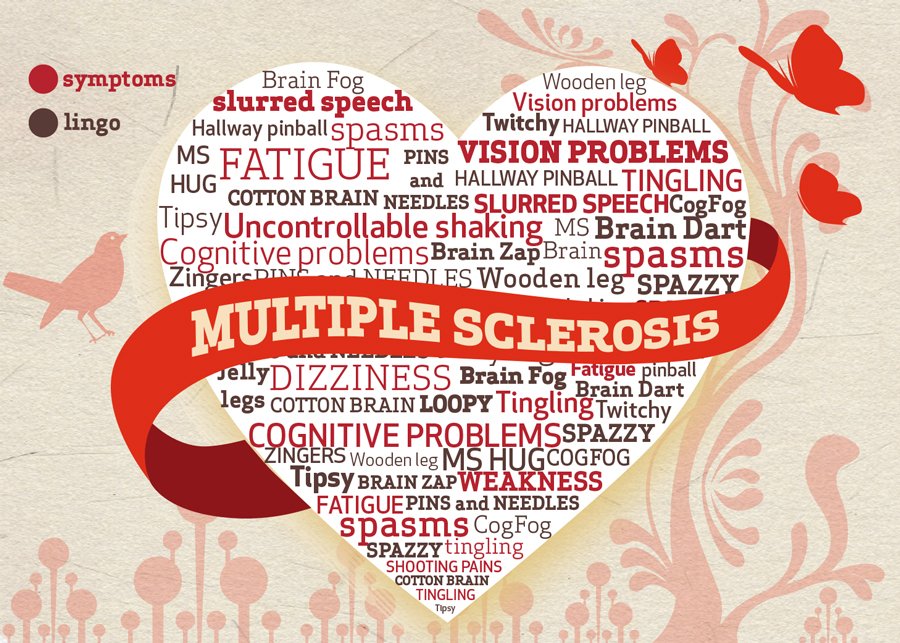
♦ Okay, I’ll step back from the ledge, and refrain from engaging in a full throated rant. Let’s turn our attentions to more positive fare. Here’s a cool little interactive graphic, courtesy Healthline.com, which helps explain some of the common phrases thrown about in the MS patient lexicon. Just click on the graphic to to open it on the Healthline site, where you can mouse over the words to see definitions pop up. It's really kind of cool…

MS Hug


♦ Here’s a video, presented by Everyday Health and Dr. Sanjay Gupta, about a weighted vest that helps MS patients suffering from lack of balance. Kind of an interesting concept with the potential to help many people, and the physical therapist featured in the video is none other than Dr. Stephen Kanter, who is the PT at the MS clinic at which I am a patient. As a matter of fact, I was just in the room that Dr. Kanter is being interviewed in last week. Can my life possibly get any more exciting?

♦ Oh goody, here’s another piece for my ongoing collection of asinine research studies. It’s a brilliant example of scientific exploration that delves into the mystifying question as to whether or not being told they are JC positive makes patients on Tysabri more anxious (click here). For those who aren’t aware, the JC virus is responsible for PML, the potentially deadly brain infection that has been linked to the MS drug Tysabri. Patients who are JC virus negative have a negligible chance of developing PML. JC positive patients, though, have a far greater risk, in some cases less than 1 in 100. Can you guess what the researchers found? Brace yourself for the shocking conclusion, because the investigators discovered that Tysabri patients who are JC positive are significantly more anxious about taking the drug then their JC negative counterparts! Who could have possibly guessed that patients that are far more likely to get a horrible and potentially deadly brain infection due to the medication they are taking would exhibit more anxiety about that medication than those whose risk is barely registrable?

Reading about this research led me to do a little thought experiment of my own. Given my fertile imagination, I assure you that going through with the actual experiment is entirely unnecessary. After much intense thought and contemplation, I’ve concluded that attaching a small guillotine to my gonads would make me significantly more anxious than not having to cope with the perpetual fear of having my family jewels chopped off any second. Of course, just to be sure, I’d like to run this experiment in real life on several hundred men, mostly pharmaceutical and insurance company executives. Where do I go to get my research grant?

♦ This last video has nothing at all to do with pharmaceutical companies, MS, or medicine whatsoever. It does feature a dog, an omelette and Bossa Nova, though, three of my very favorite things. I hope you get as big a kick out of it as I did…

Well, that’s it for this edition of Bits and Pieces. Thanks for reading Wheelchair Kamikaze!…

Enhanced by Zemanta

Tuesday, July 16, 2013

An Ugly Profile

Scary, Hideous, Negative Me!

As every man, woman and child over the age of six living in the United States must be all too aware, the latest courtroom drama to grip the nation has been the trial of George Zimmerman, which came to its conclusion this past weekend. Unlike many of our previous “trials of the century”, which usually feature lurid sexual misconduct, child murder, or the involvement of a celebrity, the Zimmerman trial focused attention on some of the most troubling fissures that threaten to fracture American society, including racial bias, the prevalence of handguns, and our well-earned paranoia regarding violent crime.

A prominent issue in the Zimmerman case was profiling, specifically racial profiling. But profiling can take many forms, and as a disabled person this aspect really struck home. More on this a bit later, but for the sake of international readers who may not know the specifics of the case, please allow me to provide a quick summary.

In February 2012, black teenager Trayvon Martin was walking back to his father’s fiancé’s townhouse at about 7 PM in the evening, after a trip to a nearby convenience store. The Florida community he was walking through had recently been the scene of several burglaries and home invasions. A white resident of the community, George Zimmerman, a volunteer in the neighborhood’s community watch program, saw Martin walking in the dark through a light drizzle. Mr. Zimmerman, who spotted Martin from his car, thought the recently turned 17-year-old looked suspicious and called local police dispatchers, who told him police were on their way and advised him not to follow Martin on foot, advice which Mr. Zimmerman, who was armed with a concealed handgun, ignored.

After following Martin for several minutes, an altercation broke out between the two subjects, during which Mr. Zimmerman suffered a broken nose and abrasions on the back of his head. According to most accounts of the struggle, including Mr. Zimmerman’s, Martin wound up straddling Zimmerman on the ground and was getting the better of the fight. Zimmerman said that at this point Martin saw the gun holstered on Zimmerman’s hip, and told Zimmerman that he was going to kill him. Zimmerman then unholstered his weapon and shot Martin at point-blank range through the heart. Trayvon Martin died within minutes.

Initially, local police declined to arrest George Zimmerman, saying that his actions were justified on the grounds of self-defense. After the case reached public attention and generated a national outcry, Zimmerman was arrested and charged with second-degree murder. After a trial that lasted approximately 3 weeks, he was found not guilty, a verdict that has ignited heated debate and public protests throughout the nation.

Naturally, I have strong opinions about the Zimmerman case, but as I’ve largely tried to keep politics out of this blog, I’ll refrain from airing my opinions here. Instead, as I mentioned previously, I’d like to use this tragic incident as a catalyst to discuss the issue of profiling, the practice of making assumptions about a person’s character, intelligence, or intentions based solely on their appearance. Perhaps the only thing that seems certain about this case is that Zimmerman profiled Martin, assuming he was “up to no good” based solely on the youth’s appearance. Tragically, it turned out those assumptions were wrong, and ultimately resulted in the death of a 17-year-old who was simply in the wrong place at the wrong time. Or, more correctly, in the right place at the wrong time.

Why discuss this on a blog devoted to issues associated with multiple sclerosis and disability? People with MS and other disabling illnesses who show the physical effects of their disease often find themselves the subjects of profiling, whether they walk unsteadily, use canes or walkers, or are reliant on wheelchairs. Assumptions are often made by members of the general public based solely on the appearance of the afflicted, and those assumptions can often multiply the pain and suffering caused by the disease itself.

There has long been stigma attached to physical disability; the severity of this stigma varies from culture to culture but certainly persists to this day even in more enlightened societies. I know many MSers with relatively mild disease who struggle mightily to keep their illness a secret in the workplace, for fear that knowledge of their ailment might derail their careers or even get them fired. Patients with more apparent manifestations of the MS, such as balance and gait issues, have found themselves accused of alcoholism or illicit drug use. Those of us who find ourselves in wheelchairs often also find ourselves ignored by the population at large, subject to ignorant or condescending comments, and sometimes even treated as complete imbeciles. Folks whose disease affects their speech are often automatically assumed to be suffering from mental retardation, the notion that a perfectly fine mind may be hidden behind their inability to enunciate never even occurring to many in the healthy population.

How can I be so sure of all of this? The answer is simple, and embarrassing. Back in my healthy days I was sometimes guilty of just such profiling, unconsciously making assumptions about the disabled based on preconceived notions that had no basis in reality. I clearly remember seething at the wheelchair reliant person who had the audacity to hold up my commute to work while the driver of the public bus I was on took the time to operate the vehicle’s wheelchair lift. How dare they travel during rush hour, didn’t they know that normal people need to get to work! Looking back, I cringe at the memory of my sometimes dumbing down my speech in the presence of people with physical disabilities, as if somebody possessed with faulty limbs was also automatically possessed with a deficient brain. Turns out the one with the deficient brain was me.

Even now, when I’m all too well versed in the trials and tribulations of the disabled, I sometimes find myself falling victim to my own subconscious preconceptions. A few years back I met a man who was active on one of the online MS forums in which I participate. In our written give-and-take on the Internet, I knew him to have a keen intellect – astute, sharp, and witty. When I finally met him in person at a large MS symposium I could barely disguise my shock when I found he could barely get a word out, his speech halting and slurred. Despite the fact that I knew that this man had a fine mind, I automatically found myself simplifying my vocabulary and talking in a louder voice, so strong and ingrained were my mistaken inclinations. I’m ashamed to admit that I was so disquieted by the situation that I cut our interaction short, behaving in a way I regret to this day.

George Zimmerman’s profiling of Trayvon Martin ultimately resulted in an innocent teenage boy’s death, an outcome that all can agree was tragic, whether or not they believe the jury’s verdict to be just. Though the profiling experienced by the sick and disabled isn’t likely to result in physical death, the injuries inflicted to sense of self and ego can at times seem more hurtful than a physical blow. The emotional maelstrom experienced by patients dealing with chronic disabling diseases is and of itself a difficult storm to weather, and the added indignities that are sometimes heaped upon them by an indifferent and ignorant public can multiply the emotional distress of such illnesses exponentially.

Unfortunately, there are no easy answers when it comes to eradicating the problem of profiling, whether that profiling is based on race, gender, religion, or physical condition. As my own experiences illustrate, perhaps the first action we should take to eliminate the poisonous practice of profiling is to look within. An open mind and an open heart are tremendous benefits not only to the person who possesses them, but to all within their sphere of influence as well.

Trayvon Martin, RIP.

Enhanced by Zemanta

Monday, July 1, 2013

It's Not Easy Being Green

The Seven Vices - Envy, by Giotto (1306, Fresc...
The Seven Vices - Envy, by Giotto (1306, Fresco, 120 x 55 cm, Cappella degli Scrovegni (Arena Chapel), Padua, Italy) (Photo credit: Wikipedia)

Envy. I’m not proud of it, but I confess that I find myself consumed with this ugly emotion with increasing frequency, in direct proportion with the progression of my disease and my increasing physical disabilities. Of the seven deadly sins, envy is certainly amongst the most distasteful, right up there with anger, greed, and pride, all such unpleasant and unlovable traits. Lust, gluttony, and sloth, on the other hand, while certainly not foundations upon which to build a thriving long-term existence, can be an awful lot of fun in the right doses. I’ve always felt that the occasional pinch of decadence was a requisite ingredient in the recipe for a life worth living.

But I digress, back to envy, that entirely negative and frustrating beast. As much as I try not to succumb, as much as I try to maintain the emotional control which is so essential to sustaining psychological equilibrium in the face of progressively debilitating disease, envy often finds the cracks in my defenses and breaches my emotional levees, and when it does the sentiment inundates my being with its toxic sway. As I roll through the teeming city streets or the more gentle confines of Central Park with my backside firmly planted in a wheelchair, passing tens and hundreds and thousands of the healthy masses, I find it at times impossible to not yield to waves of envy, covetous of the most humble abilities on full display and taken entirely for granted by those around me, mundane everyday actions that nevertheless taunt me like a poke in the eye – simple miracles like to two working legs and two working hands, fingers breathlessly nimble, and senses tingling and undulled, all utilized with nary a thought or conscious desire. You don’t know what you’ve got till it’s gone, they say, and, oh, the envy that can be risen by the sight of those whose terrific good fortune allows them to maintain their blissful ignorance.

At times it feels as if my illness is turning me into a breed apart, and despite my attempts at denial, I suppose such a transformation is inevitable. One of these things is not like the others, and that one is me. Yes, of course I’m still human, a sentient, feeling being, and this binds me to the whole of humanity, but in physical terms I am inexorably drifting further and further from the main. Some parts of the world are now quite literally shut off to me, a simple 6 inch high step as impassable a hurdle as the ramparts of a medieval castle. Food that cannot be easily consumed with one hand holding a fork or spoon needn’t be edible if placed in front of me unless I am free to go caveman and pick up that chicken breast or ribeye and tear away at it with my teeth, actions that are generally frowned upon in most fine dining establishments. Clothing with buttons, zippers, or even snaps are as useful to me as a Jell-O hat, and don’t even get me started on shoelaces.

But it’s generally not my frustrations with the obstacles of the physical world that engender aching pangs of envy. Rather, it’s observing the modest joys achieved without thought by the blessed masses that provoke a cascade of jealousy: the leisurely stroll or the hurried stride, the gesticulations that say what words cannot, the effortless grace of a lovers embrace. On these my gaze falls longingly, as remembrances of my own healthy long-ago life, so divorced from the one I lead now, claw their way out of the carefully constructed lockboxes in my mind to disrupt the ordered reality I try so hard to consciously maintain.

I envy the young for their vibrantly radiant energy; even sitting still they shimmer and glow. All that beaming vigor, if only I could siphon off just a drop from each I’d be dancing in no time. I envy the old – even those who move with obvious effort – for their decades lived without suffering a life altering physical catastrophe and for their active old age, a stage of life I will likely never know. I sit amazed – and, I must admit, in weaker moments aghast – at how many octogenarians are in far better shape than I. Let them all live long and prosper, the young and the old alike, but their very existence sometimes seems designed solely to mock my own. There are days when being out in the world can be invigorating, when I can lose myself in the kaleidoscopic swirl of humanity, if even just for a few moments. There are other times, though, that the very thought of leaving my sanctum is simply too much to bear, when solitude is the only companion I can stomach.

In those down times, though, I try to remind myself that even in my current debilitated state there are those worse off than I, some sharing the disease that afflicts me, who might look to me with envy. And there are others, perhaps those racked with terminal disease or ruinous injury, who could very well be covetous of the plight of the poor souls who envy me. The ladder of despair is long, and those clinging desperately to each rung can't help but occasionally glance upwards and stare jealously at those just above them.

I vacillate between trying my damnedest to suppress the urge to direct my wheelchair full bore into the shin bones of the able bodied and wanting to roll up and beseech them to fully embrace the power and majesty of their unsullied health. “Do you know how lucky you are?”, I want to shout at them, especially those who look sad or sullen. “Did you lose your job, some money on the stock market, a lover or spouse? Are you worried about the state of the world or suffering from some existential angst? How wonderful! Now you can take a night to feel the hurt, and then wake up tomorrow and use that fully functioning body and disease-free brain to start anew, to find a better job or make more money or discover some wonderful new person or decide to do something constructive to improve your lot in the world and maybe even help your fellow man! With your health intact you hold the power to reinvent yourself the moment you muster the will to do so. Never forget that you’re only as stuck or lonely or despondent as you want or allow yourself to be, the past is nothing more than a quickly fading photograph, and whatever emotional baggage you’re carrying around can be released as soon as you decide to stop letting it drag you down. The only reality is that which you create, and the future offers nothing but boundless opportunities as long as you allow yourself to be open to them! Choose happiness, since you’ll never get a refund on the days you spend miserable, and as long as you’re healthy the world and all of its glories are there for the taking!”

Yes, I’d sound like some gimpified late-night TV self-help shyster, but every word is true. I suppose that’s what I find so truly galling about seeing all of these magically healthy people; they bring into shattering focus the fact that I wasted so much damn time on what ultimately turned out to be trivialities when I was one of them. Here comes a cliché: if I only knew then what I know now, but how true, how goddamned true. If I could just go back for five minutes and give myself a good swift kick in the ass! I’d shout at the younger healthy me, “Stop stoking the embers of that broken heart, get off that couch, and call that sexy blonde who’s been flirting with you for the last year and a half! Don’t let fear dictate the day! Quit that soul sucking job you hate and put your talents to use chasing your dreams! Go learn how to scuba dive, or skydive, or do any of the million things you’ve always wanted to do but never got around to actually doing! Because time is finite, and there just may come a day in the future when you will no longer have the luxury of making such choices. Don’t want to scare the crap out of you, buddy, but let’s just say you’d better get cracking…”

As I write this, I realize that all of the above advice, all of my imaginary admonitions to the healthy and to the younger me, apply with a few modifications just as well to who I am now and my current circumstances. Yes, I have disease imposed restrictions, and they suck. But I still have the capacity to find joy, I can still pursue my pleasures – albeit from a more limited menu – and the world is still brimming with wonder. Though I am physically worse off than I was a year ago, I can still get out and about, can still take photographs, can still write essays that I hope resonate with folks in similar situations. It may take me longer to do these things, and I may be forced to curtail the scope of my activities, but I’d best do what I can do now for as long as I can do it because perhaps the only thing I know for sure is that progressive diseases progress, and I have a progressive disease. I suppose that makes my future more uncertain than most, but everybody is traveling down a path made up of nothing but blind curves.

I know my feelings of envy are shared by at least a few of my fellow MSers, as the topic has come up in quite a number of conversations I’ve had recently with some of my MS friends. As with all negative emotions, envy cannot be eradicated, for how can one in a wheelchair not be envious of those walking so effortlessly all around them? The key is to acknowledge the envy and then do your best to let it go, for its toxicity is only a fleeting poison unless you allow yourself to wallow and dwell, using envy’s sharp edge to administer distressing self-inflicted emotional wounds. The disease itself does enough damage all by itself, it certainly doesn’t need the help of negative emotions run amok.

So I guess I have some work to do. As I’ve noted before on these pages, one of the lessons imparted by MS is the value of kindness, and especially that of kindness to self. On days when the outside world seems too daunting a place to visit, it’s okay to relish the safety of your cocoon. But the outside world isn’t going anywhere, and those of us faced with the ravages of progressive debilitating illness know all too well how precious a commodity is time. Once each day is gone it’s not coming back, and despite the restrictions we face, the paralysis and pain and emotional distress, as long as nothing suddenly calamitous occurs only we can determine whether any particular day is good or bad, fruitful or wasted. There is still life to be lived, even if it’s not a life you could have ever envisioned. Fuck envy and fuck MS, each on their own is ugly, and the combination is wretched. Each new day belongs to nothing and no one but me, so who better to put into action the wisdom and perspective so harshly imparted by this dread disease?

Enhanced by Zemanta