Sunday, January 31, 2010

Attended a Benefit for the University of Buffalo CCSVI Imaging Study

University at Buffalo, The State University of...

Image via Wikipedia

Last Friday night, January 29, my wife and I attended a small fundraising party for the University at Buffalo's ongoing CCSVI imaging study, which is attempting to determine if there is a clear correlation between the vascular abnormalities now known as CCSVI and Multiple Sclerosis.

The party was the first of what is hoped to be many such events held around the country, raising funds to expand the study from the 500 subjects that have already been imaged to the desired total of 1700 subjects. The study is single blinded, meaning that the researchers reading the MRV and Doppler imaging results don't know if the person imaged had MS or was a healthy test subject. This blinding ensures that no unintended bias on the part of the researchers can skew the results of the study.

The fundraiser, which was held in the Manhattan restaurant O'Neal's, was a great chance to meet and greet like-minded individuals who are hopeful that CCSVI will prove to be an important discovery in the quest to unravel the mystery that is MS. Hosted by Eric C. Alcott (Development Officer, UB School of Medicine and Biomedical Sciences) and his lovely wife Deborah, over a dozen supporters attended the event, and much interesting information and lively banter was exchanged. Hell, I'll go so far as to say the thing was actually fun, and I didn't even have to make good on my threat to run over the feet of anybody who went light on their donations. Guess I'll have to vent my kamikaze urges on some unsuspecting pedestrian on the street later this week.

The initial results from the first 500 patients studied are due to be released sometime within the next two weeks, and although nothing specific was divulged, it was hinted that we would very likely be encouraged by the results that will soon be disclosed.

If you'd like to help the continuation of the study with a donation, be on the lookout for fundraising parties near you, or, better yet, donate the whizbang 21st century way, directly from BNAC website.

Reblog this post [with Zemanta]

Tuesday, January 26, 2010

Why the US News Media Silence on CCSVI?

Speak No Evil

Image by thorinside via Flickr

The topic of CCSVI, the radical new theory that MS may in fact be a vascular disease, has been raging on the Internet for several months now. On some prominent MS forums, the topic has bred near hysteria among contributors, and the websites of most of the major MS advocacy groups (the NMSS, the MSAA, etc.) have featured CCSVI information, with varying degrees of enthusiasm.

Outside of the US, CCSVI has been featured prominently in mainstream television and print news media outlets. In Canada, one of the major television networks aired a 20 minute long newsmagazine feature on CCSVI, and the pros and cons of the theory have been written about in many of the country's newspapers. The European news media have also devoted time to the theory, which got its start when the wife of an Italian vascular surgeon developed multiple sclerosis, and he investigated the blood vessels associated with her central nervous system, finding odd vascular abnormalities.

In the United States, though, the media have responded to this potentially groundbreaking theory with resounding silence. There have been no print articles about CCSVI in any major American newspaper, nor have any of the US television network news organizations paid it any notice. Very strange, given the breathless coverage many medical discoveries of lesser potential are given in the modern, voracious 24-hour news environment that demands a constant stream of newsworthy items and events. The "balloon boy" hoax was given countless hours of coverage; yet a story about a possible breakthrough in the fight against Multiple Sclerosis, a disease that affects hundreds of thousands of Americans, has warranted not even a whisper.

I've heard from very reliable sources that both CBS and ABC have had TV news stories in the can and ready to go for weeks now, but for some strange reason have not deemed them airworthy. Doctors and patients have been interviewed, and video pieces have been cut, only to be put on a shelf.

If I were a cynical man, I might wonder if sponsorship pressures could possibly be behind the silence of US news outlets. After all, if CCSVI were to prove correct, pharmaceutical companies would stand to lose billions of dollars in the yearly sales of the immunosuppressant MS drugs that have become a major cash cow for them. If I were a cynical man, I might watch all of the slick prescription drug commercials that now flood our airwaves, and contemplate the huge influence that the companies that pay to air them could exert on network and cable TV organizations with the mere threat of withholding some of their advertising dollars. If I were a cynical man, I might think about the fact that the United States no longer has any independent news gathering operations, the likes of which have all been swallowed up by huge corporate conglomerates whose focus is on the bottom line, not the dissemination of unbiased journalism.

I'm still not 100% convinced that CCSVI will prove to be THE answer for every patient struggling with multiple sclerosis. It very well might be, but there is still much to be discovered, and proper news coverage could spur into action research organizations, and the foundations that fund them, and thereby quicken the pace of discovery. If I were a cynical man, I'd contemplate these things while quietly humming the Viagra song...

Reblog this post [with Zemanta]

Saturday, January 23, 2010

Pants on the Ground, Wheelchair Style

I can't say I'm a fan of American Idol, as honestly, I've maybe watched 45 seconds of it through the years. I must admit, I'm not terribly fond of modern pop culture, and immensely prefer Lady Day to Lady Ga Ga. But even I have not been able to escape the charms of "Pants on the Ground" a little a cappella rap ditty that was performed by a 62-year-old gentleman during one of this year's American Idol auditions. Since it first aired a few weeks ago, the video clip of "Pants on the Ground" has gone viral, and I suspect that deep in the Amazonian forest, where pants haven't even been invented, there are tribal warriors chanting "Pants on the Ground" as they prepare for ritual battle. I've gotta admit, the little tune is kind of catchy...

Now, the irrepressible Mark E. Smith (the Mobility Superstar) and the folks from Pride Mobility have put together their own stellar video version of "Pants on the Ground". Pride Mobility, the manufacturer of fine mobility products, is the maker of the Wheelchair Kamikaze's own Quantum Rehab Q6000Z, the wheelchair part of Wheelchair Kamikaze. Mark E. Smith, when he's not busy being a junkyard dog gangsta rapper, serves as Pride Mobility's Consumer Research Manager, and runs the invaluable website Wheelchair Junkie , which in my humble opinion is the Web's best resource for information on all things wheelchair.

So now, strap yourselves in, pull your pants low, and get ready to groove to the Wheelchair Junkie's version of "Pants on the Ground"...

Reblog this post [with Zemanta]

Tuesday, January 19, 2010

Every Exit An Entrance: Three Years on Disability

080409 revolving door-1Image by Dan4th via Flickr

Today is the third anniversary of my leaving work and going on long-term disability. The universe being the lattice of coincidence that it is, today is also the 20st anniversary of the day I started the first job of what would be my career, TV/video/film production. Kinda weird symmetry, but so it goes...

Naturally, the day brings mixed feelings. I think back to January 18th, 1990 with a fond sense of nostalgia. I was 26 years old, probably a bit late to be starting my first "real" job, but I spent about five years nurturing the delusion that I was going to be either the next Johnny Rotten or Jack Kerouac. I'd loudly and obnoxiously sworn off ever working a real job, but the combination of cruel fate and the hard realities of such little matters as shelter and eating forced my hand. A bizarre set of circumstances (including a missed train and a punch in the eye) landed me in Fort Lauderdale, Florida, pretty much flat busted and sleeping on my mother's couch.

With a degree in film from Boston University in hand, I managed to land a job as Associate Producer of Local Programming at Continental Cablevision of Broward County, the local cable TV outlet, for a salary barely above minimum wage. Even at that paltry sum, I was grossly overpaid, because I didn't know my ass from my elbow about much of anything, much less producing video programming. It was strictly the cachet that a degree from Boston had in South Florida in those days that got me the position.

My first assignment was to cover "Horatio Alger Day" at a local high school that was largely populated by impoverished kids from the wrong side of the tracks, who could do with a bit of inspirational hokum. I was sent out with a camera and an intern who knew even less than I did about the nuts and bolts of video production. I did my best at videotaping the event, and even did an interview with the keynote speaker, the founder of the Wendy's hamburger chain, Dave Thomas. When I got back to the studio and reviewed the footage, it quickly became embarrassingly apparent that I had forgotten to white balance the camera, and all of the images I recorded were tinted bizarrely orange, looking a lot more like they were shot on Mars than in Pompano Beach. And thus began my brilliant career.

Fast forward 17 years, to my last day of working at one of New York City's premier video and audio production facilities, as the Director of DVD Production, where I'd played a large part in putting out some of the best-selling music related DVDs in the history of the format. I'd been diagnosed with Primary Progressive MS nearly 4 years earlier, and the fracking disease had whacked away enough of me to make the decision to go on disability not much of a decision at all. Preferring to not engender either sympathy or pity, I composed a parting note to my coworkers that I intended to send out at the very end of the day, and requested that my higher-ups not do anything special to mark my departure.

Much to my chagrin, they ignored my request, and put together a little farewell party for me, complete with cake and champagne. Although I thought I would be mortified at such an event, it turned out to be a nice way to put some psychological punctuation on that chapter of my life. I'll always treasure the experience of having two of my most junior people, part-timers both younger than I was when I first started out, tell me that they didn't think they'd ever have a better boss, because they felt like I truly cared about them. Knowing a little something about my back story, the two gave me a book of photos of New York's punk rock scene in the 1970s. I think there's still a mark on the inside of my lip from where I had to bite it to keep from blubbering.

Well, it's been three years since that day, and I've gone from Director of DVD Production to Wheelchair Kamikaze. On my last day of work, I struggled out of the facility wearing an ankle brace, not even needing a cane. These days I spend much of my time with my ass firmly planted in a wheelchair. Thankfully, it's one that goes fast. I've grown fond of saying, "Go fast, even if your fast is slow".

Though some find the transition from working to disability jarring and traumatic, my experience was anything but. After an initial couple of weeks during which I felt compelled to call the office every day, I quickly adjusted to a life that was increasingly limited physically but was also suddenly filled with the freedom to do what I wanted to do when I wanted to do it.

It seems almost forbidden to admit this, especially since I achieved a fair measure of success in a very competitive, high profile industry, but the truth is that I never really liked working. To be completely honest, in many respects I hated it. The only job I truly enjoyed was that very first one, way back in Florida, when I made no money but spent my days shooting and editing video, writing scripts, wiring up video setups, and getting my hands dirty. As my career progressed, and I experienced "success", I became more of an administrator, and at times I felt like a prisoner, a captive to my own achievements. In the middle of my career, I had a couple of jobs which required me to put on a tie every day, and every morning I silently cursed as I slipped that silk noose around my neck.

My last job, the DVD gig, was much more gratifying, but I think that feeling had its roots more in knowing that I had made it to the major leagues than in the actual day to day work I was doing. It felt a lot better saying I was the "Director of DVD Production" for a music industry giant than it felt actually being it. In 18 years, I'd gone from screwing up "Horatio Alger Day" to directing a department that put out mass-market product that sold hundreds of thousands of copies, but I felt that I had somehow strayed far off my path, and I yearned for the freedom of my younger days, when chasing dreams trumped chasing dollars.

How odd, then, that this insidious, hateful disease has provided me the out I coveted. I've learned a lot about myself these last three years, and some things about others as well. I've gained some insight, and maybe even some wisdom, which I've tried to share, with varying degrees of success. Attempting to save my own ass, I've learned more about MS than about any other subject I've ever studied, and I've tried to communicate that knowledge too, so that other backsides might also be saved.

It's quite possible that all of this insight, knowledge, and learning may very well prove powerless in the face of the creeping paralysis that continues to afflict me, and certainly there must be much more benign ways to achieve self-awareness. But, like it or not, this is my lot, and I owe it to myself to make the most of it, and in some way try to imbue the experience with some measure of meaning. Faced with a constant reminder of the preciousness and frailty of existence, it becomes apparent that time should not be wasted.

Reblog this post [with Zemanta]

Tuesday, January 12, 2010

Remembering Stella (Repost)

(Some good news and some bad news. First, the bad news. After trying a new drug (for me) to calm my mysterious  beast, I am instead caught in the throes of a struggle with it. Weaning off the drug now, so hopefully I'll be back to my "old normal" sooner rather than later. The good news is that all this should make for a pretty interesting blog post, including some outrageous pharmaceutical company shenanigans, the mysteries of my illness, and general adventures in medicine.. In the meantime, for your hopeful enjoyment, I'm reposting the below essay, written in January, 2010 about one of the best friends I've ever had. Thanks for reading, and a new essay will hopefully be up soon…


My best buddy Stella passed away just a little over three years ago. She was a faithful friend with a huge heart who always new just how to make me smile and often had me laughing riotously out loud. Stella was compassionate and sweet, and knew exactly how to live in the moment and seize every day. She was faithful, devoted and I knew that I could trust her entirely with my deepest darkest secrets. About the worst thing I can say about her is that she had the unshakable habit of loudly and vigorously chewing her paws in the middle of the night, while emitting strange noises that were impossible to sleep through.

stella%20action%20cu[1]Stella was, of course, my furry best friend, a yellow Labrador Retriever who came into my life in 1998, while I was still living in Fort Lauderdale. A coworker had just given birth to a baby girl and no longer had the time to care for Stella. I'd recently moved into a charming little 1940s Florida cottage with my then girlfriend, and was jonesing for a dog. So, the timing was perfect, and after two "meet and greets", during which Stella gave me the thumbs up, I was a happy new doggy daddy. Stella had just turned three years old when she came to me, and I was five years away from developing MS.

I hadn't had my own dog since I was a kid, but I had bonded with the canine companions of several friends and lovers that I'd met along the journey of my adult life. I was particularly close with a Dalmatian named Briar, whose owner unfortunately turned out to be a pathologically lying serial cheater who delighted in using my heart like a roll of Charmin. Quick life lesson: if you find out that your lover has cheated on every person they've ever been with, don't fool yourself into thinking you can somehow change them. Simply open your eyes to the truth, realize that once a person accepts such behaviors in themselves they will never change, and get as far away as possible, even if they have an adorable spotted four-legged creature with the most haunting eyes you've ever seen...

But, I digress. Stella and I quickly bonded, even as my girlfriend and I quickly unbonded. Turned out my Labrador friend enjoyed spending Sundays sprawled on the couch watching NFL games as much as I did, as long she could watch them while laying between my legs with her head nestled on my belly. We took long walks around the neighborhood together, although she wasn't much for jogging. The one time I took her out for a run, she made it about a block before squatting in the middle of the road and doing what dogs generally do when they squat. After completing that most natural of acts, Stella let me know that jogging just wasn't her thing. No harm, really, because jogging wasn't really my thing, either.

About six months after Stella joined me, the girlfriend and I decided to call it quits, and I decided to get the hell out of Florida, a place I never much cared for, even though I spent 10 years there. I think the tropical sun beating on your noggin causes some kind of dementia, because even though I felt like a stranger in a strange land the entire time I lived down there, for some reason I could never formulate actionable plans to leave. It was like, "gee, this place royally sucks, ooh, I think I'll go for a swim..."

Anyway, Stella and I were soon back in my hometown of New York City, living in a section of the city known affectionately as "Hells Kitchen". For a dog that was born and raised in Florida, Stella took to city life like a socialite. For some reason, she naturally curbed herself (if only the same could be said for socialites), and she loved the wonderful sniffing opportunities that the city streets offered up in droves. She also loved the take-out Chinese joint around the corner from our apartment, which always had partially eaten chicken wings discarded on the sidewalk in front of it. One of the few arguments Stella and I ever had were over her insistence on insanely gobbling down as many of those gnawed on chicken bones as quickly as she possibly could, but a few rounds of very stern "bad girls" helped her kick the habit. You see, she really was a "good girl", and my disapproval trumped the irresistible gristly remains of chicken wings, true testament of her feelings for me.

For about a year, Stella and I were strictly a duo, spending lots of time at neighborhood dog runs and in Central Park, where she'd occasionally take an ecstatic jump in the lake. She absolutely lost her mind during that winter's first snowfall, which was the first snow the native Floridian had ever seen. If pure joy could be embodied in flesh and blood, it would be Stella burying herself in mounds of freshly fallen snow and then wriggling on her back to make canine snow angels. Her glee was infectious, and soon I too was a snow-covered whirling dervish, joining Stella in her carefree frolicking, covered head to toe in the powdery white stuff blanketing the fields of Central Park.

After about a year back in the city, late one night in a neighborhood bar I met a girl named Karen, who, despite my best efforts, didn't seem very interested until I mentioned the fact that I had to get home to walk my Labrador Retriever. Turned out that Karen had grown up with Labradors, and, figuring that a single guy with a Labrador couldn't be all that bad, she gave me her number. Just about two years later, we were married. At first, Stella didn't exactly welcome Karen with open paws; after all, Karen had supplanted her place on the couch. But the two soon became buddies, and Karen even succeeded in getting Stella to lose a little weight (for a while, we referred to her as "Jabba the Pup"), much to the veterinarians delight.

For a year, everything was hunky dory, until one very cold day in March 2003, when I took Stella for a very long walk along the Hudson River. About 2 miles into our trek, I noticed that I'd started limping. I didn't think much of it, but in the following weeks, the limp in my right leg grew worse, and I felt my right arm starting to weaken. Several doctors visits and an MRI later, and I found myself sitting in a doctor's office listening to words like "multiple sclerosis" and "progression" and "spinal tap" somehow become associated with the words "me" and "holy shit".

Strangely enough, just about the same time, Stella also started having all kinds of health problems. I honestly believe that she was so empathic that she somehow shared my distress and manifested physical illnesses of her own. Between 2003 and 2006, Stella developed mast cell cancer and autoimmune hepatitis. She had multiple surgeries to get rid of the cancer, and was put on a variety of medications and a special diet to address the hepatitis. For a while, we were actually both on the same immunosuppressants, bought from the same pharmacist. On several occasions, it appeared that Stella was on death's door, but she always managed to somehow pull through, often to the veterinarian's surprise. He'd smile, shrug his shoulders, and offer the only explanation he could, "She's Stella..."

Through it all, Stella stayed Stella. Though she would suffer a while from her painful surgeries, and the hepatitis would sometimes rob her of strength and appetite, as soon as she felt a little bit better, her tail was wagging, her eyes were bright, and she was ready to embrace whatever joy that the day had to offer. In so many ways, she taught me how to deal with my own illness, which progressed continuously through the ensuing years.

Stella didn't waste any time bemoaning her fate, or thinking about what might have been, because she was blessed to simply not have the capacity to do so. As my condition has continued to worsen, I've often thought of Stella, and have realized just how right she had it. Feeling sorry for yourself or worrying about future calamity only serve to poison the present, and the present, the now, and our place in it, is the only thing in the entire universe that we have any real control over. Endeavor to live your life like a Labrador, attack each day like it's a great big rawhide bone sent from the heavens.

Eventually, Stella's illnesses and advancing years got the upper hand; the cancer returned, and my sweet little girl started slipping away. Over the Thanksgiving weekend of 2006 we boarded her at the veterinarians while we visited my mom in Florida, and when we returned the vet told us that Stella's condition had worsened, and he recommended we put her down. He brought her out to us with an IV already inserted into her leg, but upon seeing us I could see that familiar spark in her eye, and she started eating the treats I tried to hand feed her. We decided to bring Stella home, to give her the chance to make one more rally.

By this time I was no longer able to walk Stella, and most of her caregiving fell to Karen. Stella actually did rebound a bit for the first few weeks, but I guess the power of love can only go so far. A few days after Christmas, we brought Stella back to the vet one last time, held her, and said goodbye. Those weeks between Thanksgiving and Christmas became one extra month of bonus life for Stella, during which Karen took Stella to Central Park almost every day, and Stella ate all of the chicken and turkey she wanted.

Stella saw me through many transitions; from Fort Lauderdale to New York, from single to married, from well to Multiple Sclerosis. Aside from my wife, there is no being I have ever felt closer to, or more intimate with. I miss her still, and will for the rest of my days. Karen and I now live in a building that is wheelchair friendly, but doesn't allow dogs. If I somehow beat this thing, first thing we're doing is moving out of this place and getting ourselves a great big pooch, who will take Stella’s space, but surely not her place.

Here's my favorite photo of my pal Stella...

stella door effect

Reblog this post [with Zemanta]

Wednesday, January 6, 2010

The Trouble Is The Night

nightmaresImage by Joe Thorn via Flickr

I've always been a night person; left to my druthers, I'd happily keep the hours of Nosferatu. Back in my working days, having to be dressed and in the office by the ungodly hours of 8:30 AM or 9 AM was monstrously inhumane. My brain didn't start functioning until after noon, and about all I could do in the hours preceding midday was to try my best to simulate the actions of a fully conscious person, walking around like Mr. Spock in that episode of Star Trek where aliens steal his brain.

Later in my career, when I went to work in the music industry, many of my coworkers were of the same ilk, and the production studios where I toiled were generally devoid of human activity before 10 AM. I had no problem working late to get the job done, so long as I wasn't required to show up at the crack of dawn (and my definition of dawn includes the hours between 5 and 10:30 AM). The night was when I was in my element, and this still holds true. Most of my blog posting, photoshopping, and video editing takes place well after the sun has dipped below the horizon. Though this keeps me out of step with most of the rest of the world, it is what it is, I am by nature a denizen of the dark. I even met my wife at 4:30 AM.

Lately, though, the nighttime hours have been troublesome. Not so much the nighttime hours, per se, but the hours after I've gone to bed, when I'm left without the distractions which serve to keep me from focusing on my illness and all the damage it has done. When not under the covers, and surrounded by my toys and other people, I'm usually quite able to keep the wolves of the despair at bay. Through mindful choices and a diligent channeling of my attentions and emotions, the psychological ravages of my multiple sclerosis are held at arms length, and though they are never beyond my consciousness, I refuse them the ability to cloud my minute to minute existence with anguish. I recognize my situation, and determine to live my life the best I can despite of it. Though this works better some days than others, in general I'm able to keep my head well above the water.

Once the lights go down, though, and all is still, it is a far more difficult task to corral the thoughts that conspire to mangle my peace of mind. I've always been an insomniac, as a child I remember lying awake for hours, even as the light of a new day gathered in my bedroom windows. Now, with my wife sleeping gently beside me, the psychological barriers I carefully maintain during the day start to crack, and the thought train gathers a wicked momentum and threatens to break loose from its tracks. The void that is left by the momentary lapse of emotional diligence is quickly filled with the whys and why nots, the what ifs and the if onlys.

With my head on my pillow, the Torment Express picks up steam and careens through the furthest corners of my mind. How did I get this fracking disease and could I have done anything to stop it? Is this retribution for some forgotten sin, or am I a merely the victim of a simple but cruel twist of fate? If I'd made different choices, if I'd only caught that missed train, or had stayed in Boston, or somehow stayed true to my youthful dreams and ambitions, could I somehow have avoided this ghastly withering, this slowly watching myself lose me inch by inch and limb by limb?

Where would I be this very moment had I not taken ill? That career that I'd built so steadily, despite my struggles with selling out and my battles with the twin fears of success and failure, only to have the mountain crumble beneath me as I approached the summit of real triumph, where might that have led me? At the very precipice of the next level, I was pushed to the sidelines and forced to watch as others scrambled over the foundations I had built.

My God, the time I wasted, the days and weeks and months and years when I was healthy and had the world at my feet, but kept myself bound and gagged with fears and insecurities, bad habits and stupidity, with envy and jealousy and pride and conceit, turning the infinite possibilities of each and every glorious day into a self-imposed prison of preconceptions and misguided expectations and the absolute folly of self-righteous suffering. That time so precious, so delicate, so priceless, time that slipped away without my making even the slightest effort to catch it, blind to the approaching maelstrom that crouched waiting, just beyond the bend. All of the irreplaceable people and experiences and moments that I took for granted, which no amount of wishing or hoping or wailing can ever recover. Gone for good, consigned only to that box marked "memories"...

And what of all the treatments I've undergone, and all of the doctors I've seen, every one of which has failed me completely, and some of which have left me worse off than when I began? How much damage have they done that has yet to reveal itself, these powerful poisons that I've taken even whose manufacturers cannot say exactly what they do? Is there some missing piece to my puzzle, some missed clue or overlooked anomaly that might decipher this disease that has left some of the best minds in medicine puzzled? Is it too late to alter the ugly endpoint of this disease, or might I still have a chance, a tiny chance at finding my way through this thing, to the other side?

I toss and turn with the force of the thoughts ricocheting around inside my skull. Finally, I silently scream "enough", and slowly stretch my spastic limbs, force my aching joints into motion, and clumsily stumble and drag myself to the bathroom, not so much due to physical need but just a break the inner cycle. Back in bed I grab my smartphone and read the opinion pieces from tomorrow's New York Times. As insane and volatile as the outside world may be, it's a powder puff compared to what lies within. Finally, eyes heavy, I surrender to sleep.

When tomorrow comes, I'll take inventory of my physical status, strap on my armor, and begin the battle anew. Inner demons back in their cages, I'll do my best to make the most of the day, imposing some measure of contentment upon myself, because really, there's nothing else to do...

Reblog this post [with Zemanta]

Tuesday, December 29, 2009

Video Portrait of an Artist Grappling with PPMS

One of the MS blogs I've been most impressed with is "Healing through Multiple Sclerosis", published by artist Cathy Aten. Cathy's blog documents both the mounting physical challenges and very personal internal struggles that she must wrestle with as a result of her Primary Progressive Multiple Sclerosis.

On a daily basis, Cathy eloquently communicates the difficult to verbalize impact that the disease has on the psyche of those who suffer from it. She writes of the horror and wonder of watching oneself change, and the constant coming to terms with losing control of one's life and oneself on so many levels, all the while teasing out the quiet lessons that might be learned from the experience.

Cathy recently posted a video in which she discusses her experiences in dealing with her progressively disabling illness. Both intimate and intelligent, this brief video is an impactful summation of the psychological labyrinth that this very physical disease demands its sufferers go through, forcing its victims to find a way to navigate through a fearful and ever-changing landscape, all the while trying to hold onto that which defines them.

As Cathy so succinctly puts it, "What all can you take away and still have the essence of a thing?"...

Thursday, December 24, 2009

A Christmas Miracle

Well, it's now officially Christmas Eve, so I thought I'd post a little Wheelchair Kamikaze Christmas message. I decided to refrain from ranting and raving about hairy monkey balls sucking Multiple Sclerosis, evil insurance companies, festering brain lesions, the pleasures of lumbar punctures, brilliant neurologists, Eastern philosophy, the promise of CCSVI, absurd research findings, crazy wheelchair shenanigans, the injustices of disability, moneygrubbing pharmaceutical companies, the threat of the medical industrial complex, the insensitivities of society to those of us who are disabled, or any of my other usual fodder.

Instead, I thought I'd simply wish you all a very Merry Christmas.

Now, there's a Christmas miracle...

And here's my favorite Christmas song, by The Royal Guardsmen...

Saturday, December 19, 2009

Moments of Clarity

The Storm is Coming

Image by innoxiuss via Flickr

Receiving a diagnosis of MS, or any serious illness, is a reality shattering event. There you are, going about the business of day-to-day life often as if on autopilot, when a huge hairy beast steps into your path, grabs you by the ankles, and drags you kicking and screaming into some strange new dimension. Suddenly, the world is a different place, everything that you took for granted now imperiled, your expectations for the future warped beyond recognition. What once may have seemed quite orderly has now fallen victim to chaos, and however composed one might appear on the outside, on the inside pandemonium has gained a foothold.

Even after many years of dealing with chronic illness, the chasm between what was expected and what has been received can be tremendously disorienting. When dealing with a progressively disabling illness like MS, reality is a moving target. It seems that just when you acclimate to your current condition, some new symptom or event crops up to tear apart even that impermanent reality. The human mind craves at least a minimal amount of order, but in the life of a chronically ill patient, disorder often has the day.

Lately I've been awash in a surplus of muddle and inner tension. The relentless progression of my MS, my dissatisfaction with the results of my cataract surgeries (which I'd had such high hopes for), and a bunch of other nagging health issues have combined to turn the universe into an unfriendly swirl of doubt and confusion. The coming of another holiday season, which starkly marks just how far my disease has progressed compared to holidays past, has also taken its toll. What is this treacherous path that I've been forced to follow? Is there some purpose that can be divined from it? And can this path possibly lead to a destination less ugly than the one I anticipate?

As threatening skies have gathered, I've managed to find some solace by taking shelter in a moment I experienced many years ago, a fleeting instant of understanding, a flash of insight that was gone before I could grasp it, the momentary comprehension that there are indeed patterns and reason and logic that lie just beyond the abilities of our puny, inadequate brains to realize.

I think I've experienced such a moment only once.

In late November, 1993, I was driving back from Key West to Miami, after spending a deliciously debauched but life-affirming weekend at the southernmost town in the United States, in the company of my extremely difficult but very attractive girlfriend. Back then Key West still had the vestigial feel of the Bohemian frontier town it once was, a feel which I understand is tragically now gone. I drove in the approaching dusk of one of those perfect tropical winter afternoons, the sky an endless blue, the balmy air tender as a gentle peck on the cheek. The convertible top of my little red sports car was down, its engine singing its satisfying throaty growl, King Pleasure's "Moody's Mood for Love" pouring from the speakers which lay embedded in the car's head rests, cleverly placed there so the music could be heard above the noise of the open road.

The late afternoon sun infused everything with a glowing pink and gold, and the road we followed was on one of the smaller islands that make up the Florida Keys, just a little spit of land less than a half-mile across, the Gulf of Mexico a few hundred yards to my left and the Atlantic Ocean the same distance to my right. The air whipping around us tasted like the ocean, and with one hand on the steering wheel, and the other feeling the vibrations of the motor through the stick shift, all of my senses were full.

I started to say something to the girl, and glanced over at her sitting to my right. Though she wore big dark sunglasses, I knew in an instant she was dozing, her head cocked gently to one side, her long strawberry hair playing with the wind. In the amber warmth of the setting sun, the sight of her, set in such perfect repose, stirred some secret part of my soul.

I took a breath, and quite suddenly everything stopped. The music and the sound of car and the road around me fell silent, I didn't exhale, I couldn't exhale, the girl and her tousled hair and the car and the sky and the world around us frozen for a pregnant instant. In that momentary pause, I flashed upon the unexpected understanding that I might have a chance at figuring it all out, that there could be significance and purpose to the teeming chaos that makes up a life, that the path upon which I tread might actually have some meaning.

And then it was gone, everything set back in motion. King Pleasure sang another note, my heart registered a beat, the girl stirred, and the march of life continued once again, just beyond the reach of comprehension. I exhaled.

Well, the car was sold about a year later, and the girl and I didn't last half that long. I’ve heard that Key West has since succumbed to the inevitable rot of commercialism, and is no longer the wonderfully strange little place I so loved back then. But for one single transcendent moment, all of these elements came together in a way that still keeps me pondering, in a tableau forever imprinted in my minds eye. In times of sadness, or trouble, or remorse, or confusion, I often retreat to that moment, and somehow find comfort in the wisp of insight into the wholeness of being that it provided.

Zen Buddhists refer to these brief moments of understanding as kensho. They call a deeper, more lasting enlightenment satori. Whatever its name, I'm grateful to have experienced my moment, as its impact has served me as an anchor through troubled times. Whenever the burden seems too great, the road too twisted, when I start getting lost in abstractions like "fair" and "not fair", I can slip back into that moment, and though I can't re-create the experience, the simple knowledge of it and the sense that there are indeed unknowable patterns within all of the seeming randomness grants me at least a few measures of serenity.

I guess some would call it faith...

Reblog this post [with Zemanta]

More CCSVI Info

The momentum behind the Chronic Cerebrospinal Venous Insufficiency (CCSVI) theory of MS really seems to be picking up steam. Though not yet covered extensively in the American press, in Europe and Canada print and television journalists have eagerly picked up on the topic.

I'll continue to post intelligent links to CCSVI info as I come across them, and as more studies get started, I'm hopeful that the theory will move into the realm of fact. As of now, I will remain optimistic but skeptical. I've seen many other MS "miracles" turn into faerie dust, but my gut tells me that there really is something to CCSVI.

Here's a link to a news piece on CCSVI from CBC radio, in Canada. It's an interview with Dr. Samuel Ludwin, a professor of neuropathology at Queen's University who's been researching Multiple Sclerosis for over 30 years. Though cautious, he does express enthusiasm for the radical new idea that MS may in fact have a heavy vascular component.

One of the problems I've had in fully embracing CCSVI is the fact that it doesn't account for the almost certain association of the Epstein-Barr virus (EBV) with MS. Numerous studies have shown that people who are not infected with EBV do not get MS. Here's a letter to the editor of the Journal of Neurology, Neurosurgery and Psychiatry that postulates a convincing link between EBV and CCSVI.

We may be witnessing a shifting in the paradigm of the understanding of Multiple Sclerosis...

Reblog this post [with Zemanta]

Wednesday, December 16, 2009

New Canadian Broadcasting News Report on CCSVI

(Sorry I've been inactive for the last week or so. I've been unable to blog or respond to e-mails because my computer fried. Just got it back up and running today, and let me just say that the Dell telephone service technicians are complete nincompoops. I think they mean well, but gadzooks, trying to diagnose a dead computer by reading through a script all the way in India just isn't working, folks. After I dig out from under a big pile of e-mails, I'll get back to posting my usual mindless dreck.)

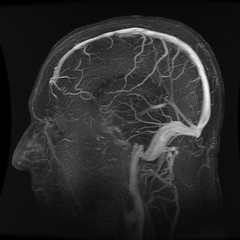
Annotated Sagittal ATECO MR VenogramThe Canadian Broadcasting Company aired a news piece tonight on CCSVI (the "vascular theory" of MS), which featured Dr. Zivadinov, the researcher who is running the imaging study at the University of Buffalo. This report is much more cautious than the feature that ran two weeks ago, and appears aimed at tempering the expectations of MS patients.

Just to throw in my two cents, I believe that CCSVI will in fact prove to play a part in the Multiple Sclerosis puzzle, but how big a part has yet to be determined. It may turn out to be the Holy Grail, or researchers might find that narrowed veins are the result of Multiple Sclerosis, and not the cause. The reality probably falls somewhere in between these two extremes.

Even if CCSVI does prove to play a major role in the MS disease process, it also must be determined exactly how best to treat it. As it stands now, the surgical treatments involve either balloon angioplasty, or placing stents in the narrowed sections of the jugular and/or azygos veins. Unfortunately, balloon angioplasty (referred to as the "Liberation Procedure") often has to be repeated, as 50% of the jugular veins treated eventually re-collapse. The stenting procedure has proven to have some major problems also, as the stenting of jugular veins is largely unexplored territory. One of the patients who was treated at Stanford University had a stent migrate down into his heart, necessitating emergency open-heart surgery to save his life.

It may turn out that customized procedures need to be developed to treat CCSVI, and multiple techniques will probably be necessary in order to address stenosis found in various places of the CNS venous system. In particular, stenosis very high up in the jugulars may prove to be quite problematic, resistant to both balloon angioplasty and stenting. Naturally, the stenosis that has been found in my jugular is extremely high up.

Yippie.

Reblog this post [with Zemanta]

Sunday, December 6, 2009

'Tis the Season

Holiday InclusionImage by Amarand Agasi via Flickr

Alas, it's that time of year again, when folks of all races, creeds, and colors turn their attentions to friends, family, and the brotherhood of all mankind. A time when all thoughts of the self are shunted aside and give way to the beneficence of faith, hope, and charity. Filled with the spirit of the season, a heartfelt kinship for one and all is celebrated throughout the land...

Okay, let's cut the crap. The holidays are upon us and it's time to party like Tiger Woods, hopefully without getting hit upside the head with a nine iron. In between imbibing too much eggnog (I'm not quite sure what nog is, but it sure helps put the "spirit" in the holidays), giving yourself carpal tunnel from spending countless hours on Amazon.com, and fake smiling your way through holiday office parties, this is a great time of year to give the gift of giving, by donating generously to the charity of your choice. And while I genuinely feel nothing but warm fuzzies for helping the homeless, abused children, or neglected animals, worthy causes all, there is one particular crusade that is near and dear to my heart, and, I suspect, yours, since you are reading this blog.

I speak, of course, about the fight against Multiple Sclerosis. I truly feel that we are on the cusp of some incredible breakthroughs in this battle, from the tremendous promise of stem cell research, to the unraveling of the genetic mysteries presented by the disease, to the recent excitement that has spread like wildfire about the possibility of MS being a vascular disease (the CCSVI theory). On many fronts, the war against MS is finally yielding the kind of results that can be translated from the intellectual exercises of the laboratory into the hard-core realities of patient care. Although the ultimate answers may still lie just beyond our reach, momentum is building, and it's not entirely delusional to have real hope that some momentous breakthroughs may be just over the horizon.

When thinking about making donations to the fight against MS, the one organization that universally comes to mind is the National Multiple Sclerosis Society. To the population at large, the NMSS has become THE face of the struggle against MS . Because of the huge amount of publicity generated by NMSS sponsored events such as MS walks and bike rides, many other worthy organizations fighting the good fight against MS get lost in the Society's shadow.

Please don't get me wrong, the NMSS provides many valuable services and resources to the MS community, but there are smaller organizations slavishly devoted to the complex fight against MS that also deserve attention (and donation dollars). Besides, the Wheelchair Kamikaze has a visceral distaste for conformity, and a natural affinity for the little guy, so why donate your hard-earned cash to the same monolith that everybody else donates their money? It just so happens that I know of a few smaller MS groups devoted exclusively to MS research, whose work I believe to be vital to the fight against Multiple Sclerosis.

Three of my favorite lesser-known MS nonprofit organizations are The Accelerated Cure Project, The Myelin Repair Foundation, and The Multiple Sclerosis Research Center of New York. These terrific, energetic organizations take a very hands-on approach to tackling the the puzzles of Multiple Sclerosis, and work tirelessly on the behalf of those who've heard the dreaded words, "You have Multiple Sclerosis". Here's a little bit about each of them:

  • The Accelerated Cure Project- Founded by an MS patient, this nonprofit is dedicated to curing MS by determining its causes and mechanisms. They have established an "MS Repository" of blood samples and data that has been made available to all scientists and companies that have promising ideas that might potentially benefit people with MS. Lack of access to high-quality samples and data from MS patients has been a major obstacle that has long plagued MS researchers. For scientists investigating MS, the MS Repository, which so far includes blood samples from over 1000 MS patients, is a gold mine of hard to get materials that can be used for analysis and experimentation. The compiling and organizing of the repository requires a tremendous amount of time and effort, and the funding for the endeavor comes primarily from individuals and families directly affected by MS. MS patients can also choose to participate in the repository itself by donating blood at one of the ACP's participating MS clinics (more information is available on The Accelerated Cure Project website). And, yes, the repository does include samples of the Wheelchair Kamikaze's blood, which for some reason is kept in a lead lined container and is under 24-hour guard by a detachment of specially trained Sasquatches.
  • The Myelin Repair Foundation-The MRF, also founded by an MS patient, was created to break down the barriers in medical research and commercial drug development that work against the rapid delivery of patient treatments. All too often, researchers work in a kind of vacuum, and often consider each other rivals rather than partners in the battle against MS. The model under which research is currently carried out often presents hurdles to true collaboration among researchers in different laboratories and research groups. The MRF has developed the Accelerated Research Collaboration model, a radical new approach to medical research whose primary goal is the rapid translation of laboratory discoveries into real-world patient treatments. As its name would suggest, The Myelin Repair Foundation has made identifying myelin repair drug targets that will lead to treatments for MS its sole focus. The MRF is heavily involved in investigating the potential of stem cell research, as well as other therapies designed to physically repair the damaged nervous systems of MS patients. The Accelerated Research Collaboration model has proven so revolutionary that many believe it has the potential to change the way of all medical research is conducted. Gifts to the MRF will be matched by a challenge grant from another generous donor, effectively doubling the size of any donation.
  • The Multiple Sclerosis Research Center of New York-The MSRCNY is an independent research laboratory that is headed by the Wheelchair Kamikaze's own neurologist, Dr. Saud Sadiq. Under Dr. Sadiq's direction, the center conducts groundbreaking research into identifying the cause of MS, understanding the mechanism and progression of the disease, examining new treatment strategies, and studying ways to repair and regenerate nervous system damage. Considered one of the finest independent MS research laboratories in the world, the MSRCNY is staffed by world-class researchers and doctors whose sole focus is defeating Multiple Sclerosis and increasing the effectiveness of MS patient care. Dr. Sadiq and his staff also deserve enormous admiration for putting up with the constant pestering of some wise ass crackpot who likes to drive his wheelchair much too fast. Thanks to the generosity of an anonymous donor, tax deductible contributions to MSRCNY will be matched dollar for dollar, doubling the value of any donation.

All of these organizations do incredibly valuable work, and are truly worthy of any donations that you, your family, or your friends would be kind enough to make. If you have MS, donating to The Accelerated Cure Project, The Myelin Repair Foundation, or the Multiple Sclerosis Research Center of New York is truly a case of helping yourself by helping others. If you love someone with MS, there could be no finer expression of your affection than a donation made on their behalf to any or all of these groups.

Of course, there are other extremely worthy organizations doing terrific things to help combat MS, and I don't mean to slight any of them by exclusion. The Accelerated Cure Project, The Myelin Repair Foundation, and the Multiple Sclerosis Research Center of New York, though, get the exclusive and much sought after Wheelchair Kamikaze stamp of approval...

Reblog this post [with Zemanta]

Monday, November 30, 2009

CCSVI (the Vascular Theory of MS): Separating Fact from Fiction

Veins of the head and neck.

Since the airing of a Canadian television newsmagazine piece on CCSVI, there has been a veritable frenzy on Internet chat rooms and bulletin boards regarding this radical new theory. Unfortunately, the tsunami of information that is being bandied about is often misleading and sometimes just plain wrong. Based on scant knowledge, many are making extraordinary claims regarding the theory and the treatment options it presents, most of them based on little actual fact.

For those unfamiliar with CCSVI (chronic cerebrospinal venous insufficiency), I've made two previous posts about it, which you can find here and here. I've been fastidiously following the development of the theory and the treatments being used as a result of it for at least ten months now. Though I'm far from the be-all and end-all of CCSVI information, I do feel qualified to make some intelligent observations about it.

For readers unacquainted with CCSVI, the theory basically states that narrowing in the veins that drain the central nervous system (CNS) leads to an abnormal flow of blood through the CNS, which damages nerve tissue via several different mechanisms, and leads to the lesions and immune responses that are the hallmarks of Multiple Sclerosis. First proposed by an Italian doctor, Dr. Paolo Zamboni, whose wife was stricken with MS, the theory has won over several fervent supporters. Dr. Zamboni is treating MS patients with a modified balloon angioplasty procedure he calls "The Liberation Procedure", and another physician at Stanford University, Dr. Michael Dake, is opening up the blocked veins of MS patients using stents. There is also a doctor in Poland, Dr. Marian Simka, who appears to be using a combination of these two methodologies. As knowledge of the theory has spread, many harsh critics have quite expectantly begun to ring in. I'll attempt here to cut through the noise, and present the facts as I know them, along with some commentary.

To begin with, let me state that although I remain somewhat skeptical, I'm a cautious believer in the concepts put forth by the CCSVI theory. It is certainly my hope that the theory bears fruit, as it will offer MS patients a myriad of new options to treat the disease, and will lead research scientists in entirely new directions as they investigate the many aspects of Multiple Sclerosis. Hopefully, it will help bring about a rethinking of the autoimmune theory of MS, which states that, for reasons unknown, the immune system goes bonkers and starts attacking the body's own cells. Quite frankly, we've been fed that line of bullshit for far too long. If the CCSVI theory starts gaining significant traction, expect a withering storm of criticism to come from some mainstream neurologic circles, as well as from the pharmaceutical industry, which stands to lose untold billions in the sales of drugs designed to suppress the immune system.

Dr. Zamboni's research began with his imaging the vascular systems of MS patients, sufferers of other neurologic diseases, and healthy subjects. He reports that he found signs of vascular abnormalities in almost 100% of the MS patients he studied, but none in either the patients with other neurologic diseases, or the healthy subjects. On its face, this would seem to be very compelling evidence. However, as my doctors at the National Institutes of Health (NIH) have pointedly explained, this claim throws up some big red flags. Because MS is a notoriously hard disease to diagnose, and there are many diseases that mimic MS, in any large population of diagnosed MS patients, there will be a significant segment that have in fact been misdiagnosed. Therefore, finding 100% of any trait among a large population of MS patients is practically impossible. As a matter of fact, the way I first became involved with the NIH was as part of a study being used to identify patients that the National Institutes of Health could be certain actually suffer from MS, because misdiagnosed patients were skewing the results of many of the MS studies they had undertaken. The NIH is trying to identify a pool of patients they can be confident actually have MS, for use in future studies. This is how the NIH ascertained that it's very likely I do not have MS.

Still, the Zamboni findings appear to be compelling. Before they can be accepted as scientific fact, though, they must be replicated by independent researchers, and so far, no such evidence has been presented. There are several different research groups currently putting together studies of CCSVI, and a large imaging study is already ongoing at the University of Buffalo, so we should have either independent verification or refutation of the theory sometime within the next 6 to 12 months. Before we get these independent reports, however, it is extremely premature to state anything with certainty about the theory.

In my mind, CCSVI could explain several of the mysteries surrounding MS, but fails to explain many others. It's one of the first theories to adequately explain the formation of lesions and the immune response that are the calling cards of MS. It also explains findings such as those that tie cigarette smoking to an increased incidence of MS and a quicker progression of the disease. Since smoking is known to exacerbate vascular issues, if MS is in fact a vascular disease, it stands to reason that smoking would have a considerable negative effect on it.

On the other hand, the theory does not address what we know about the geographic distribution of MS, the male-female ratio that is well known to exist in MS, the existence of "MS clusters" (which would seem to point to an infectious cause), or the unmistakable link between MS and Epstein-Barr virus (100% of MS patients are infected with EBV. I know, many of you reading this have never had Mono, but the vast majority of people infected with EBV have no idea that they carry the virus. It can often be asymptomatic, or present as a bad cold or flu).

Having said that, MS is an extremely heterogeneous disease, and it may be that CCSVI is THE answer for a subset of MS patients, but may play only a partial role, or no role whatsoever in others diagnosed with the Multiple Sclerosis.

As for the surgical interventions now being used on patients whose imaging (via MRV and/or Doppler imaging studies) indicates that they have venous abnormalities related to the CNS, there are controversies surrounding these, as well. The problems stem from the fact that the procedures being used were all developed for use in clearing out the obstructed arteries of cardiac patients. Remember, CCSVI is concerned exclusively with veins.

There are major differences between arteries and veins, both in form and function. Arteries are designed to facilitate the outflow of blood from the heart to the various organs and regions of the body. They must be able to withstand the tremendous internal blood flow pressures generated by the beating heart, and thus their walls are stiff and resistant to tears and breaks. Veins, on the other hand, function to return deoxygenated blood to the lungs and heart. They are designed to be flexible and pliant, and their walls are much thinner and more prone to tearing than the walls of arteries. Arteries grow narrower in the direction of blood flow, while the opposite is true of veins, which grow wider as they return blood to the cardiopulmonary system. Therefore, a stent that gets loose in an artery is typically only pushed deeper into that artery. A stent that gets loose in a vein generally has a clear path to the heart.

In self-reported results, Dr. Zamboni's balloon angioplasty Liberation Procedure appears to be quite effective in reducing relapse rates and disease severity. Unfortunately, as many as 50% of the patients treated suffer restenosis of the veins opened by the Liberation Procedure, and thus require multiple interventions. As with any surgery, there is risk involved, and that risk is multiplied each time the intervention must be repeated. Furthermore, stenosis that is found in problematic areas, such as high in the jugulars, is not treatable by balloon angioplasty.

The surgery being attempted at Stanford University is much more aggressive, and places stents at the stenosed areas of blockage. Stenting has very rarely been tried in veins, and much less so in veins associated with the brain and spinal cord; the stents used have been almost exclusively designed for use in arteries. So far, slightly over 60 patients have been treated with this procedure, and there have been some serious complications reported. Despite the fact that I have a significant stenosis in my left upper internal jugular, both the doctors at the National Institutes of Health and my primary neurologist have repeatedly and adamantly warned me against undergoing this procedure, citing the possibilities of brainstem hemorrhages, stent migration (which would almost inevitably lead to stents finding their way into the heart), and the ever present danger of bleeding and blood clots. Although the majority of the patients that have undergone this procedure report positive results, a minority have had a difficult time recovering from surgery, and have reported nerve pain and nerve damage. There has been one near calamity associated with the surgery, as one patient required emergency open-heart surgery to retrieve a stent that had become dislodged in his jugular and migrated to his heart. (Update: as of 12/08/09, CCSVI surgical procedures at Stanford have been halted, pending the start of a clinical trial, scheduled to begin in the first quarter of 2010.)

In short, the research surrounding CCSVI appears to be very promising. Until this research is replicated by independent organizations, no real conclusions can be drawn. There have been many other promising leads in the history of MS research that have eventually led to dead ends. I'm hopeful that CCSVI will not be one of them, and instead will lead to a seismic shift in our understanding of not only MS, but other so-called autoimmune diseases as well. I cannot make any such statement, however, until the research is verified by multiple sources. As for the surgical procedures now being offered to treat stenosed veins, they must be characterized as experimental, and as such, carry with them a sizable degree of risk, more so with the stenting procedure than with balloon angioplasty. If CCSVI theory turns in to CCSVI fact, these surgical procedures will in time be refined, and the risk in undergoing them will be diminished.

As exciting as Dr. Zamboni's research is, I think it's important that the MS community as a whole steps back and takes a breath, and waits to see what further research bears out. I understand how hard this can be with a progressive neurologic disorder breathing down your neck. Believe me, I'm nearing the point of desperation myself, but in situations like these, we cannot let hope and emotion cloud our actions and understanding of the issues. These are potentially life and death matters, and need to be approached with clarity of mind and a complete grasp of the complicated issues being presented.

Reblog this post [with Zemanta]

Saturday, November 28, 2009

Drumsticks and Stuffing and Big Screen TVs

'Image via Wikipedia

For those of us here in The States, this past Thursday was Thanksgiving. Although it's always been one of my favorite holidays, like everything else in America, Thanksgiving lately seems to have become supersized, and has been transformed into little more than a homage to gluttony. To put it mildly, turkeys aren't the only things getting stuffed on the last Thursday in November.

To advertisers and marketers, Thanksgiving has become the starting whistle to the holiday shopping frenzy, which starts the very day after with "Black Friday", an event that has created a new holiday tradition: breathless news reports of crazed consumers lining up before dawn, trampling over each other's overstuffed backsides in a frenzied scramble to get their grubby mitts on discounted 50 inch flat screen TVs.

There was an interesting piece that ran in the New York Times earlier this week, which pointed out that through much of this nation's early history, the Thanksgiving feast was preceded by a Thanksgiving fast. People would deprive themselves for a day or two, and follow-up that deprivation with a huge feast. The Taoist in me loves that notion, it seems to me to be in keeping with the Yin and Yang of things. There can be no day without night, no peaks without valleys, no happy without sad. Why not no feast without fast? As a society, but also as individuals, we seem to have lost sight of the double-edged nature of reality. We are all for the "gain", but want nothing much to do with the "pain". It's all about the easy fix, but for those of us dealing with chronic illness, there is no such thing.

Despite my best efforts at staying in the moment and keeping myself centered, I had a hard time mustering up much to be thankful for this year. My MS continues to progress, well, if it even is MS, and everyday tasks are getting more and more difficult. On top of that, my recent cataract surgery has left my eyes all wonky, and I think I'm going to need further surgery to correct the mistakes of the initial surgeries. In the parlance of World War II, it's all just a big SNAFU (Situation Normal, All Fucked Up). The eye thing has been especially frustrating, as I'd convinced myself that taking care of the cataracts would be the first step on some kind of road to recovery. Well, that first step has been a doozy...

As I contemplated my situation, I thought back in the spring of 2006. At that time I was still working, and didn't even need a cane or ankle brace to walk. I certainly was no Fred Astaire, but I could at least limp for a half block or so, which now seems incredible, given my current state of affairs. I'd recently undergone sinus surgery, which sent my neurologic crap into overdrive. Even though it was a minor procedure, I had a really hard time getting over the surgery, and my neurologist decided to pull out all the stops in an attempt to slow down the progression of my disability. He ordered a 10 day course of IV steroids, and had me spend a week at the Helen Hayes Rehabilitation Hospital for some intense physical and occupational therapy.

The steroids had a dramatic effect, and although those effects were relatively short-lived, I did temporarily recover function that had been lost to me for the better part of a year. Unfortunately, the massive dose of steroids led to my developing avascular necrosis, which I've complained about in other posts, so I'll refrain from doing so again here. My time at the Helen Hayes Hospital was life-changing, though, in ways that went far beyond the exercises and techniques that I was guided through by the hospital's crack staff of nurses and therapists, angels all. What really struck me, and has stayed with me to this day, were my fellow patients.

The people I met at Helen Hayes were of all different ages, races, and educational and economic backgrounds. I met one man in his early 50s, who had been a top corporate lawyer. He had suffered three strokes, and was trying to relearn how to do the simplest of things, to use a knife and fork, to turn the pages of a book. Another patient was a woman in her 40s, a biker chick that had "kissed the pavement" (her words), and had been in a coma for more than three months. Her progress had been amazing, and when I met her she was just about back to normal. Then there was Steve, a kid in his 20s, who every day told me a different story about how he had suffered his head injury. On Monday it was a boating accident, on Tuesday a fight, on Wednesday he told me he fell off a wall. I asked a nurse about him, and she told me he had in fact been in a car accident, and as a result of his injuries he had completely lost his short-term memory. Each morning he made up a new reality for himself. He had to be led back to his room after each therapy session, as he couldn't remember the way.

Though we were all very different, and were at the facility for very different reasons, all of us patients had one thing in common. None of us had ever expected, had ever had the slightest notion, that we would someday end up in a rehab hospital. At some point in the not-too-distant past, we had all been simply living our lives, consumed by the details of the day-to-day, concerned and sometimes overwhelmed by problems that now seem almost laughably trivial, taking the fragility of what seemed mundane completely for granted. But an errant blood clot in the brain, a slippery stretch of pavement, or a tiny patch of sick nerve cells were all that it took to completely demolish everything that used to be. Given half a chance, each of us would have eagerly leapt at the opportunity to exchange the problems from the worst of our "well" days for the ones we were now facing.

Funny thing is, three and half years later, I would now leap at the opportunity to be in the same condition that seemed so debilitating to me back then. In retrospect, even what once seemed like a curse can look like a blessing, and if you've woken up on this side of the grass today, that alone is reason to be thankful. If you are healthy, or only lightly touched by disease, rejoice in your good fortune, regardless of whether your present circumstances are what you wanted or expected. You have within you the infinite power to change those circumstances. If you're dealing with considerable disability, try to find the determination to focus on the here and now and all that you still can do, rather than dwell on what you've lost. Easier said than done, I know, but that which we take for granted today might seem quite precious tomorrow.

And everybody, well or unwell, happy, sad, or indifferent, embrace all who you love and who love you back. Tell them how much they mean to you, if not in words then in actions, your family, your friends, your dogs and cats, even those who might not be aware of your affections for them. Tomorrow is an iffy proposition, yesterday is an illusion, today is the culmination of all you have been and the beginning of all you ever will be. In the now there is the inestimable power of the universe, there for you to use or risk of losing. Celebrate the ordinary, celebrate the extraordinary, celebrate everything in between, because in the vastness of time, this short life, this briefest of ticks on the universal clock, is all you've got, so ride this sucker hard, and bring it back to the barn wet (how's that for some cowboy talk from a city boy?). Go fast, my friends, even if your fast is slow.

Happy Thanksgiving, everybody. And please, try not to get crushed to death at your local Best Buy.

Reblog this post [with Zemanta]

Saturday, November 21, 2009

Video: CCSVI and The Liberation Treatment- A Whole New Approach to MS

Blood circulation:  Red = oxygenated  Blue = d...Image via Wikipedia

Canadian television network CTV tonight aired a 20 minute news report on Dr. Paolo Zamboni and the "Liberation Procedure", a surgical intervention he uses to clear the blocked veins he's consistently found in MS patients. Zamboni has come up with a radical new theory regarding the cause of MS, called CCSVI (Chronic Cerebrospinal Venous Insufficiency), which states that MS is caused, in whole or in part, by the abnormal narrowing of the veins that drain blood from the central nervous system (the jugular and azygous veins). I've previously written about CCSVI in two posts, which contain links to pertinent research and other information, here and here.

The CCSVI theory hypothesizes that the blockages found can cause blood to flow back into the CNS, depositing iron in the brain and spine, which leads to nerve cell damage and death. The body responds to this damage with the immune response that has thus far been the focus of most modern MS research.

The CCSVI theory doesn't address some of the distinctive features of the MS population (geographic distribution, male: female ratios, the existence of MS "clusters", etc.) but could possibly explain much of what has been observed about the disease. Furthermore, the vascular abnormalities seen in CCSVI can be corrected surgically, potentially giving people with MS the hope of a safe and effective treatment.

Please keep in mind that despite the enthusiasm that this theory has generated among MS patients, there is still much to be proven. This can only be done through studies that confirm Dr. Zamboni's findings, some of which are already underway.

The link below will take you to the CTV site that hosts the video news report, broken into two parts. Also included on the page are additional segments featuring Dr. Zamboni being interviewed on various aspects of his findings and results. For MS patients, this is must-see TV...

CTV News The Liberation Treatment: A whole new approach to MS

Reblog this post [with Zemanta]

Video News Piece on the Vascular Theory of MS (CCSVI)

Canadian Television has produced a five-minute news piece on the "vascular theory" of MS, otherwise known as CCSVI (chronic cerebrospinal venous insufficiency). This theory hypothesizes that rather than autoimmunity, the narrowing and blockages of veins that drain the central nervous system may be the actual cause of MS. If proven correct, this could fundamentally change our understanding of the disease. Better still, surgical intervention could be performed that might stop the disease in its tracks.

This theory was first proposed by a doctor in Italy, Dr. Paolo Zamboni, and his research is being followed up in several locations around the globe, including a large study now underway at the University of Buffalo.

All of this is far from proven, but the research does look intriguing. At the very least, it's prompting people to look beyond the autoimmune theory of MS, which in itself is a good thing. CTV will be airing a one-hour documentary on CCSVI this weekend, and I'll provide a link to that show when it becomes available.

Click the link below to view the video.

CTV News W5 investigates intriguing new theory about MS

Reblog this post [with Zemanta]

Thursday, November 19, 2009

NIH Thinks I DON'T Have MS. Wow!

National Institutes of Health

Well, after four months and a huge amount of poking and prodding, the National Institutes of Health Neuroimmunology team has decided that it's very unlikely that I have Multiple Sclerosis.

Holy shit.

Despite the fact that I've been disputing my diagnosis almost since the day I received it, and this news should be hugely validating, it's left me a little breathless, my head spinning faster than a chunky yuppie trying to lose her love handles at the local Bally's. Not exactly doing a victory dance here, and not only because I could just as soon dance as crap the Hope diamond.

Since July, I've made four visits down to Bethesda to be seen by the doctors at the NIH. During that time, I've undergone extensive testing, the results of which seem to confirm my long-held suspicions about my diagnosis. I only have one central nervous system (CNS) lesion of consequence, located at the base of my brainstem, and this lesion has not changed one bit during the eight years I've been getting regular MRIs. The lesion appears to be an old scar, and doesn't look to be "active". The very name "Multiple Sclerosis" implies more than one lesion, so right there we have a problem. Additionally, multiple tests reveal no evidence of inflammation or immune activity in my CNS, another hallmark of MS.

My test results look more like those of a patient who had suffered a damaging central nervous system "event" at some time in the past, had suffered disability at that time, and has remained stable since. In actuality, though, I've experienced a slow and steady progression of symptoms. When I first took note of the fact I was limping, 6 1/2 years ago, I could easily walk several miles, and the limp was the result of some slight weakness in my right knee, which only showed itself after a good long hike. Fast forward to today, when my right arm and leg are basically paralyzed, and I have increasing weakness and numbness on my left side as well. My progression has been continuous during this time, which is a complete disconnect from what my test results would appear to reveal.

My clinical presentation (disease history, physical neurologic exam) does resemble that of someone with PPMS, so it still could be that I have a very, very atypical form of that disease. The NIH thinks it more likely, though, that I'm suffering from some other progressive neurologic illness, of which there are more than a dozen. Unfortunately, none of them (including PPMS) currently has any treatment, and my symptoms and test results don't neatly fit into a diagnosis of any of them. I could be suffering from some new "Wheelchair Kamikaze Disease", and even though new diseases are usually named after the doctor that discovers them, if this is a new disease, I absolutely insist that it be called "Wheelchair Kamikaze Disease". Not exactly the rock star fame I was looking for in my younger days, but any port in a storm...

The other big news out of my examinations down in Bethesda is that I do have a vascular abnormality like those that are described in the CCSVI theory of MS. For those unfamiliar with this theory, which hypothesizes that MS is actually a vascular disease, I've described it in two previous posts on this blog, here and here. I believe this is must reading for anybody who has MS, as this theory could change everything we think about Multiple Sclerosis.

I had a CT venogram done several months ago, which revealed that I have a stenosis (narrowing) of my left internal jugular vein, very high up in my skull. This narrowing is directly adjacent to the central nervous system lesion on at the base of my brainstem that is causing all of my problems. Though they're far from sure, the NIH believes that this vascular abnormality could be related to my neurologic degeneration, so we're going to investigate that possibility further, through additional testing, to see if a connection can be made between blood flow problems and the damage being done to my nervous system.

There is currently a doctor in California who has done endovascular surgery on several dozen MS patients who have been shown to have stenosis, placing stents in their narrowed veins. So far the results have been encouraging, but I'm going to wait to see what the NIH and my primary treating neurologist (Dr. Big Brain) have to say on the matter. Despite the NIH results, Dr. Big Brain is not convinced that I don't have MS, and hasn't bought into the vascular theory, either. I have an appointment to see him on December 5, when we'll try to hash these things out.

File:Conrad von Soest, 'Brillenapostel' (1403).jpgOn the cataract front, I'm less than thrilled with the results of the surgery, so far. I paid quite a significant sum out-of-pocket for special lenses to be implanted into my eyes, to replace my natural lenses which had developed cataracts. I was told these implants would very likely give me near normal distance vision, but that I would still require reading glasses. To a person who's been wearing glasses to correct his nearsightedness since age 6, the promise of "near normal" distance vision sounded almost too good to be true.

Well, it was. As it stands now, these miracle lenses have overcorrected my eyes, and now the wonders of modern medicine have magically transformed my former nearsightedness into farsightedness. Abracadabra.

After the second surgery, the doctor told me to buy some drugstore reading glasses so that I could read while my eyes healed. Surprise, surprise, when I put the reading glasses on, instead of clearing up my close up vision, they improved my distance vision. In order to read, or see a computer screen, I had to buy a second pair of drugstore reading glasses, which I wear in front of the first pair in order to see the fracking screen. So, yes, as I sit here writing this, I'm wearing two pair of drugstore reading glasses. Can a guy catch a break? To top it off, the glasses that correct farsightedness are the kind that make your eyes look really big, so now I can look forward to zipping around in my wheelchair all bug eyed. Incredible that despite being half paralyzed, I'm still as vain as a homecoming queen, isn't it?

I have my next follow-up with the eye doctor on November 30, when my eyes will be healed enough to get a final prescription for glasses, but if my eyesight has not improved by then, he's going to get quite an earful. Jackass.

Okay, deep breath, time to kick into high gear some of that Zen stuff I'm always talking about. But first I think I'm just going to curse a lot, like a Tourette's patient on Red Bull. Cover your ears...

Reblog this post [with Zemanta]