Tuesday, August 30, 2011

A Bit, a Piece, and Some Photos…

Thermometer Fever

Image via Wikipedia

Sorry about the nearly two-week gap since my last post, but in addition to earthquakes, hurricanes, and my birthday, I've also been dealing with a persistent low-grade fever that seems to be related to the monthly IVIG infusions I've been receiving. My doctors claim that IVIG doesn't cause such long-term fevers, but the fevers do seem to have started when I started IVIG, and have increased in frequency in the five months that I've been on the stuff. As I'm sure most of you know, those of us with damage to our central nervous systems are especially sensitive to increased body temperatures, so these fevers have been draining both mentally and physically.

The real kick in the ass is that IVIG is the first treatment I've been on that has actually shown any benefit, having restored some strength to my extremely weak right side. Frustratingly, it doesn't seem to have stopped the progressing weakness on my left side, which is quite distressing since I use my relatively strong left side to make up for my extremely gimpy right side. Once the left side goes, I'm all out of sides, and thus shit out of luck, since I'm a mere Earthling and don't have the benefit of the additional extremities sported by some of our extraterrestrial friends. Damn, if only I was one of those six armed, six legged bastards from the planet Mu, but then again if I were I'd be forced to exist on a diet made up exclusively of tremendous brussels sprouts, and I absolutely detest brussels sprouts. Karen adores them, though, and it's only due to the magical power of love that our relationship has survived this calamitous obstacle.

Anyway, enough about me. I thought I'd share a couple of interesting MS related news items, and a new batch of photos that I've added to the Wheelchair Kamikaze photo gallery, which can be found on the left side of this blog. It's been a while since I've added any photos, so it's about time. I'll have a bunch more to post sometime soon, so stop needling me, see, stop riding me, or I'll have to reach through the Internet and sock you right on the kisser. Yikes, suddenly I'm writing like a 1930s movie gangster, so before any more such silliness ensues, let's get on with it…

· The first FDA approved stem cell trial involving multiple sclerosis patients is now underway at the Cleveland Clinic in Cleveland, Ohio (click here). The trial is using mesenchymal stem cells, harvested from a patient's own bone marrow, and then infused intravenously back into the patient after the cells have been cultivated and multiplied in a carefully controlled lab environment. Although this is a very small phase 1 trial, at least one of the initial patients is already reporting some improvements. The mesenchymal stem cells (MSC's) are thought to work by both regulating the body's immune response and initiating the repair of damaged nerve tissues, and offer the extremely exciting prospect of not only stopping the disease but also reversing some of the damage it does to the nervous system. Another small trial, conducted by Dr. Neil Scolding in England, reported encouraging results, finding that patients treated with intravenously infused MSC's showed stability and even some improvement in symptoms after one year (click here). Much larger stem cell trials are currently being readied throughout Europe, and are slated to get going later in 2011 (click here). Similar stem cell treatments are being offered in various overseas clinics at extremely high prices, but the outcome reports from patients who have traveled for these treatments have been mixed

· Yet more idiocy involving the use of medical marijuana to treat MS in the United States has once again made the news, this time in New Jersey, where an MS patient has been tried, convicted, and sentenced to five years in prison for growing 17 marijuana plants for his own use (click here). During his trial, the judge determined that the fact that the defendant has MS and was harvesting the plants as a form of medicine not be allowed to be told to the jury. The convicted man is now appealing the case to the State Supreme Court, and had been out on bail, but as of a few days ago is in prison beginning to serve his sentence. The kicker is that New Jersey now has a law allowing medical marijuana to be used for certain conditions, including MS, but it was passed after this man was first arrested. As I've written about previously (click here), the draconian anti-marijuana laws here in the US - enacted in the mid-20th century largely to protect the cotton industry from the growers of hemp - don't even allow for the testing of pharmaceutical products derived from marijuana, such as Sativex, an anti-spasticity spray available throughout Canada and much of Europe. Sheesh…

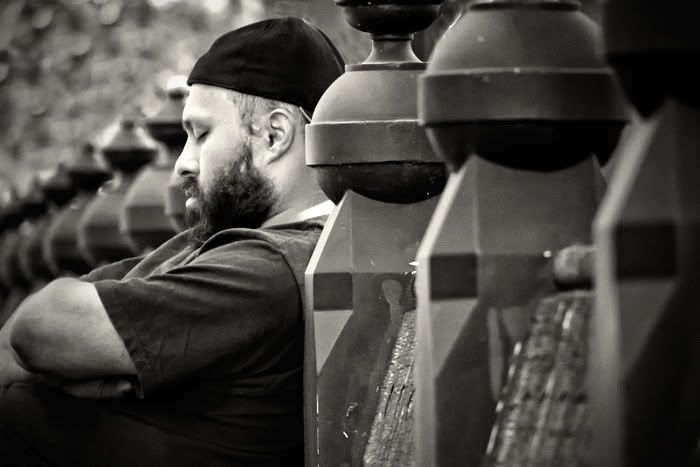
Okay, now for the photos I know you've all been waiting for with bated breath. These were all taken between within the last 12 months, with a camera mounted on the arm of my wheelchair. Most were shot in either Central Park or Hudson River Park. I hope you like them. Please click on the thumbnails below to view a larger image. I'd love to know if you have any favorites, or even if you happen to despise any of them, so please feel free to leave some comments…

Enhanced by Zemanta

Tuesday, August 16, 2011

The Horrible and The Miserable

In his 1977 Academy Award-winning cinematic masterpiece Annie Hall, Woody Allen explains his belief that the entire population can be broken down into two groups, the horrible and the miserable:

Yes, the horrible are "terminal cases, blind people, the crippled…", and the miserable are everybody else, Woody advises Annie, so you should be happy to be miserable.

When I first saw Annie Hall, decades before I was fated to join the ranks of the horrible, Woody's analysis of the human condition seemed perfectly on target, so much so that I wanted to scream "Yes!" at the screen when I first heard this philosophy so succinctly put to words. Annie Hall is a bittersweet comedy, though of the most illuminating sort, and Woody's words were meant to be sardonic, but the teenage me found them to be in perfect sync with my own observations about our society and the world at large. It did seem to me, as Henry David Thoreau wrote, that "most men lead lives of quiet desperation, and go to the grave with the song still in them."

Yes, it's safe to say that I wasn't the most happy-go-lucky young man, and the divide between the miserable and the horrible fit well with my cynical and angst ridden personal philosophy. Not that I was a sad sack, mind you, as I was always equipped with a keen sense of the absurd and thus a lively sense of humor, but looking around me I saw a world filled with adults who to my eyes had long ago forsaken what they wanted to do for what they had to do, and who were so anesthetized by the repetitious machinations of society that this tremendous sacrifice barely even registered with them.

So, by Woody's definition, I would just have to be content with being one of the miserable. The thought of somehow one day becoming one of the horrible was, well, just too horrible to contemplate. The idea of having to deal with severe physical infirmity on top of the emotional grind of everyday life would be simply unendurable. Yet, now that I find myself firmly in the ranks of the horrible, I'm less miserable than when I was one of the miserable. How strange, and how completely unexpected.

Back when I was lucky enough to be one of the miserable, I did a pretty good job at embodying that designation. During the first decade or so of my adult existence, my determination to not succumb to the drudgery of 9-to-5 led me to live a rather Bohemian existence. I spent several years as the lead singer of a punk rock band, working part-time jobs to earn just enough cash to keep a roof over my head and a belly at least half full of food (the other half taken up, more often than not, by vodka and beer). I cultivated the uncanny ability to be able to identify the one female in a crowded room who would be most toxic to me and then fall madly in love with her, a surefire ticket to misery. Though I was living a life of relative freedom and the potential for having a grand old time abounded, my natural proclivity towards anxiety and depression kept me in a nearly constant state of emotional turmoil.

Soon enough, as I got older, responsibility started creeping in, and I was forced to emerge from the nocturnal underground and try my hand at making a living. Somewhere along the line I'd earned a degree in Broadcasting and Film, and an odd confluence of events found me living in Fort Lauderdale, a very accidental Floridian. I was a stranger in a strange land, and with few remaining options, I put my degree to use, finding work in the production studios of the local cable television company, a humble start to a nearly 20 year career in the TV and video production business.

Through a series of ever increasingly responsible jobs, I found some measure of professional success, but always harbored the gnawing feeling that I had somehow strayed very far from my path. My youthful dreams of living large as a rock star or writer slipped out of reach in my rearview mirror. Though I could soon enough afford to placate myself with fast cars and shiny objects, I felt an increasing sense of suffocation. I eventually wound up in a job that required me to wear a necktie (ack!), and I vividly remember the pit I felt in my stomach each morning as I stared into the mirror watching myself literally tying a noose around my neck.

Somewhere along the line I'd blindly capitulated and crossed that line between "want to do" and "have to do". Despite my quiet desperation, I couldn't see a way clear of my situation. Now there were bills to pay, a lifestyle to be maintained, femme fatales to be entertained. I was stuck in a prison of my own making, definitely one of the miserable, but still thankful to not be one of the horrible.

And then, one day, I was. I'd been back in my hometown of New York about four years, and was working in a high profile job that I actually didn't hate (and one for which I did not have to wear a necktie). Having finally learned my lesson, I married a wonderful woman, and settled into a very pleasant existence. Still, I harbored the unsettling feeling of somehow being false to myself, as if I'd been shoehorned into living someone else's life. During my walking commute to work, I'd constantly fantasize about a life spent writing, or taking photos, a life full of want to do's rather than have to do's.

One cold day in March 2003, while walking my beloved pooch Stella, I realized I was limping, my right knee buckling with each step I took. A few doctors’ visits and an MRI later, and I soon found myself being informed that I had multiple sclerosis.

Holy shit.

Welcome to the horrible.

As it turned out, my disease was of the progressive type, and aggressively progressive at that. Less than four years after my diagnosis I was forced to stop working, and about a year after that a wheelchair entered my life. If you had used my past as a predictor of how I'd react to this dreadful new reality, the projected outcome would not have been pretty. Had I been told before my diagnosis of what was about to come, and was then given the choice to either plunge forward or gracefully check out, I might very well have chosen the latter. But somehow, despite my forced migration from the miserable to the horrible, I not only survived but thrived, surprising not only myself but also those who knew me best.

Although MS (or whatever it is, as my diagnosis is more up in the air than ever) has imposed ever-increasing limits on my physical abilities, within those limits I've found a kind of freedom, one that was sorely missing when I was healthy and a so-called productive member of society. Looking back from the vantage point of the horrible, I can see that the life of the miserable is filled with an almost limitless number of options, so many that they can become paralyzing in and of themselves, as choosing one closes the door on so many others. The result can be a kind of blindness, a resignation to keep following a familiar but ultimately unsatisfying path.

Now that I am partially physically paralyzed, and my options limited in a very tangible way, I find in some ways that my existence is easier to navigate. Living within some very real boundaries in fact affords a certain amount of freedom, as the structure imposed by a debilitating illness invites one to use that structure as the skeleton upon which to build a new and different life. I have been freed from the expectations of the working world, a world in which we are often defined not so much by who we are but what we do. Apart from that world, I am free to define myself, albeit within the limits imposed by my disease, by what exists within. Thus, who I am, rather than what I am, takes on the utmost importance.

Just as a gifted poet limited to the strict rules of haiku can create combinations of words that have the power to take the breath away, attempting to live a meaningful life within the strict confines imposed by illness has allowed me the chance to rise above my previous foibles and weaknesses, to strive for some measure of triumph in the midst of mounting adversity, to try to be a better me. That effort has allowed me to rediscover parts of myself that had long ago withered from lack of attention, and to reconnect with the person I was before the burdens of adulthood and its attendant responsibilities had tugged and twisted that fresher version of myself almost beyond recognition.

Make no mistake, I am not saying that this damned and detested illness has conferred upon me any benefit that I could not have conferred upon myself while healthy, given a dose of mental strength and fortitude that I was lamentably unable to muster. This illness, any chronic illness, is a curse, a vile and venal monstrosity that is the very definition of horrible. But despite this beast attempting to consume me, I can endeavor to rise above, to mindfully claim each moment as my own, and to control my emotions rather than have them control me, thereby creating my own reality and snatching it from the gaping maw of illness.

Sick or healthy, miserable or horrible, we all have but brief lives to live. Those of us with the misfortune of being saddled with illness are only too aware of this fact, our mortality laid raw before our eyes as our illnesses insidiously do their dirty work. This keen knowledge of the frailty of existence can and should be used as a great motivator to make the most of each day, to live each and every moment to the best of your ability. This isn't to say that every sick person has to accomplish some kind of daily miracle; there are some days when the best of my ability amounts to lying in bed watching the Marx Brothers. It is often enough to acknowledge that time is fleeting, as my weakening left side constantly reminds me. While this knowledge can and does terrify, it can also fortify and strengthen the resolve to make damn sure that although illness may claim my body, it can never claim that spark of life that animates it and makes me, me.

The horrible and the miserable. Turns out we're all in the same boat. Might as well start rowing…

Saturday, August 6, 2011

Bits and Pieces-It's Been A While Edition

This electron microscopic image of two Epstein...

Image via Wikipedia

It's been almost 2 months since I did my last Bits and Pieces post, so I figured it's high time I put together another collection of interesting (at least to me) links and other tidbits of information mostly having to do with Multiple Sclerosis.

As usual, there's been a steady stream of news related to MS, from outrageous behavior by Big Pharma to MS drug info to insights into possible causes of the disease. Believe it or not, I find such info a refreshing distraction from the nonstop barrage of news about the idiots in Washington doing their utmost best to screw up a perfectly good country, and a world that seems to be flying apart at the seams.

It's a sad commentary when plumbing for research about a miserable disease is more enjoyable than simply perusing the latest world and national news. One of Shakespeare's most famous lines is, "The first thing we do, let's kill all the lawyers". These days, he might be more apt to write, "The first thing we do, let's kill all the politicians". Not that I'm advocating violence, as I'm an extremely nonviolent person, but metaphorically, at least, all of those supposedly in charge, every single last one of them, need to be put out of our misery…

As for me, I'm continuing my monthly IVIG infusions, which do seem to be having some benefit. Unfortunately, for the last month or so I've been battling a weird low-level fever that is really pissing me off. Feeling like crap for weeks on end is no fun, but this coming week I have several doctors’ appointments that hopefully will get this thing figured out. Otherwise, I may soon be urging "The first thing we do, let's kill all the doctors"…

Anyway, on with the show. I hope you find the following items to be scintillating and effervescent. On second thought, that may be that's asking a bit much, so at the very least I hope you'll find these tidbits worthy of your attention…

· This article (click here), from the New York Times, details yet more bad behavior by the Big Pharma companies. It seems that the pharmaceutical companies have been sponsoring drug trials designed not so much as to investigate a drug's efficacy, but to popularize the drug among the doctors taking part in the trial. To this end, drugs that have already been approved by the FDA are "investigated" in trials designed not by the company's research departments, but by their marketing people. Called "seeding trials", these sham investigations’ primary purpose is to familiarize physicians with pharmaceutical products in the hopes that they will increase writing prescriptions for them.

As the article states, "In a typical seeding trial, a pharmaceutical company will identify several hundred doctors and invite them to take part in a research study. Often the doctors are paid for each subject they recruit. As the trial proceeds, the doctors gradually get to know the drug, making them more likely to prescribe it later."

To say that the ethics of this practice are questionable would be quite the understatement, as patients participating in these trials believe they may be contributing to the greater good, when in fact all they're doing is contributing to the bottom line of the pharmaceutical companies. Patients have died as a result of these trials, yet the government is powerless to do much about them, since most of the rules governing trials were written over 40 years ago, when most medical research was carried out by academic facilities. These days, the vast majority of research is conducted by for-profit companies, leading to outrageous abuses like seeding trials that blatantly manipulate patient populations strictly for financial gain. Is there any wonder why almost every chronically ill patient I know oozes with cynicism regarding the entire medical establishment? Shame on all involved…

· Speaking of the drug companies, some of them have suffered setbacks in bringing oral MS medications to market. Teva Pharmaceuticals, makers of Copaxone, have been hard at work trying to get their new oral MS compound, Laquinimod, through the trial process for eventual approval by the FDA. The results of the latest Laquinimod trial (click here) showed that it worked no better than placebo, severely impacting the drug's eventual chances for ever being made commercially available. Of course, this news was reported in the business pages, as it also negatively impacted Teva's stock price, which fell precipitously. My heart bleeds…

Meanwhile, German drugmaker Merck has decided it will not seek approval of its oral drug Cladribine for use in combating Multiple Sclerosis (click here). Cladribine is an older drug that has been used to treat leukemia, and although it appeared somewhat effective in reducing relapses in MS trials, the drug has a nasty side effect profile, and the company decided that Cladribine probably wouldn't be competitive in the MS drug marketplace.

Another negative trial demonstrated that simvastatin, otherwise known as Zocor, was ineffective as an add-on treatment to Interferon B (Rebif, Avonex, and Betaseron) when used on MS patients (click here). Earlier studies had hinted that the statin drugs, currently used to control cholesterol levels, might be beneficial to MS patients, an idea that this study apparently disproves.

The cost-effectiveness of the MS Disease Modifying Drugs in general, at least here in the US, was called into question by this study (click here) citing their extremely high cost versus their moderate long-term efficacy. The study notes that the interferon drugs cost three times as much in the US as they do in the UK, and that if costs in the United States could be brought more in line with those paid by the rest of the world, the drugs could then be deemed cost-effective. Why do the pharmaceutical companies charge three times as much for the same drug in the United States when compared to other countries? Because they can. Regulation bad. Price gouging good…

· It's long been thought that viruses play some role in starting the MS disease process. Several new studies certainly seem to bear this out, with the primary culprits being viruses in the herpes family. Epstein-Barr virus (EBV) in particular has been singled out as very likely being in MS instigator, with some researchers going so far as to state that if a person isn't infected with EBV, they will not get MS.

EBV is the virus that causes Mononucleosis, but often those carrying the virus never had Mono, as EBV infection can manifest as a respiratory infection, and can even sometimes be completely asymptomatic. Most of the population (upwards of 90%) carries EBV, so EBV infection alone can't cause MS, but several new studies to offer intriguing insights into the role that the virus may play. This paper (click here) offers a comprehensive overview of EBV and MS. It's kind of a heavy read, but offers a keen analysis of the available information. This study (click here) demonstrates that MS patients were almost 3 times as likely to be infected with both strains of EBV (there are two distinct types of the virus) as healthy control subjects. Another study, out of Australia, demonstrates that people with a particular genetic subtype are 20 times as likely to develop MS when infected with EBV as is the general population (click here).

Epstein-Barr, though, is not the only virus seemingly implicated with MS. A study done in Taiwan, which looked at hundreds of thousands of patients, showed that people who suffered an outbreak of shingles were four times as likely to develop MS within the year (click here). Shingles is a very painful skin condition that is caused by the Varicella Zoster, the same virus that causes chickenpox. Varicella Zoster is a cousin of EBV, as both are herpes viruses. Another herpes virus that seems to be related to MS is HHV-6 (Human Herpes Virus 6), which is talked about extensively in this paper (click here).

So, by what mechanism might these viruses play a role in the development of MS? It certainly seems that a genetic predisposition is required, and this article, "The Insanity Virus" (click here) offers a tantalizing theory that helps tie all of this together. If you don't read any of the other links in this post, please read this one, as I believe "The Insanity Virus" is a MUST READ for anybody with MS. The title of the piece refers to schizophrenia, but MS plays a prominent role in the article.

In the years since the human genome has been mapped, it's been found that over 90% of our DNA is "junk", and not needed to make a human being. A lot of this junk is comprised of the remnants of ancient retroviruses, which at some point in our evolutionary history were infectious, but over the course of hundreds of thousands of years became incorporated into our DNA as what had been thought to be harmless pieces of deactivated genetic material.

Now, research is showing that this supposedly harmless retroviral DNA can suddenly be switched "on" by the presence of chronic infections just like those represented by the human herpes viruses. Once this long dormant genetic material has been activated, our very own cells produce viral proteins that send our immune systems into attack mode, thus leading it to go cannibal and set out destroying a patient's own central nervous system. This is a fascinating revelation, and one that can explain some of the major mysteries regarding the roots of Multiple Sclerosis. Truly, the importance of these findings cannot be overstated.

· On the CCSVI front, research seems to be moving steadily along. This September, some major CCSVI research papers are expected to be published, and several of the ongoing CCSVI research projects are expected to reveal preliminary results at the upcoming ECTRIMS (European Committee for Research and Treatment in Multiple Sclerosis) meetings in late October.

A very good paper was recently published that gives a very balanced overview of the current state of CCSVI research, both pro and con (click here). This is another very worthwhile read.

Many MS patients are aware that former talk show host Montel Williams recently underwent CCSVI treatment venoplasty. He is going to divulge the results of his procedure on a TV special cohosted by celebrity physician Dr. Oz, currently scheduled for September. Montel recently made an appearance on Fox Business News, during which the conversation steered towards his MS "surgery" (click here for video) . His comments offer a big tease about the results of his procedure, which apparently were quite positive. Unfortunately, you'll have to sit through a commercial first, but once that's done, if you drag the slider to about 2 min. and 30 seconds into the interview, you'll find Montel's intriguing comments on his CCSVI procedure.

Enhanced by Zemanta

Thursday, July 28, 2011

A Patient's Perspective on CCSVI, in Words and Pictures (Part Four)

On July 15, 2011 it was my honor to give a presentation at the Patient Information Day of the Second Annual CCSVI Update Symposium, held at the Crowne Plaza Hotel in Times Sq., New York City. The organizer of the symposium, Dr. Salvatore Sclafani, asked me to write an essay for oral presentation on "A Patient's Perspective on CCSVI", using some of the photographs I've taken from my wheelchair mounted camera to illustrate my talk. I've posted the resulting essay here in four parts, spaced a few days apart. Here's the finale, part four (click here for part one, part two, or part three):

clip_image002

This is one of my favorite photos that I've taken from my wheelchair. It was taken in Central Park, in an especially beautiful section called The Conservatory Gardens. The gardens are truly spectacular, and I'd urge anyone who has the chance to visit them to do so, especially in spring or autumn, when they are bursting with color.

For me, this photo embodies two key elements, freedom and patience. While the element of freedom may be easy to discern, the patience involved in taking the photo is probably harder to detect. When I first discovered this fountain, adorned with sculpted sparrows, I also saw real-life sparrows utilizing it as a birdbath, just as the artist intended. I found the juxtaposition of the inanimate and live birds striking, and hoped to capture a moment that would illustrate the coming together of nature and such a graceful example of the power of the human imagination. In order to capture the fleeting moment caught in this frame, I sat in one spot for about an hour and a half, taking literally hundreds of photos, systematically shooting pictures in rapid-fire mode every time a bird took off or landed. Luckily for me, one of those hundreds of photos turned out to be this one. Patience does have its rewards.

When it comes to the pace of CCSVI research and treatment, I completely understand how difficult it can be to be patient. Those of us suffering from chronic, progressively disabling disease know all too well that the clock is ticking. Any youthful notions of immortality or indestructibility were demolished the moment we were shown MRI images depicting holes in our brains and spinal cords. Stripped of such illusions, a certain desperation can set in, and the desire to do something, anything, to stave off a calamitous future takes hold. This desire can manifest in many forms, from outright panic to steely determination, but every self-empowered MS patient has their radar set to scan the horizon for any new development that might save them from a dreadful end.

CCSVI certainly holds the promise of potential salvation. This radical new approach to looking at MS, offering fundamentally new ideas about how to treat the disease, gives the afflicted a life ring to grab onto, a ring plainly inscribed with the word Hope. But we are yet in the early stages of our understanding of CCSVI and how best to treat it. The treatment procedure I underwent a little bit over a year ago is far different than the procedures being done today, and procedures being done a year from now will likely be more different still. Therefore, while no one could argue with any patient choosing to pursue treatment now, for some the decision to be patient and wait cannot be viewed as a terrible choice. Sometimes, the race does go to the swift, but there are times too that discretion is the better part of valor.

As for the other element prominent in this photo, freedom, well, that is what I wish for every MS patient, everywhere. Freedom from the fear that we wear as a second skin, freedom from the cognitive deficits that threaten to steal our very essence, freedom from the braces, canes, scooters, and wheelchairs that that we use to compensate for our damaged bodies, freedom from the grip of a medical establishment that all too often seems more designed to seek profits than cures. Let us all someday soon alight like birds from a fountain, our sweetest dreams come true, and our fondest desires realized.

Enhanced by Zemanta

Sunday, July 24, 2011

A Patient's Perspective on CCSVI, in Words and Pictures (Part Three)

On July 15, 2011, it was my honor to give a presentation at the Patient Information Day of the Second Annual CCSVI Update Symposium, held at the Crowne Plaza Hotel in Times Sq., New York City. The organizer of the symposium, Dr. Salvatore Sclafani, asked me to write an essay for oral presentation on "A Patient's Perspective on CCSVI", using some of the photographs taken from my wheelchair mounted camera to illustrate my talk. I'll post the resulting essay here in four parts, spaced a few days apart. Here's part three (click here for part one or here for part two):

clip_image002

This is a photograph taken in Central Park, which is a photographer's paradise. The man making the giant bubbles is a fixture in the Park, spending countless hours on sunny days creating colossal bubbles, much to the delight of children and adults alike. Kids invariably flock to him at the sight of his fantastical creations, intent on grabbing hold of that which could never be caught.

Shooting photos of the action surrounding the bubble man, I'm always struck by the wonderful innocence of childhood, when all things seem possible, even the improbable act of catching a giant iridescent bubble. At their apex, floating free, the huge bubbles do indeed for several moments assume an appearance of shaky permanence, almost like airborne jellyfish, only to inevitably burst in a shower of soapy water a few short moments later. Undeterred, the children try ever harder to catch them, taking delight even in their repeated failures at the giddy but impossible task at hand.

When healthy, I think many of us were very were much like these children, taking for granted the foundation of our daily lives, which seemed as solid as concrete, but which all too soon proved to be as transient as a huge soap bubble. At the moment of diagnosis, the childish notion that the arc of our lives would forever be strong and true came to a jarring end. The future that we had long imagined for ourselves, a precious bubble of dreams, suddenly burst by a torrent of words spoken across the desk of a physician. At some point in the past, none of the patients reading these words, or their loved ones, ever imagined that they would be one day be confronted with the scourge of disease, desperate to find relief and salvation, seeking to educate themselves and inoculate their spirit with a much-needed injection of hope.

The trauma of diagnosis is often followed by creeping disillusionment, as the realization that that shiny miracle machine known as modern medicine, with its wondrous high-tech devices and endless stream of headline worthy breakthroughs, is itself just another soap bubble, the illusory nature of which is only revealed once you are forced inside the belly of the beast. As the writer Gertrude Stein said, when you get there, there is no there there. No surety, no answers, and certainly no cures, at least not for this thing called multiple sclerosis.

But, through sheer strength of will, we not only survive, but thrive in spite of the disease. MS can take many things, our careers, our relationships, our mobility, but it can never ever touch the spirit within, unless we give it permission. And that is a permission that should never be granted. We fight back, with determination, education, and a big iridescent bubble called hope.

CCSVI has for many provided that hope, and in turn, for some, that hope has been transformed into actual progress made against the disease. There are still many obstacles to the hurtled, many chasms to be crossed, but momentum is building. The true nature of CCSVI and its place in the MS puzzle probably lies somewhere between the panacea envisioned by those most optimistic and the fool’s errand it's been labeled by its staunchest naysayers. But research into CCSVI has already wrestled the stubborn attention of some experts away from the party line of autoimmunity, and the power of educated patients is changing the patient-doctor dynamic from dictatorship to partnership. Never stop reaching for bubbles, my friends, someday they will be held in our arms.

Click here for part four…

Wednesday, July 20, 2011

A Patient's Perspective on CCSVI, in Words and Pictures (Part Two)

On July 15, 2011 I was honored to give a presentation at the Patient Information Day of the Second Annual CCSVI Update Symposium, held at the Crowne Plaza Hotel in Times Sq., New York City. The organizer of the symposium, Dr. Salvatore Sclafani, asked me to write an essay for oral presentation on "A Patient's Perspective on CCSVI", using some of the photographs taken from my wheelchair mounted camera to illustrate my talk. I'll post the resulting essay here in four parts, spaced a few days apart. Here's part two (click here for part one):

clip_image002

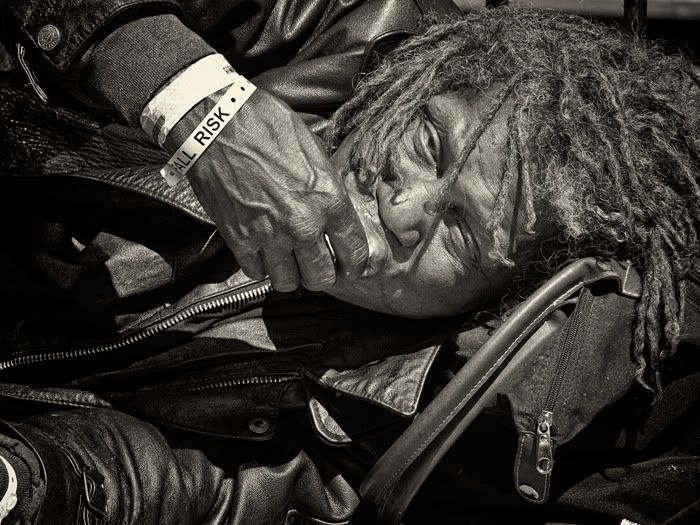
I photographed this poor soul just a few blocks away from Roosevelt hospital, on Manhattan's West Side. Judging by the hospital bracelets on his wrist, he'd obviously been newly discharged. The bracelet warning of his being a fall risk resonates in any number of ways, coming to metaphorical fruition probably within hours of his leaving the hospital.

Patients dealing with multiple sclerosis, or any serious incurable illness, are far too well acquainted with the notion of risk. From the moment of our diagnosis we are bombarded by a befuddling array of new and frightening information and faced with making with grave choices, all of which entail varying degrees of risk. I vividly remember the day of my diagnosis, when, with my head spinning with fear and confusion, I was handed a pile of videotapes and told to go home, watch them, and choose my treatment option. I felt as if I'd been handed citizenship papers to a world in which I never wanted to be part of and for which I had no roadmap or experience to draw on.

My reaction to being confronted with this new path, riddled with pitfalls and landmines, was to intensely educate myself as best I could. I quickly learned that every choice confronting the MS patient is fraught with risk. Doing nothing is obviously risky. There is a reason they call MS a progressively disabling disease. It progresses. The existing mainstream treatment options all carry some degree of risk, ranging from relatively minor flulike symptoms all the way to ghastly and deadly brain infections, and many of these drugs are of questionable efficacy at best.

Now, CCSVI has entered the picture. What at first seemed like a relatively simple hypothesis, with a relatively simple solution, has turned out to be more complicated than most expected. Instead of arcane and impossible to understand ideas about autoimmunity, many of which sound like bullshit because they very likely are, CCSVI postulates that MS is the result of disrupted blood flow through the central nervous system, a relatively easy idea to wrap your brain around. Likewise, its treatment, the opening of blocked veins through a minimally invasive procedure also seems relatively simple when compared to traditional MS therapies, all of which ominously tinker with the workings of the infinitely complex human immune system.

Unfortunately, things are turning out to be not quite as simple as first hoped. As research into CCSVI has picked up, we've been confronted with a sea of sometimes contradictory findings. The CCSVI treatment procedure itself is a work in progress, with many treating physicians reporting a surprisingly steep learning curve required to master the procedure. The techniques being used are undergoing constant refinement, with no standard of practice fully agreed upon by all of the physicians currently involved in treating CCSVI.

Please don't misunderstand me, I fully believe that there is merit to CCSVI, and that its treatment has the potential to help a significant portion of the MS population, but once again, in considering whether to undergo CCSVI treatment, the MS patient is confronted with the weighing of risk. Not all patients are helped by treatment, and those that are helped often find the benefits they receive only temporary, requiring them to undergo multiple procedures to maintain their perceived gains. A small percentage of patients suffer potentially serious side effects, including blood clots and the formation of scar tissue in their veins. There's also the cost of the procedure to consider, which can be substantial if not covered by insurance, the expenditure of which brings no guarantee of success.

It's vital that every MS patient considering any new treatment to honestly tally their own unique risk/reward calculation, and the only way to properly do this is to self-educate with all blinders off. When it comes to making decisions as vital and controversial as to when and whether to undergo CCSVI treatment, I've often found more value in listening to and understanding the opinions of those you don't agree with than to those you do. A truly well-informed patient should be intimately familiar with both sides of every argument regarding their own care and treatment.

Click here for part three…

Enhanced by Zemanta

Sunday, July 17, 2011

A Patient's Perspective on CCSVI, in Words and Pictures (Part One)

On July 15, 2011 I was honored to give a presentation at the Patient Information Day of the Second Annual CCSVI Update Symposium, held at the Crowne Plaza Hotel in Times Sq., New York City. The organizer of the symposium, Dr. Salvatore Sclafani, asked me to write an essay for oral presentation on "A Patient's Perspective on CCSVI", using some of the photographs taken from my wheelchair mounted camera to illustrate my talk. This was a challenging proposition, since none of my photos were taken with MS or CCSVI in mind, but the presentation turned out well, and I was not pelted with rotten vegetables or garbage, as I feared. I'll post the resulting essay here in four parts, spaced a few days apart. Here's part one:

clip_image002

This photo is of an abandoned structure on the Manhattan side of the Hudson River, known as the 69th St. Transfer Bridge. Built in 1911, during its heyday, when Manhattan's Riverfront was teeming with industrial activity, the structure was used to transfer railcars onto barges for trips to freight ships or across the Hudson to rail lines in New Jersey. It is now listed on the National Register of Historic Places.

I've long found this derelict structure to be captivating, and have often felt a sort of kinship towards it. Like me, the transfer bridge once stood tall and strong, hard-working, perfectly in sync with the beehive of action that surrounded it. Now wrought immobile by rust and decay, the transfer bridge is a stubborn old beast, still able to grab attention in spite of its diminished state.

Like many of my MS brothers and sisters, I too can no longer function as I once did. Instead of rust doing its insidious damage to the hard steel of the bridge, a mysterious disease process now does ongoing injury to the all too soft tissues of my central nervous system, creating neurologic deficits that in eight short years have left me spending much of my time sitting in a wheelchair. But, like this structure, I too refuse to go quietly into the night, and hope, through words and images, to at the very least give voice to the stresses, frustrations, and emotions that come part and parcel with having a progressively debilitating chronic illness. In my fellow patients, I've met countless individuals whose guts, courage, and spirit inspire me, and whose determination to live fulfilling lives in spite of the disease should serve as lessons to us all, sick and healthy alike.

Of course, this photo not only depicts the long abandoned transfer bridge, but also rays of sun light bursting through a threatening cloud bank, daggers of illumination cutting through a potential source of gloom. These rays of light are akin to Dr. Zamboni's CCSVI hypothesis, giving hope to a patient population searching so desperately for answers. Despite the incremental advances made in treating the disease over the last decade or so, MS has remained a maddeningly elusive target, its victims left to choose among an array of drugs which, in varying degrees, all carry with them the risk of serious downside, and none of which offers a cure.

The source of hope called CCSVI has burst through this haze of confusion and energized MS patients worldwide, like starved seedlings suddenly exposed to a sunny day. Although still early in the game, the very promise of CCSVI has beckoned patients to organize and educate themselves, and to ask questions that were in dire need of asking.

By shaking up the status quo, CCSVI has already won a tremendous victory, and the hope it has given to many is nothing short of a blessing. But in assessing the full impact of CCSVI, we must also be careful not to be blinded by these same bright rays of hope, as investigations into CCSVI, and the methods to treat it are still in their infancy, and the full impact of the hypothesis has yet to be determined. Certainly, we have seen the CCSVI treatment procedure help many patients, sometimes dramatically, but we have also seen it be less than effective for a substantial number of those who have undergone it. In fervently desiring CCSVI to provide answers for all, we must guard against hope eclipsing reason, and understand that there is still much to be learned.

Click here for part two

Enhanced by Zemanta

Wednesday, July 13, 2011

Video: CCSVI Doctors Roundtable Discussion

Drain the Brain

Image by Beveik Rimtas via Flickr

Sorry that things have been so slow around here for the last week or so, but I've been busy preparing to give a live presentation at the Patient Education Day at the Second Annual CCSVI Update Symposium, to be held this coming weekend at the Crowne Plaza Hotel in Times Square, Manhattan (click here for details). Dr. Salvatore Sclafani, who is hosting the symposium, asked me to put together a presentation including some of my photographs for an essay on "A Patient's Perspective On CCSVI".

Dr. Sclafani is an innovative CCSVI practitioner as well as an extremely accomplished amateur photographer himself, so I was honored by his asking me to participate. Have no fears (as if), those of you who can't attend the symposium will be able to catch the presentation right here on Wheelchair Kamikaze, as I'll post the photos and words I wrote to accompany them as a series of entries on the blog.

In the meantime, here's an incredibly informative video, recorded this past March at the annual Society for Interventional Radiology meeting in Chicago. A CCSVI Doctors Roundtable Discussion was presented, which included some of the biggest names in CCSVI engaging in a lively talk which covered a broad spectrum of the issues involved with the investigation and treatment of the condition. The Roundtable, sponsored by the CCSVI Alliance (click here), offers a comprehensive and evenhanded view of many of the hot topics surrounding CCSVI. Hearing the information coming straight from the doctors’ mouths is absolutely invaluable, and the presentation is packed with highly relevant info.

The video is quite long, about one hour and twenty minutes, and was recently edited by yours truly in my capacity as a member of the Alliance's Patient Advisory Board. It is must-see viewing for anybody interested in CCSVI, even if watching the complete presentation requires multiple sittings. (Note: Those readers who receive this blog by e-mail will need to visit www.wheelchairkamikaze.com to view the video)

Enhanced by Zemanta

Sunday, July 3, 2011

Finally! Canadian Government Decides to Fund CCSVI Treatment Trials…

Education in Canada

Image via Wikipedia

In a surprise move, the Canadian federal government has reversed its previous decision, and decided to fund CCSVI treatment trials on MS patients (click here). Just last year, government officials decided against funding such trials, citing a lack of evidence that a clear link existed between CCSVI and MS. Now, a working group of scientific advisors, after reviewing already published research in addition to the preliminary data from the seven ongoing studies funded by the MS societies of Canada and the USA, has concluded that there is enough evidence of a relationship between the vascular abnormalities collectively known as CCSVI and Multiple Sclerosis to warrant federally funded treatment trials (click here).

This is extremely welcome news to MS patients worldwide. Although treatment trials won't answer many of the scientific and medical questions surrounding the CCSVI hypothesis, such trials will determine whether catheter venoplasty, when used to open blocked veins and improve impeded bloodflow through the central nervous system of MS patients, results in an improvement of symptoms and/or a slowed progression of the disease. While academic questions such as cause and effect ultimately must and will be answered, the most pressing issue for MS patients themselves is whether or not getting treatment for CCSVI will improve their symptoms and lessen the long-term impact their potentially crippling disease.

What's of primary importance now that a mandate has been given to commence treatment trials is the design of those trials and exactly which treatment protocols will be used on the patients enrolled in them. Over the last 18 months we've learned that treating CCSVI is far less simple than was originally thought, and the physicians most experienced in the treatment of CCSVI are in unanimous agreement that the learning curve involved with perfecting the technique is steep, and the methodologies used are still a work in progress. The fact is that many of the treating physicians use quite disparate treatment protocols, and there is no clear consensus on best practices and a standardization of treatment methodology.

As CCSVI treatment has thus far been unavailable in Canada, there is an absence of Canadian physicians experienced in the treatment procedure. I trust that the scientists involved in the Canadian trials are fully aware of such issues, and that the physicians who will be performing the treatment procedures will undergo training at the hands of the experienced physicians outside of Canada who have been blazing the trail in performing what is still an experimental procedure. It's vital that these trial procedures be done using the latest and most effective techniques, as sub-optimal procedures will lead to sub-optimal results, which would be disastrous for the advancement of the science, and could easily lead to false conclusions about the effectiveness of treatment.

I would expect that the Canadian trials will not only demonstrate whether CCSVI treatment is effective, but, if it is, which symptoms are most impacted by improving venous blood flow, and which patient populations stand to most benefit from CCSVI treatment. MS is an extremely heterogeneous disease, with no two patients experiencing the malady quite the same way. A recent study (click here) by a CCSVI treatment practice in Poland found that patients most likely to benefit from CCSVI treatment are younger females (under the age of 30) with Relapsing Remitting Multiple Sclerosis, who have had the disease for relatively short amount of time and have not yet experienced severe mobility issues. Keeping in mind that the study was based on a relatively small sample size (47 patients), and the long-term effects of successful CCSVI treatment are still unknown, such data does make some sense in the context of what is known about MS pathophysiology, especially once the disease moves from its relapsing remitting form into its progressive stages.

Recent evidence has provided tantalizing clues that suggest that the progressive stages of the disease may be driven by an abnormal immune response contained entirely within the central nervous system, in a sense approximating a rogue immune system that operates separate and apart from the systemic immune system at work in the rest of the body (I'll blog about this in the near future). The implications of these findings, if correct, are profound, and would suggest that once the disease enters its progressive stages, treatments that are effective in RRMS, even CCSVI, may be rendered useless, as they do nothing to address an aberrant immune response that is contained entirely behind the blood brain barrier, operating independently and completely unto itself.

Be that as it may, the MS community on the whole should loudly applaud the Canadian government for taking the bold if belated step of federally funding vitally important CCSVI treatment trials. At the very least, such trials will pry scientific attention away from its current togmatic insistence that MS is strictly an autoimmune disease confined only to the central nervous system, and see it as a systemic problem with physical implications reaching beyond the brain and spinal cord. For far too long the autoimmune model of the disease has ruled the day, generating billions of dollars of profit as it turned the treatment of Multiple Sclerosis a hugely lucrative business, while at the same time generating tangible but limited benefits to patients suffering from the disease. Let these Canadian trials be a huge step towards a new understanding of the MS, one that will lead to its final eradication and an end to the suffering of millions of patients worldwide.

Enhanced by Zemanta

Tuesday, June 21, 2011

CCSVI and MS: Cause, Effect, or Neither?

BRISTOL, UNITED KINGDOM - MARCH 10:  Nicole Br...

Image by Getty Images via @daylife

It's now been over 18 months since the news of Dr. Zamboni's vascular theory of MS, the CCSVI hypothesis, first made its way into the consciousness of the greater Multiple Sclerosis patient population. Touched off by news reports on Canadian television channel CTV, an inferno of hope raced through MS patients worldwide, and a firestorm of controversy regarding almost every aspect of the hypothesis was ignited, a conflagration that seems to only burn more intensely with each passing week. The relatively simple CCSVI hypothesis (which postulates that blockages in the veins draining the central nervous system lead to or contribute to the MS disease process) has managed to pit physician against physician, physician against patient, and patient against patient. While the various factions duke it out, an estimated 15,000-20,000 MS sufferers have undergone CCSVI venoplasty, with a wide variety of resulting outcomes, ranging from dramatic benefit to no benefit whatsoever to, in rare cases, a worsening of disease symptoms.

Several key questions have emerged regarding CCSVI during the last year and a half, primary among them whether or not CCSVI and MS have any link whatsoever, and if so, whether the venous anomalies collectively known as CCSVI are the cause or an effect of the disease. We've seen a steadily increasing flow of CCSVI research results, providing enough conflicting data to fuel all sides of the argument. As with all things Multiple Sclerosis, CCSVI presents a complex picture, and despite evangelical believers/nonbelievers on all sides of the squabble, at present the ultimate outcome of the CCSVI conundrum is as clear as mud. Here then is a brief look at some of the issues currently being batted about, with some small attempt on my part to make some sense of it all.

My personal belief is that CCSVI and MS do indeed have a relationship, at least in some MS patients. However, I acknowledge that my opinion is based primarily on anecdotal evidence, and anecdotal evidence alone is not enough to state anything with scientific certainty. Despite the insistence of many in the CCSVI advocacy community, the link between CCSVI and MS has not yet been established with evidence that measures up to the scientific standard. On its face, the basic premise of CCSVI, that restricted blood flow through the central nervous system, caused by vascular abnormalities that are very likely congenital, slowly cause damage to the CNS over the course of decades, eventually becoming significant enough to result in a clinical diagnosis of Multiple Sclerosis, seems simple and makes perfect sense. Yet upon closer inspection, the picture is not quite so clear-cut.

There have been several very convincing studies demonstrating that venous abnormalities now known as CCSVI occur more often in MS patients, and even in patients with other neurologic diseases, than in healthy control subjects. Conversely, there have also been quite a few studies disputing this. Almost all of these studies, pro and con, have relied on noninvasive imaging techniques (Doppler ultrasound or MRV) to ascertain the presence of these abnormalities. Unfortunately, neither of these noninvasive imaging techniques has proven to be entirely accurate, though Doppler ultrasound, in the hands of a skilled and well trained technician, does appear to be the more reliable of the two techniques. Still, we have research groups reporting widely divergent findings, and some of that divergence could possibly be attributed to the relative inaccuracy of the diagnostic methods being utilized.

Complicating matters further is the fact that human venous anatomy, with a few exceptions, has been very little studied. So little, in fact, that no clear-cut definition of "normal" exists when it comes to the anatomy of the veins that drain the central nervous system. It had previously been assumed that since the veins in question had so many built-in redundancies, any blockages encountered would be easily compensated for. While the Interventional Radiologists performing the CCSVI treatment procedure are reporting that the overwhelming majority of MS patients are indeed displaying a large number of venous abnormalities, we cannot state with any certainty that a significant portion of the healthy population does not also present with such abnormalities.

What are desperately needed are trials using catheter venography to ascertain the prevalence of CNS venous abnormalities in healthy control subjects. However, there are some ethical questions involved in performing this minimally invasive procedure simply for research purposes. Although the risk is low, catheter venography, like any invasive procedure, does carry with it the potential for dangerous complications, and the prospect of exposing healthy subjects to these risks has inhibited such studies from taking place. Until it can be established beyond dispute that vascular abnormalities in the jugulars, azygos, and other veins that drain the CNS are more prevalent in MS patients than in the general population, the question of the CCSVI/MS relationship will not be put to bed.

Let's assume, though, based on the anecdotal reports, that there is a connection between CCSVI and MS. The big question then becomes whether CCSVI is the cause of the disease, or an effect of the Multiple Sclerosis disease process. Again, there is enough conflicting data to support both sides of the argument.

Those who support CCSVI as the cause of MS site several compelling reasons for their belief. One of these is that many of the abnormalities being seen in the veins of MS patients, such as anomalous membranes and fused valves, appear to be congenital in nature, that is, patients have had them since birth (click here). If these defects are congenital, and occur in greater preponderance in MS patients than the healthy population, it would seem reasonable to assume that they play a causative role in MS disease etiology. Another argument in favor of CCSVI as the cause of MS is the growing body of evidence that suggests that nervous system tissues in MS patients are damaged before the immune system comes into play (click here for one such study), findings that would seem to contradict the prevailing theory of MS, the "autoimmune theory". The autoimmune theory states that, for reasons unknown, the immune systems of MS patients go rogue and start attacking the patients' own central nervous system tissues. If some studies done within the last decade are correct, and CNS damage occurs before immune system involvement, this would apparently discredit many of the basic assumptions of the autoimmune theory, and CCSVI provides an explanation as to how this damage occurs.

While I've long held the autoimmune theory in contempt, and I'm convinced that the aberrant immune response seen in MS patients is a symptom of some larger underlying and as yet undiscovered cause, I'm not sure that cause is CCSVI. While the CCSVI hypothesis does in some ways elegantly account for some of the mysteries surrounding MS (the venocentric nature of MS lesions, the reduced volume of blood flow through MS brains, etc.), it does not account for several of the more confounding aspects of the disease. It's difficult for CCSVI to explain the geographical distribution of the MS population, which sees a far greater prevalence of MS the further away one gets from the equator (click here). Related to this geographic distribution, CCSVI also can't explain some of the migratory observations made in regard to disease prevalence (click here). When a person below the age of 15 migrates from an area of higher disease prevalence to one of lower prevalence, they take on the characteristics of their new home. When the migrant is over the age of 15, though, they retain the propensity for the disease of the area they migrated from. In other words, a person under the age of 15 migrating from Maine (high prevalence) to Florida (low prevalence) has the same low chance of getting the disease as a Florida native. However, older migrants retain the higher chance of getting the disease seen in Maine. Furthermore, children of these older migrants, born after the move south, take on the same lower chance of developing MS as children born to the native population.

Similarly, CCSVI cannot account for the existence of "MS clusters", which are small concentrations of population in which MS appears to be epidemic (click here). The most famous of these clusters is in the Faroe Islands, an island group situated between the Norwegian Sea and the North Atlantic Ocean. Prior to World War II, MS was virtually unknown among the native islanders. During World War II, the British, who have a high incidence of MS, occupied the island, and subsequent to this occupation, MS has become epidemic among the native population. Another such cluster was recently identified in a small town in Ohio, where over two dozen MS cases were discovered within a six block radius.

The geographic and migratory components of MS epidemeology, as well as the existence of MS clusters, are heavily suggestive of an environmental (infectious or toxic) element to the MS disease process, and indeed, recent studies have linked several viruses, most of them in the herpes family, to MS. Just within the last week or two, a study out of Taiwan, which looked at hundreds of thousands of subjects, found that people suffering an outbreak of shingles, a painful skin condition caused by the varicella zoster virus (which also causes chickenpox), are three times as likely to develop MS within the year as those who didn't suffer from shingles (click here). Likewise, the Epstein-Barr virus has also been cited as a possible infectious trigger of the disease, with some scientists stating that if a patient isn't infected with EBV, they won't get MS (click here).

Another potential problem with CCSVI as the cause of MS is the inflammatory patterns seen in patients afflicted with the disease. According to CCSVI theory, disrupted blood flow through the CNS creates damage and inflammation to the cells contained within, through a variety of possible mechanisms. This would lead one to expect that the longer the condition persisted, a patient's levels of inflammation would slowly increase over time, in a steady upward slope. However, in reality, RRMS patients see their greatest amount of inflammation early in the disease, during its relapsing remitting stage. Once the disease moves into the progressive stage, and RRMS turns into SPMS (normally within 10-15 years when left untreated) inflammation levels decrease dramatically. Patients with PPMS, who start out with progressive disease, very often show very little signs of CNS inflammation. As a matter of fact, this lack of inflammation, seen as enhancing lesions on MRI images, is a hallmark of progressive disease. This is why anti-inflammatory therapies such as steroids generally have little effect on patients with progressive illness.

Of course, none of this directly contradicts the idea that CCSVI may play some causative role in the disease of some MS patients, but it strongly argues against the idea that CCSVI is the primary cause of the disease.

Some compelling evidence that CCSVI may be an effect of MS has been presented by several researchers, most notably Dr. Robert Zivadinov and the researchers at the Buffalo Neuroimaging Analysis Center. Although Dr. Zivadinov's findings have been savaged by some of the most fervent "CCSVI as cause" proponents, the totality of the research done under his direction does point to the possibility that at least some of the venous abnormalities now called CCSVI are a result of the MS disease process. Although Dr. Zivadinov's opinions only recently made headlines (click here), he in fact implied them in research presented in October, 2010 at the annual ECTRIMS (European Committee on Treatment and Research in Multiple Sclerosis) conference. One paper presented at that time demonstrated that the severity of CCSVI increases with the severity of Multiple Sclerosis symptoms experienced by patients, and with a more advanced disease course (click here). These findings were backed up by papers presented by researchers from Beirut (click here) and Italy (click here). Another study presented by Dr. Zivadinov found that subjects who presented with CCSVI had significantly more lesions and brain atrophy as measured by MRI than those MS patients without vascular abnormalities (click here). Yet another investigation presented by Dr. Zivadinov looked at the correlation between a gene implicated with MS, and CCSVI, and found that the data supported an association between MS disease progression and CCSVI separate from the suspect gene. The implications of these findings are that CCSVI could be a risk factor in developing the disease, or a result of the progression of MS (click here).

Additionally, it would seem to me that the high rate of restenosis in patients who have undergone CCSVI treatment venoplasty could also hint that CCSVI is more an effect rather than the cause of MS. Despite the wide range of treatment methodologies being employed, patients are still experiencing a re-narrowing of their previously unblocked veins far too frequently. This has been seen even in patients who have had stents placed in their veins, only to see their veins stenosing in areas not stented. If CCSVI were an effect of the MS disease process, one would expect to see repeated restenosis of the veins as that disease process continued to impact a patient's vasculature.

So then, what conclusion can be drawn? Is CCSVI the cause of MS, an effect of the disease, or does it have no relation to Multiple Sclerosis at all? My honest belief is that the answer could be all three, depending on the individual patient.

Multiple Sclerosis is a remarkably heterogeneous disease, meaning that it impacts different patients in vastly different ways. Across the wide spectrum of MS patients, the primary symptom of the disease may be fatigue, cognitive dysfunction, muscle weakness, spasticity, eye trouble, nerve pain, or any combination thereof. Some patients can have the disease for decades and show very little physical disability, while others find themselves in a wheelchair (or worse) in less than 10 years (sometimes much less). Some patients have a great many lesions and very little disability, others have few lesions but devastating disability. Confounding the issue even more, MS comes in several different flavors, from Relapsing Remitting to Primary Progressive, and evidence suggests that the disease process at work in progressive disease may be quite different than that underlying Relapsing Remitting MS.

Given such a wide array of disease presentations, and thus the likelihood that a variety of mechanisms may be at play, it could very well turn out that CCSVI plays no role at all in the disease of some patients, a more causative role in the disease of others, and could be an effect of MS in yet another patient population. Very likely the line between cause and effect may be quite blurred, with CCSVI playing an exacerbating role in a disease that almost certainly has, in addition to a vascular component, very strong genetic and infectious components as well. The mix may be dramatically different from patient to patient, and indeed, CCSVI may be THE major factor in the disease of some patients, but play absolutely no role in the disease of others.

This may be reflected in the breakdown of outcomes reported by some of the Interventional Radiologists doing the CCSVI treatment procedure. The most widely quoted is Dr. Gary Siskin, of Albany New York, whose group has done over 700 procedures. Dr. Siskin has found that one third of his patients experience dramatic improvements, another one third experience mild improvements, and a final one third experience no improvement whatsoever. Further complicating this equation is the definition of just what constitutes a dramatic improvement. For somebody who's most disabling symptom is fatigue, a lifting of that fatigue would undoubtedly be called dramatic. For somebody more disabled, like I am, a lifting of fatigue, while certainly welcome, would hardly be defined as a dramatic improvement.

As I stated earlier, clear as mud…

Enhanced by Zemanta