Monday, January 31, 2011

CCSVI (and Me) on the Radio, and an NMSS CCSVI Research Update

Logo of NPR News.Image via Wikipedia

Last October, a reporter from radio's version of Public Television, National Public Radio (commonly referred to as NPR), conducted a telephone interview with me about CCSVI. I came to her attention because of the many posts on CCSVI that have appeared on this blog, in addition to the fact that I'd undergone CCSVI treatment in March, 2010. A full list of my CCSVI posts appears in the left column of this website, under the heading "CCSVI Related Posts".

Originally, the NPR piece was supposed to air on November 1, but the air date was pushed back pending further research being done by the reporter, Gretchen Cuda Kroen. I was told the completed piece would run sometime early in 2011, but was never given a firm air date.

Low and behold, this morning my phone began to ring quite early, with friends and family reporting that they had heard me on the radio. As I have steadfastly sworn off the morning hours since MS forced my "retirement" from the working world, and I tend to rise at the crack of noon, I was happy to learn that the report was available on NPR's website (click here). I was quite honored to find that the other two interviewees in the piece are both highly distinguished physicians conducting very important research on CCSVI, Dr. Robert Fox of the Cleveland Clinic, and Dr. Robert Zivadinov of the Buffalo Neuroimaging Analysis Center. All I did was have a catheter snaked through my jugulars...

Just a few comments on the report…

While it's fantastic that CCSVI is finally getting some media attention here in the United States, I think the report overstated some of the hazards involved with undergoing CCSVI venoplasty. It talks about "several patients" dying from blood clots resulting from the use of stents in their jugular veins. In truth, we know of one patient who died of an aneurysm most likely brought on by the anticoagulant drugs she was put on post procedure, and another who did die from a clot that developed in an implanted stent. The use of stents in treating CCSVI has come to be a cause of concern to many of the doctors currently doing the CCSVI venoplasty procedure, and many, if not most, are now primarily using balloon venoplasty in treating patients. Thus far, no patient deaths have been attributed to balloon venoplasty, although cases of thrombosis (clotting) and restenosis (surgically opened veins collapsing once again) are acknowledged problems.

The piece quotes me as saying that I wished I had waited for more research to be done before undergoing the procedure. While this is true, it is not due to safety concerns, but rather to the fact that mine is a complicated case, and the techniques being used to treat CCSVI are in a constant state of evolution. Procedures being done now are much different than those done only six months ago, and those done six months from now will without doubt be all the more sophisticated. This is why I've recommended in previous posts that patients with milder and less aggressive disease might want to consider holding off on getting the procedure done, because their chances of longer lasting success will certainly increase with time. I do agree with the piece's warnings about medical tourism, because many patients have indeed spent large sums of money, and traveled many thousands of miles, only to find that if they did get benefit from the procedure, it was unfortunately temporary. It's also important to remember that a substantial number of patients do not get any benefit at all from the procedure, and expectations must be kept realistic.

One factual error included in the piece is that Dr. Zivadinov believes that the venoplasty procedure is unsafe, which is clearly not the case. His research group at BNAC is currently conducting a treatment trial which recently increased the number of patients included, a strong indication that he does not consider CCSVI treatment as prohibitively dangerous. I contacted a representative from BNAC, and they assured me that Dr. Zivadinov in no way intended to infer that CCSVI venoplasty is a hazardous undertaking.

It would've also been nice to have heard from a patient who, unlike me, had experienced real benefit from CCSVI treatment, as many have. Since the piece is only 5 1/2 min. long, I'm sure the reporter was limited in what she could pack into it, and we all know that a full discussion of CCSVI and its related issues could only properly be covered in a much longer exploration. Hopefully, this report will be the tip of the iceberg, and will spur the rest of the US media to finally start doing its job, and get quality information out to the public at large. The mainstream media's complete silence on this issue has been egregious, but I wouldn't hold my breath in anticipation of an onslaught of reporting.

In other CCSVI related news, the National Multiple Sclerosis Society released its first six month report on the CCSVI trials it funded this past summer (click here). Though the report does not contain any trial results, it does provide much information on the nuts and bolts of the projects funded. Although it's unfortunate (in my opinion) that none of the NMSS funded projects is a treatment trial, it is encouraging to read that many of the researchers involved have undergone training in the specific methods used by Dr. Zamboni to detect CCSVI, and have acquired the specialized equipment required to do so. I look forward to the Society's next research update six months from now, which hopefully will include some of the initial data being gleaned by these studies.

Enhanced by Zemanta

Friday, January 28, 2011

Latest MS Drug News; Much of It Bad…

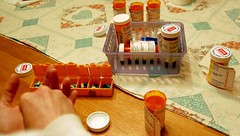
Prescriptions Galore

Image by mtsofan via Flickr

There’s been a spate of news in the last two weeks regarding existing and proposed MS drugs, much of it on the negative side. Several drugs have been rejected by the European regulatory agencies, and another has seen the specter of its deadly side effects continue to rise.

Although much maligned by the MS activist community, many of the drugs prescribed for MS have in fact improved the quality of life for many of the patients taking them. Although exorbitantly expensive, not targeted at the root cause of the disease (which remains unknown), and of help to only a portion of the MS population, the approved drugs have been shown to reduce the rate of relapses in some RRMS patients, though there is much question over whether they actually slow the insidious progression of the disease.

The injectable CRAB drugs (Copaxone, Rebif, Avonex, and Betaseron) have been demonstrated in clinical trials to significantly reduce relapse rates in about one third of patients taking them. Copaxone has a relatively mild side effect profile, but the other three compounds, all forms of beta interferon, often make those taking them suffer flulike symptoms for a day or two after dosing. For the patients in whom they work, though, a significant drop in relapse rates can substantially lessen the impact of the disease on their lives. Unfortunately, after over a decade of use, it's still not clear whether or not these drugs have any influence on the progression of disability. A recent report out of Great Britain challenged the notion that the CRAB drugs positively impact progression (click here), but other studies (click here, here, and here) seem to support the claim that these drugs do at least something to slow progression.

A newer generation of MS drugs, including Tysabri, Rituxan, and the recently approved (by the FDA) Gylenia offer a marked uptick in efficacy in both the reduction in relapse rates and MS symptoms, as well as the proportion of the patient population for whom they are beneficial . Unfortunately, along with this increased efficacy comes an increased severity in their potential side effects, which can include deadly brain infections and cancer. These drugs, too, do nothing to address the underlying cause of MS, and work by profoundly altering the workings of the very complex and little understood human immune system, the consequences of which, over the long-term, have yet to be seen. Still, the sometimes dramatic improvements experienced by some patients taking these drugs have led many to be extremely reticent to give them up. In the case of Tysabri, I personally know several patients who, after several years on the drug, have tested positive for the virus that causes PML, a ghastly brain infection, but still refuse to come off Tysabri because of the positive impact it has had on their lives.

Unlike some other MS voices on the Internet, I'm unwilling to label the current crop of MS drugs "snake oil", simply because of the positive influence they do have on the lives of many patients. Certainly, they do nothing to cure the disease, and I do doubt their ability to significantly impact the progression of MS, but I know of enough patients whose lives have remained relatively productive in large part due to these medications that I can't help recognize their value. The actual financial cost of these drugs is mind-boggling, with the price of the newly approved Gylenia (the first oral medication approved for MS) coming in at almost $50,000 per year, and I abhor the fact that MS has been turned into the goose that continues to lay the golden egg for many pharmaceutical companies, but the apparent positive effect of these compounds shouldn't be ignored. Before the introduction of the CRAB drugs, MS was known among physicians as a "diagnose and adios" disease, one with very little that could be done to combat it. The advent of these drugs, no matter how flawed they are, has at least put some arrows in the quiver of those trying to fight MS.

Unfortunately, all of the drugs currently approved for MS have only been shown to work on patients suffering from the relapsing remitting form of the disease; those of us suffering from the progressive forms remain shut out from any even nominally effective treatment. Very few drugs have even been trialed for use on progressive MS patients, but recently at least some attention has been turned to the plight of those suffering from SPMS and PPMS (click here).

Okay, enough of my bloviating about the current state of MS drugs. Here's a rundown of the latest news regarding MS pharmaceuticals. The fact that many of the articles linked to come from financial websites speaks volumes as to the sad state of affairs regarding MS as Big Business:

  • Biogen, the makers of Tysabri, released its monthly report on the rate of PML (a devastating brain infection) in patients taking the drug (click here). When first starting Tysabri therapy, patients in the United States are enrolled in what's called the TOUCH program, designed to carefully track them for signs of the infection. The risk of PML infection as a result of Tysabri therapy has long been touted as 1000:1. The statistics released earlier this month show that the infection rate for patients taking Tysabri for less than two years falls well within that figure, but starts to rise dramatically once patients surpass the 24 month mark. The incidence of PML in long-term therapy is now stated at 2.13 per 1000, and the trend suggests that the longer patients are on Tysabri, the higher their risk of infection. After first being introduced in 2005, Tysabri was quickly withdrawn from the market when the threat of PML became known. It was reintroduced in the second half of 2006; therefore, the majority of patients taking it have yet to reach the "danger zone". As I stated previously, many patients are loathe to stop Tysabri after experiencing sometimes dramatic relief from their MS symptoms while on the drug. As the PML count increases, many patients now on Tysabri will have to grapple with some very difficult decisions.
  • The European Medicines Agency’s (EMA) Committee for Medicinal Products for Human Use (CHMP) recommended against the approval of the oral drug Fampyra (click here), which in North America is called Ampyra. Ampyra, approved by the FDA in 2010, is the only drug thus far approved strictly for the symptomatic relief of MS. The compound increases walking speed in approximately 1/3 of the patients who take it. Some patients on Ampyra also report an overall increase in muscle strength. In recommending against the drug, the CHMP said that it "was not convinced that Fampyra’s small effect on the walking speed was a meaningful benefit for patients. The effect on speed could not be linked to meaningful improvements such as better coordination, balance or stamina or increased range of action. The Committee was of the view that the medicine’s uncertain benefits did not outweigh its side effects which included pain, dizziness, paraesthesia (unusual sensations like pins and needles) and problems with balance, as well as symptoms similar to those of multiple sclerosis that could impair the patient’s ability to walk. The Committee also noted the lack of adequate long-term data on the medicine’s benefits and safety as well as data on some groups of patients, such as the elderly and patients with epilepsy or heart problems. The CHMP concluded that the benefits of Fampyra did not outweigh its risks and recommended that it be refused marketing authorisation."
  • The CHMP also recommended against the approval of the experimental oral MS medication Cladribine (click here), marketed by the giant drug company Merck. Cladribine has been used in IV form as an anticancer agent since the mid-1990s, with known possible severe side effects. Reformulated in an oral form and named Movectro, the drug went through a full trial regimen for use in RRMS patients, and was shown to reduce the rate of MS relapses and possibly impede the speed of disease progression. In deciding against the drug, the CHMP had concerns about the medicine’s safety. "An increased number of patients with cancer were observed in trials with Movectro, which may indicate an increased risk of cancer over time and with increasing doses. The Committee also noted that the benefits and the most appropriate dosage for treatment had not been fully established in patients who were expected to use the medicine. Therefore, at that point in time, the CHMP was of the opinion that the benefits of Movectro did not outweigh its risks and recommended that it be refused marketing authorisation." The drug will be up for FDA approval later this year, and it will be interesting to see if the FDA follows their European cousins’ decision.
  • The CHMP recommended for the approval of the oral MS drug Gylenia, formally known as Fingolimod or FTY 720 (click here). This drug has already won approval from the FDA, and should be hitting the market sometime in the first half of this year. Gylenia is a powerful drug that greatly alters the workings of the human immune system. The compound traps the immune system's T cells in the lymphatic system, thereby keeping them out of not only the central nervous system, but the rest of the body as well. As one neurologist told me, "Tysabri keeps the cops out of a certain neighborhood, but Gylenia keeps them locked in the police station". While many patients relish the thought of giving up their injections or monthly infusions for the simplicity and pain-free action of taking a daily oral tablet, the mechanism of this drug should give pause. Though it has not yet reached the market, it is believed that neurologists will initially be quite careful in prescribing the drug. Interestingly, Gylenia is being tested as a possible neuroprotective agent, so the drug may have a double-barreled effect. It would be wonderful if science could isolate Gylenia's neuroprotective properties and develop a compound that shields nerve cells from the MS disease process, but that development seems far off in the future.

As an MS patient, I find it incredibly frustrating that millions upon millions of dollars are being spent researching, developing, and marketing pharmaceutical compounds that do absolutely nothing to actually cure the disease, but in effect turn patients into indentured servants of Big Pharma. Unfortunately, our medical research model has evolved into a highly dysfunctional beast, one which all too often ignores real patient benefit in favor of the possibility of huge financial gain. The aberrant immune reaction seen in MS is essentially a symptom of an as yet undiscovered disease cause. If even a fraction of the research dollars spent by Big Pharma on drugs designed to suppress or modulate the immune system were instead spent on finding this unknown cause, we might actually be on the road to a cure for this damned disease.

One can only hope that the beliefs of the most fervent CCSVI advocates hold forth, and vascular abnormalities do prove to be a vitally important part of the MS disease process. At the very least, may investigations into CCSVI finally wrench the focus of MS research away from the concept of autoimmunity and onto a model of MS as disease in which an immune system gone awry signifies greater ills still hidden, and at long last brings those hidden ills to light.

Can I get an Amen?

Enhanced by Zemanta

Monday, January 24, 2011

Video of Dr. Michael Dake's CCSVI Presentation at Brandeis University

On January 10, 2011 the CCSVI Alliance sponsored a presentation by Dr. Michael Dake of Stanford University entitled "CCSVI and the MS connection". The event was held at Brandeis University, in Waltham, Massachusetts.

Dr. Dake was the first Interventional Radiologist in the United States to treat MS patients for CCSVI. On January 10, he presented a broad overview of the evidence supporting a connection between the vascular abnormalities collectively known as CCSVI and Multiple Sclerosis. His presentation was followed by an informative question-and-answer session with the audience.

I'm on the Patient Advisory Board of the CCSVI Alliance, and, since I made my living in the TV and video business before MS forced me to "retire", I edit most of the videos that the Alliance sponsors. Below are videos of Dr. Dake's presentation, which I think you'll find quite interesting and informative. The video is broken into two parts, each about 10 minutes in length. The first includes highlights of Dr. Dake's prepared presentation, and the second is comprised of the question-and-answer session that followed.

Please check out the CCSVI Alliance's website (click here) for more videos and comprehensive information on all things CCSVI.

Part One:

Part Two:

Saturday, January 15, 2011

Bits and Pieces: Including NMSS Neuroregeneration Webcast Recap

A female RCMP officer riding a horse at the 20...

Image via Wikipedia

Well, it's time for another edition of Bits and Pieces, my semi regular compilation of various items, mostly related to MS, which have recently caught my attention. First though, a quick note about some housekeeping I was forced to do here on Wheelchair Kamikaze.

Due to an onslaught of spam being left in the comments section of older posts, I've been forced to institute the "post moderation" option made available by Blogger, the host of this site. In plain English, this means that all comments left on older posts will have to get my okay before they are officially posted to the site. I resisted this option for a long time, primarily because I don't believe in censoring anybody's opinions, but also because I'm too damn lazy to have to okay every comment left on older posts. Unfortunately, the spamming efforts of one organization hawking CCSVI testing and treatment have forced my hand. This organization, The CCSVI Clinic (click here), was recently cited as being a something of a scam in the Canadian press (click here).

UPDATE: I've been in contact with the CCSVI Clinic, and I've been assured that the spamming is not coming from anywhere within their organization. They are actively trying to find the source of this electronic harassment, and have recently been the victims of vandalism, slander, and hacking. Hopefully they will be able to resolve these issues quickly, and to their credit, the individuals I've spoken at the organization with have been forthright and genuinely helpful.

And now, on to our smorgasbord of Wheelchair Kamikaze delicacies…

· On 01/11/11, the NMSS held a one-hour webcast entitled "Repairing the Nervous System in MS: Progress and Next Steps". The webcast featured four experts in the field, and it is well worth watching the archived version, or reading the transcript, both of which are available on the NMSS website (click here). Much stimulating information was featured, including info on evolving strategies for stimulating the body's own resident stem cells to repair damaged nervous system tissue, as well as the use of adult and embryonic stem cells to affect these same kind of repairs. Also discussed were the efforts currently underway of developing drugs that will protect nerve cells from the damage that the MS disease process inflicts, and perhaps stimulate myelin repair. One such drug currently under development by Biogen blocks the protein Lingo-1 (click here), which inhibits the body's production of myelin. Phase 1 human trials of this drug are currently underway. Even if radical new approaches prove to be able to stop the progression of MS (say, like, CCSVI) the repair and regeneration of the nervous system will still be of primary importance, as stopping the progression of the disease alone will not restore function to patients with long-term nervous system damage.

Okay, that's the good news. The bad news is that the best case scenario for all of these wondrous developments is that they are at least 5 to 10 years away from being available to the general patient population, far too long for most of us to wait. Not only do trials and testing take time, but getting proper funding for large-scale trials is a daunting task. There is a gaping chasm in our medical research model between developing innovative treatments in the lab and bringing them to market, and this fault is so endemic to our system that it's often referred to as "the valley of death" by medical researchers. Organizations such as the Myelin Repair Foundation (click here) are feverishly trying to tackle this tremendous problem, but the simple fact is that the current research model is horrifyingly dysfunctional, which I wrote about extensively in a previous post (click here).

· It's long been known that MS attacks women in greater numbers than men. Actually, this is only true of Relapsing Remitting Multiple Sclerosis, as Primary Progressive MS attacks men and women in equal numbers. Regardless, new research into the genetics of the disease reveal that women are more likely than men to carry a gene variant associated with Multiple Sclerosis (click here). The study finds that women are 1.41 times more likely to have a MS related gene mutation in an area of the human genetic code linked to MS. Additional information (click here) showed that women are also more likely to pass the "MS gene" onto their female children, which further explains the female: male difference seen in the disease. It's thought that this gene variant is not naturally occurring, and rather comes about through an interaction with environmental factors. This change in genetic structure due to interaction with the environment is a relatively new discovery, and is referred to as epigenetics. Some of the environmental factors that might contribute to an MS gene mutation could be stress, diet, smoking, vitamin D exposure, or exposure to toxins or infectious agents. Interesting stuff…

· In this curious bit of news, a 53-year-old man admitted to dressing up as a Canadian Mountie as part of a sexual role-playing game (click here). Normally, although well worth reading, a news item such as this wouldn't warrant inclusion in Bits and Pieces, except that the first line of the article notes that the man is a Multiple Sclerosis sufferer. This isn't mentioned anywhere else in the piece, and I have no idea how it relates to this gentleman's predilection for donning the uniform of a Canadian law enforcement officer in an attempt to pick up men. He was caught in uniform three times, twice after taking his Mountie dressed self to police stations, on one occasion to drop off a box of doughnuts. Our MS stricken mock Mountie now faces the possibility of six months in prison. So, if there is a lesson to be learned here, it is that if by chance you find yourself strangely drawn to dressing like a character in Bullwinkle for the purposes of sexual satisfaction, don't use your MS as an excuse. It won't fly, at least not in Canada.

· In another odd bit of MS related news, an MS riddled human brain is being featured in an exhibit at a London art gallery (click here). A British member of Parliament was quoted as saying, "this is a disrespectful way to treat the human body and is unacceptable.” Many others simply commented, "yuck!" Personally, although I'm no art critic, I find it hard to understand how the brain of an MS patient could be considered a work of art, unless of course the lesions on that brain formed a portrait of Elvis Presley, in which case I'd want to buy it and keep it permanently displayed our dining room table. I'm pretty sure that Karen wouldn't let me, though…

· On a more serious note, a batch of alcohol pads possibly contaminated by bacteria was included in kits distributed to patients using the MS drug Copaxone (click here). If you are on Copaxone, or any injectable drug for that matter, please check to see that your alcohol pads were not manufactured by a company called Triad, or use any of these names on their packaging: Cardinal Health, PSS Select, VersaPro, Boca/ Ultilet, Moore Medical, Walgreens, CVS, or Conzellin.

· As many of you know, I'm an avid amateur photographer, and shoot with a camera mounted to the arm of my wheelchair (please see my photo gallery on the left column of this blog). Here's a very cool video made up of over 30,000 individual photos, shot with a technique called tilt shift photography, which involves the use of special lenses. The effect of this technique makes every day scenes look like they are parts of miniature dioramas, and this video of a day in the life of New York City is, to me at least, is the very definition of "eye candy". Thanks to my buddy Weeble for sending me this video…

Enhanced by Zemanta

Sunday, January 9, 2011

Live Webcast, "Repairing the Nervous System in MS: Progress and Next Steps": Tuesday, 01/11/11, 2 PM ET

The National Multiple Sclerosis Society is holding a live webcast on Tuesday, January 11, at 2 PM, focusing on the latest research efforts in neurorepair and neuroregeneration, two of the holy grails of MS investigation. (Click here for more info and to register)

This topic should be of extreme interest to all MS patients, regardless of your feelings about the NMSS, mainstream neurology, and CCSVI. Even in a CCSVI best case scenario, in which the hypothesis does turn out to be the primary cause of MS, damage done to the central nervous system will still need to be repaired to restore functionality to the patient once disease progression has been stopped. Damaged nerve cells rarely if ever repair themselves, so strategies for stimulating such repair are vital.

This webcast will feature the following panel of world-class MS researchers:

Dr. Peter Calabresi, Professor of Neurology and Director, Johns Hopkins MS Center, Baltimore, MD;
Protecting the nervous system from MS damage, novel ways to track repair

Dr. Ian D. Duncan, Professor of Medical Sciences at the University of Wisconsin, Madison;
Novel imaging technologies, transplanting cells to promote repair

Dr. Charles ffrench-Constant, Chair of Medical Neurology, University of Edinburgh, UK;
Transplanting repair cells and stimulating natural nervous system repair

Dr. Gavin Giovannoni, Chair of Neurology at Barts and The London School of Medicine and Dentistry,
Screening molecules for their protective properties and conducting clinical trials

As is noted above, some very interesting topics will be discussed, including the use of stem cells to stimulate nervous system repair.

(Click here) to find out what time the webcast will be held in your time zone. Choose "America/New York" in the "From Time Zone" window.

Enhanced by Zemanta

Wednesday, January 5, 2011

The Acorn and the Tree

mother and son

Image by 'PixelPlacebo' via Flickr

Before my diagnosis, I might have been the last person you'd have expected to not crumble under the relentless hammering of progressive Multiple Sclerosis. I was quite the neurotic, and although I'd made much progress in learning how not to be self-defeating (with the help of a few decades of therapy) and was able to function at a high level both socially and professionally, the inner Marc waged a perpetual battle at keeping my natural anxious tendencies in check. At work I was somehow always calm in a crisis, and perhaps this was a harbinger of how I'd react to a true personal calamity, but my emotional past was littered with quite a few messy episodes following heartbreaks and other blows to the ego. Whenever I would obsessively imagine myself getting a dire medical diagnosis, the scenario in my mind did not end well.

In puzzling over the contradiction between my expected emotional reaction at being confronted with a serious illness and the reality that has come to pass, I know that I grew up with a role model to whom I owe not only my relative emotional stability in the face of chronic illness, but also life itself: my mom. Mom developed type I diabetes while she was pregnant with me, and unlike most cases of gestational diabetes, my mom’s did not go away after she gave birth. At the age of 23, with her first (and, it would turn out, only) child as much of a handful as any infant, my mom also had to deal with a potentially life-threatening illness that not only required the mental toughness to make sweeping lifestyle changes, but to also give herself two injections of insulin a day. In fact, the disease changed the very act of birth itself, as due to her diabetes I had to be delivered by cesarean section.

My mom and dad divorced when I was three years old, and for much of my youth I often felt like it was me and mom against the world. My dad was always there for me, and I spent most weekend days and one evening a week with him, but in my day to day life it was Marc and mom, through sunshine and storm. I honestly don't think I ever saw my mom let her disease get her down; in her chest beats the heart of the lion (an occasionally goofy lion, but a lion nonetheless). Growing up, watching mom inject herself with insulin twice a day seemed no stranger to me than eating breakfast or getting tucked into bed. I remember often playing with mom's syringes, sans needles, taking them apart, using them as little squirt guns, and generally including them in my huge collection of toys.

My mom is a bit of a character, and soon after the divorce, we moved in with my grandmother and aunt, who were quite colorful in their own right. There are many adjectives that can be used to describe my family, but boring is definitely not one of them. My grandmother was 4'11" full of piss and vinegar, a chain-smoking scallywag with a well-earned gravelly voice and mischievous streak wider than she was tall. My aunt was (and still is) quite the fanciful character as well, ill at ease in the real world but exceedingly comfortable in an alternate reality filled with plot lines taken from long forgotten movies and flights of whimsical imagination that the little me found thrilling. In my aunt's world, almost anything was possible, from the power of magic incantations to the notion that a super robot was due to arrive at our little apartment by special delivery any day now, an illusion that I faithfully believed for several years, despite the fact that no robot ever showed up at our door. No matter, the anticipation of the robot was a thrill in itself. We might have been decidedly lower middle class, but I bet most of the kids on Park Avenue didn't spend several years in breathless anticipation that Gigantor (click here) was about to be their best friend.

As I grew older, life with mom did not always follow the path of least resistance. She remarried and we moved away from my aunt and grandmother, though they remained a large part of my life. Mom's second marriage, to a man I never really gave a fair chance, petered out after a few years, and once again it was just the two of us. During her second marriage, mom was felled by two diabetic comas, during which she was hospitalized for extended periods of time. Though I knew that mom was very sick, I was, at age 9 or 10, never told the gravity of her situation, which at times was quite dire. I vividly remember coming home for lunch one afternoon when I was in the fourth grade, on a day that mom had returned from the hospital after one of her coma episodes. When I walked in the front door, mom fell to her knees and hugged me close, sobbing. Despite the often tumultuous nature of our lives, and my mom's own hardships, I think that instance may have been the only time I ever saw my mother cry, and the tears she shed were those of joy. She had been so sick she that thought she was surely dying, and would never see me again.

I wasn't an easy kid to raise, my emotional maturity never keeping pace with my intellect, and among my host of quirks was an extremely well-developed case of hypochondria. If there was a Junior Olympics for young neurotics, I would have easily won the gold in the hypochondria competition. By the time I was 10 years old I had wrestled with several cases each of hepatitis, stomach cancer, leukemia, and in one very dramatic instance, after getting hold of a copy of the novel Papillion, a frightful bout of leprosy. I wasn't a kid who kept such fears to himself, either. Mom was constantly pestered with my asking her to check the whites of my eyes for jaundice or my forehead for fever, and I drove her so crazy during my attack of leprosy that she finally took me to the pediatrician, who had himself quite a hoot over my self diagnosis. No, he assured me, my nose was not about to fall off.

One particular hypochondriac specialty of mine was brain tumors, and at least once a month I would plaintively wail, "Mom, I think I have a brain tumor!", to which she would always reply, in full sarcastic mode, "First you need a brain…" Then we'd both laugh, as was our ritual, and I'd tuck away my brain tumor concerns for another week or so. Looking back, maybe I wasn't such a hypochondriac after all. Perhaps I sensed that there really was something wrong with me, a something that finally manifested itself several decades later as Multiple Sclerosis.

We never had much money, mom almost never had the best luck in romance or business (although, despite her illness, she was an extremely hard worker), and she sometimes didn't make the best life choices, but through it all the memories of my youth are infused with an overwhelming sense of love and laughter. Mom's lust for life is palpable, and her charisma always assured that she would have a gaggle of spirited and wacky friends around to keep her company and join her for nights out on the town. One of the traits I inherited from mom is a love of the nightlife. She and her friends frequented many of New York City's 1970s hotspots, and although diabetes kept her from consuming alcohol, she invented a nonalcoholic drink she called a "Shmendrick", the recipe to which many a bartender around town made sure to commit to memory, lest they suffer the good-natured wrath of mom's fiercely loyal pals.

Even in the face of her sometimes debilitating illness and a life filled with hurdles, mom has never lost her sense of optimism, or her ability to laugh through adversity. A little diabetes was definitely not going to burst her bubble; it just gave her all the more reason to fight, and laugh, that much harder. Our apartment was always filled with music (mostly Streisand and show tunes, and thus my heterosexuality makes me living proof that homosexuality is a function of nature not nurture), with mom more often than not belting out lyrics as she washed the dishes or did other household chores.

At about the same time my MS started making itself apparent (2003), my mom developed Parkinson's. In the intervening years, we've both watched our mobility decline precipitously. Since mom lives in Florida, and I'm in New York, we've been able to physically visit with each other less and less with each passing year, as our illnesses have made traveling more difficult. Still, we talk daily by phone, and although at my best I handle my illness with a Zen stoicism, mom always manages to find the humor in our situations, often joking that between the two of us we couldn't come up with one good body, or that in a race across the living room we could be timed with a calendar. I know that my illness has taken a greater emotional toll on her than her own, and when clouds of doubt darken my horizon, hurricane mom is always just a phone call away, ready to blow those clouds away.

The combination of Parkinson's, diabetes, and advancing years still haven't been able to keep mom down, as she and her friends are frequent visitors to the restaurants and casinos that thrive in South Florida. Mom consciously taught me a set of essential foundational values, always stressing the importance of honesty, loyalty, and integrity, but perhaps the most important lessons I learned from her she continues to set by example, in the form of an indefatigable spirit, and the resolve to never let circumstances dictate your ability to experience joy.

Thanks, mom…

Enhanced by Zemanta

Thursday, December 30, 2010

A Video Interview with My CCSVI Doctor

MRI image of a patient with CCSVI. Diagnosis: ...

Image via Wikipedia

Sorry for the delay since my last post, but I've been a bit under the weather. Nothing serious, but as my fellow MSers know, just a touch of fever can really set MS symptoms afire. It's that whole heat sensitivity thing…

I'll be working on a new post in the next several days, but rather than leave everyone hanging, I thought I'd post this interview with the Interventional Radiologist who did my attempted CCSVI treatment, Dr. Salvatore Sclafani.

A quick recap for those who've discovered Wheelchair Kamikaze since my try at liberation: I underwent a catheter venogram procedure last March, which revealed that I do have a blockage in my right internal jugular vein, but, as with everything else about my disease, it's pretty strange. Unlike most other patients found to have the venous blockages associated with CCSVI, whose abnormalities occur inside of their veins, in the form of stenosis, valve malformation, or anomalous membranes, my blockage is caused by a muscle bundle outside of the vein pressing in on it, forcing it significantly closed. This blockage can't be addressed in the usual ways, with balloon venoplasty or with a stent, so further options are being explored.

I currently have tentative plans to undergo a second procedure with Dr. Sclafani sometime early in the New Year, to recheck my entire CNS venous system, as well as take another look at the blockage in my right internal jugular. Dr. Sclafani has learned much since I underwent my procedure nine months ago, as knowledge of CCSVI and how to treat it is evolving exponentially, almost by the day. This is why I've recommended in previous posts that those with milder symptom profiles and less aggressive disease should probably hold tight and wait 6 to 12 months before pursuing CCSVI treatment, since the procedures being done now are much more sophisticated than those done just a few months ago, and those done several months from now will be all the more refined. We'll also be discovering much more about the prevalence and impact of CCSVI in the coming months, as several trials start reporting initial results.

Unfortunately, my disease continues to progress rapidly, and I believe left unimpeded it will have me bedridden within the next 12 months, so I simply don't have the time to wait. Any port in a storm, as they say…

And so, without further ado, here's Dr. Sclafani, with a comprehensive assessment of the current state of CCSVI research and treatment, including an explanation of what CCSVI is, the methods used to treat it, the uncertainties surrounding the hypothesis, reasons for optimism, and the need for healthy skepticism and realistic expectations. BTW, I did not shoot this video…

Enhanced by Zemanta

Sunday, December 19, 2010

Ho Ho Ho-Now Give Me Your Money

A&P, COFFEE, SANTA CLAUSImage by George Eastman House via Flickr

No, I don't want your stinkin' money, but if you are looking for places to do some charitable giving this holiday season (and before January 1, so you can write it off on this year's taxes), I thought I'd provide a list of some of the more esoteric MS related nonprofits that could certainly use whatever funds you might be able to spare. I know that times are tight, and many of us can barely afford to keep ourselves afloat, so please know that I'm not trying to guilt trip anybody. But If you do suddenly find yourself sprouting a full set of white whiskers, an expanding girth, a red velvet jumpsuit, and an unquenchable urge to give, here are a few places worthy of your dough re mi…

· CCSVI Alliance (click here)-this is a new organization devoted to helping further research and learning about CCSVI and its treatment. Although only a few months old, the CCSVI Alliance is already starting to see its presence felt, and is sponsoring events such as a CCSVI Walk-n-Roll in Tampa Florida (click here), and a learning symposium at Brandeis University in Waltham, Massachusetts (click here). Future plans include sponsoring panels to encourage dialogue between neurologists, interventional radiologists, and patients, and the funding of CCSVI treatment research. (Full disclosure-I am a member of the CCSVI Alliance's Patient Review Board, but please don't punish them for their dubious choice of friends).

· Buffalo Neuroimaging Analysis Center (click here)-often referred to as BNAC, the center is currently conducting numerous CCSVI trials, including ongoing imaging studies and one of the few CCSVI treatment studies currently underway. BNAC is home to a dedicated group of CCSVI researchers, led by Dr. Robert Zivadinov, a world-class research neurologist. BNAC has until January 1 to reach a fundraising goal of $150,000, which will be matched dollar for dollar by a grant from the Direct-MS Foundation. BNAC offers some innovative fundraising options, including the hosting of MStery parties (click here), which have been held around the country. I had the pleasure of personally attending one of these parties here in New York City, and virtually attending one held at The Pink Door restaurant in Seattle, Washington, during which I had the honor of introducing Dr. Zivadinov, live via Skype. Oh, the wonders of modern technology…

· The Myelin Repair Foundation (click here)- The MRF is the world’s largest non-profit research organization exclusively focused on developing the next generation of MS treatments—myelin repair. By aggressively dismantling the walls that exist between researchers and labs that often compete rather than collaborate, the MRF is in effect building an entirely new research model, which is a necessity of the utmost urgency, as our current research model is horribly flawed (click here for Newsweek article on this topic). The founder of the MRF, Scott Johnson, is himself an MSer, and his tireless efforts, and that of his organization, have already led to some innovative scientific breakthroughs that hold the promise of fulfilling the Holy Grail of MS research, the repair of nervous system damage done by the MS disease process. In just five years, the efforts of the MRF have led to 19 new potential myelin repair drug targets, 24 new research tools for neurological disease research, 18 patentable inventions, more than 50 articles published in peer-reviewed journals.

· The Accelerated Cure Project (click here)-The Accelerated Cure Project for Multiple Sclerosisis a national nonprofit organization dedicated to curing MS by determining its causes. The organization's main effort is the creation of a large-scale, multidisciplinary MS Repository of blood samples and data from people with MS and matched controls. The ACP makes these samples available to researchers investigating the causes of MS and other demyelinating diseases. In exchange for access to the repository, researchers agree to return the data they generate from the samples so that results from disparate experiments can be combined. So, the ACP not only wants your money, they quite literally want your blood, too. The Accelerated Cure Project holds in its repository over 40 tubes of the Wheelchair Kamikaze's blood, which, as I've noted in previous posts, are for some reason kept in a specially designed lead lined box, guarded by a detachment of highly trained Sasquatches.

· The Multiple Sclerosis Research Center of New York (click here)-The MSRCNY is headed up by my personal neurologist, Dr. Saud Sadiq (who I affectionately call Dr. Big Brain, because he's really smart). In addition to his clinical practice, Dr. Sadiq runs the MSRCNY, an independent, private not-for-profit research entity dedicated exclusively to research into the cause, treatment and remedy of MS. Areas which the Research Center is investigating include identifying the cause of MS, understanding the mechanism and progression of the disease, new treatment strategies for MS, and, most excitingly, neural cell repair and regeneration. This last area of research includes explorations into the use of adult stem cells to repair the damage done by MS. Just as an aside, I've heard that the MSRCNY has some marmosets, but they have so far refused to allow me to play with them. I suspect that if I keep arguing with Dr. Sadiq about CCSVI, though, he may try to turn me into a marmoset. If he promises to turn me into a marmoset that can walk, I may just go for the deal. I'm not sure how Karen would feel about being married to a marmoset, but she's pretty easy going…

So, there you have it, five lesser-known MS nonprofits that are very worthy of your charitable donations. To all of my readers, I wish you from the bottom of my heart a very Merry Christmas, a belated happy Hanukkah, a good Kwanzaa, and a joyful (and belated) Eid-al-Adha.

And to ring in the holiday, here's one of my favorite rock 'n roll Christmas songs, done by The Waitresses, a band the 18-year-old me saw perform at the now long gone Peppermint Lounge on W. 45th St. in Manhattan, on New Year's Eve, 1981, at about 5:30 AM.

Good times, those…

Enhanced by Zemanta

Sunday, December 12, 2010

Bits and Pieces: The Return

Adults with chicks

Image via Wikipedia

It's been a while since I've done a "Bits and Pieces" post, so I think it's high time for another one. Just to review, this series of posts are a collection of various news items and other bright and/or shiny objects that have caught my attention in the recent past. Most have something to do with MS, but I reserve the right to include whatever random objects show up on my radar screen.

Please note, I do not actually have a radar screen, although, now that I think about it, I would definitely like to have one. I'm not sure what I would actually do with my very own radar screen, but it seems like having one would be good for at least a few minutes of amusement every day. Kind of like a fish tank, which I also don't have, or a 50-year-old plaster statue of Louis Armstrong, which I do.

When I was single, back in the 90s, I had my very own pinball machine in my very own bachelor pad, and on many days my pinball machine was good for several hours of amusement. It was an old machine from the early 1970s, and it featured a picture of a woman who looked a lot like Angela Davis (click here). I also had my very own 3 1/2 foot tall inflatable Emperor Penguin named Emerson. It was quite the swinging bachelor pad, and was like a Venus Fly Trap for female aficionados of pinball and Emperor Penguins. In other words, I wound up playing a lot of pinball. By myself.

Anyway, on to Bits and Pieces:

  • This article from the Wall Street Journal (click here) talks about the roots of the soon to be available oral MS drug Gilenya. I'd been hearing for years that the drug was derived from an ancient Chinese herbal remedy, a fungus called Cordyceps that grows on the back of caterpillars. But, according to this article, while Gilenya does have its roots in ancient Chinese herbal medicine, it's actually derived from a fungus that grows on cicada bugs, eventually killing them and then using the bug carcass as nourishment while the fungus grows. In the flowery prose of the Wall Street Journal (now, there's a phrase that's not used very often), it's described this way: “By summertime, the insect is dead and its corpse has been transformed into a vessel for the blooming fungus." Poetic, isn't it? Turns out that this fungus has strong immunosuppressive properties and a refined version of it was first tried as an antirejection drug for transplant patients. When that didn't work, they turned the drug's crosshairs on MS patients, and found the compound to be quite effective at suppressing relapses and reducing enhancing lesions. It may even have neuroprotective properties, and is currently undergoing trials on PPMS patients, one of the few drugs ever trialed on that particularly hard to treat patient population. I have serious reservations about this drug, which I'll discuss in an upcoming post, but it is interesting that an ancient Chinese herbal remedy has indeed been found to have powerful medicinal properties. The Chinese have been using many of these remedies for over 5000 years, and common sense should tell us that they wouldn't still be in use if there wasn't something to them.
  • Here is a brilliant piece of scientific investigation entitled "Fatigue, Sleepiness, and Physical Activity in Patients with Multiple Sclerosis" (click here). This study somehow separates fatigue from sleepiness, measuring them independently, and then comes the startling conclusion that the amount of physical activity undertaken by an MS patient decreases as the severity of the disease increases. Gadzooks! Stop the presses! Meticulous scientific study has shown that the more crippled somebody gets, the less physically active they are. Guess I'd better cancel my plans to summit Mount Everest. And I was so looking forward to my scheduled meet and greet with the Yeti (click here). This brief abstract doesn't quite tell us the precise difference between fatigue and sleepiness, although apparently they can be measured on different scales. Personally, I don't think I've ever been fatigued without being sleepy, or sleepy without being fatigued. Maybe I'm just too tired to understand the difference between the two, or too sleepy, or too fatigued. Either way, trying to figure this out has made me exhausted, and I think I need a nap…
  • Speaking of naps, I discovered a cool little app for the iPhone or iPod Touch called Pzizz Energizer, courtesy Julie Stachowiak's weekly MS column on about.com (click here). Pzizz is kind of a guided meditation thingie that mixes sound effects, gentle music, and a soothing voice to lull you into a highly relaxing nap of anywhere between 10 and 90 minutes (the length of the nap is user selectable). I'm usually pretty suspicious of such things, but I really respect Julie's writing and perspective on MS, and was confident she wouldn't recommend anything that was complete bullshit. So, I ponied up the dough and bought the app for my iPod Touch, and promptly gave it a whirl. Sure enough, the hypnotic sounds generated by the app put me into a very relaxed state, and when my 25 minutes were up, I did find myself a bit more energized. In all honesty, the effect wasn't much different from some guided meditation CDs that I have, but Pzizz promises that the program will be different every time you use it, so you won't pass out simply from the sheer boredom of listening to the same program over and over again. I can't tell whether it works better on sleepiness or fatigue. Perhaps I'll apply for a research grant to study this mystery, but that will have to wait until I get back from Mount Everest.
  • The total scumbags who conducted this study (click here) concluded that MS patients exhibit twice as much withheld anger than the general population. Fucktards! What the hell do they know, with their fancy PhD's and symposiums and crap. These pieces of animated horse shit further conclude that the suppressed anger in MS patients is "caused by nervous system damage, rather than an emotional reaction to the stress of the disease." As if. Did it ever occur to these mental Lilliputians that the suppressed anger of MS patients may have something to do with the fact that money is being spent on asinine studies like this one, rather than on finding a cure for this fucking disease? If these scientists were standing in front of me, I'd kick them squarely in the nuts. I'm assuming the researchers were men, because no woman would be stupid enough to conduct such a mind numbing bucket of moose piss. But wait! Rats! I can't actually kick anything, because I have goddamned MS. Those bastards! Holy crap, now I have even more repressed anger! Aaargh!
  • Okay, so much for repressed anger. Sorry about that, don't know what came over me. Must've been my nervous system damage causing repressed anger. Well, maybe not that repressed. Anyway, my friend Michelle, who was Montel's Facebook Friend of the Week a few weeks ago (click here) sent me this link (click here) which made me laugh harder than I've laughed in a long time. It helps if you're a dog lover, but even if you're not, this is just plain funny. For those of you with urinary urgency issues, you might want to read this in or near a bathroom, because I almost wet myself about halfway through the read.

Okay, that's it for this edition of Bits and Pieces. I think this post has run the full gamut of emotions, and now I've got to go check on getting my very own radar screen. EBay, here I come…

Enhanced by Zemanta

Sunday, December 5, 2010

The Frustration Machine

Rubik's Cube

Image via Wikipedia

I recently posted a piece titled "Surfing an Emotional Tsunami", in which I talked about the overwhelming torrent of emotion that comes bundled in the Multiple Sclerosis package (click here) . One astute reader commented that I had left out a very important feeling with which he often saw his MS stricken wife struggle: frustration. And, of course, he was absolutely right. The more I thought about it, the more it became clear to me that frustration plays such a large role in the experience of MS patients that it deserved a post of its own. MSers experience frustration on so many different levels that it's presence can almost be taken for granted, like the air that we breathe. Unlike life-giving oxygen, though, frustration can be suffocating, and in fact can be the seed of many of the other negative emotions that plague MS patients: fear, anger, guilt, desperation. Frustration strikes on many fronts, and MS patients battle it in its myriad forms over and over each and every day.

The disease itself frustrates all that it touches; patients, their loved ones, and the doctors who tend to them. The infrastructure that has grown up around the disease, a multibillion-dollar a year engine for which MS is the fuel, generates its own set of gargantuan aggravations. And the world itself, in which an increasingly disabled person can start to feel more and more alien, holds perhaps the most implacable frustrations of them all.

Let's start within the patient, and work our way outward. Upon diagnosis, patients are told that we have an incurable disease (frustration of the terrifying variety) that, despite over 150 years of research, medical science barely understands (mind-numbing frustration). Our immune systems for reasons unknown have gone on the fritz, we are informed, and have become cannibalistic, slowly devouring our own central nervous systems (petrifying frustration). The more questions we ask, the less clear the picture becomes, and as questions beget questions, the mind begs for answers that simply aren't there (intellectual frustration). We are trapped in a medical Rubik’s cube, and despite decades of endless turning and twisting, the goddamned colors refuse to line up.

As the disease progresses, its attendant frustrations, often suffered in silence, progress right along with it. The nagging disturbance of a numb or weakened limb slowly morphs into the outright horror of a once faithful leg or arm that has become totally dysfunctional, more a hindrance to be overcome than the helper that it used to be. The frustration I feel when I am forced to use my still functional left arm to physically place my now useless right arm into some out of the way position is indescribable. Despite my never-ending attempts at ferociously willing the damned thing to move, that arm becomes ever more and more unresponsive, as if it were part of a corpse grafted onto my body.

As physical dysfunction spreads, no amount of willfulness is able to impede its momentum. The frustration involved in watching oneself whither away is simply beyond words. When medical science first recognized MS as an identifiable disease, one of the earliest names given to the condition was "Creeping Paralysis", a discomforting label to be sure, but one that much more accurately describes its horrors than any of the medical jargon now used to conveniently camouflage the realities of Multiple Sclerosis. Million dollar words like spasticity and paresis do nothing but dress up in ludicrously antiseptic scientific jargon the fact that I can't move my fucking arm or leg. I'm not a case study in a scientific paper, I'm a human being with creeping paralysis. Frustration…

Each of the physical losses inflicted by the disease frustrates the execution of everyday tasks that in the past never even warranted a second thought. I very often find that my losses reveal themselves in the countless simple acts that it takes just trying to get dressed and out the door. Can the word "frustration" even begin to describe the emotion I feel when I discover that some of last year's difficult tasks have now become damn near impossible? When last December's barely winnable struggle to put on my right sock has now become an unworkable nightmare? When such inconsequential modern conveniences like the zipper on my favorite leather jacket have suddenly been transformed into infernal devices seemingly designed specifically to illustrate just how brutal a toll this disease has taken on my body? Certainly, there must be a mightier word, but for now frustration will have to suffice.

For those who love and care for us, watching the disease’s effects from the outside in is its own particular brand of torture. Though I don't have any children, I can only imagine the helpless anguish a parent must feel watching their child struggle with the disease, no matter the age of the parent or the child. The only personal experience I have that might begin to compare would be the gut wrenching desperation I felt as my beloved Labrador Retriever Stella (click here) succumbed to cancer. Though I know such a comparison might make a mockery of the parent-child bond, it's the closest I can come, and at least I could take some comfort in the fact that my canine friend had lived a relatively normal life span. But there can be no such comfort for a parent watching their adult child, the essence of their own flesh and blood, gradually become diminished. Can a young son or daughter's immature mind even process the sadness, anger, and frustration of having a dad who can no longer play catch, or a mom who needs to be mothered? And those spouses who decide to stick by our sides, dauntless spirits all, navigating the treacherous path laid out by MS, not out of necessity but by sheer love and devotion, how to define their courage? I've been given no other choice but to follow this road, but for my wife Karen exit ramps abound. And yet, by the grace of all that is good, she remains. Somehow, she remains.

Conversely, the frustrations felt by those who love us can in turn incite yet different shades of that same emotion deep within we who suffer from the disease. Despite mutual attempts to shield each other from the hurt, it's plain to see that our physical and emotional pain is causing those we love distress, and like the chain reaction that generates an atomic blast, frustration from all sides collides and mutates, simultaneously leaving too much said and too much unsaid, for the region between "dwelling" and "denial" is narrow and almost impossible to navigate. Every day small talk can become unbearably trivial, yet speaking of nothing but disease is poison for the soul. Phone calls from the concerned can come too often, or not often enough, and social invitations become objects of synchronized dread and delight. Yes, I would love to meet you at the café for coffee, but there is this thing about the zipper on my coat, and I don't know if next Tuesday will be one of those days that I'm simply too tired to get out of bed, and if it rains my wheelchair becomes as useful as an anchor. Frustration…

Many times simply being a member of the human race in a world that naturally caters to the well can conspire to frustrate at every turn. I flip on the television and see commercials hawking products that not long ago might have filled me with consumerist desire, but now are almost comically useless to me. What am I going to do with a shiny new Jaguar? Watching a sporting event and marveling at the incredible physical talents of the athletes involved, I sometimes can't help but reflect on the fact that the man making that impossible catch is doing it with far more ease than my increasingly futile attempts to simply put one foot in front of the other. Lovers delightfully snuggling on a park bench, that business suited jackass blindly walking through a crowd oblivious to everything but his blackberry, the single eight inch step that keeps me out of countless shops and restaurants, the everyday problems with office politics and petty relationships that so consume the healthy but, through the lens of far greater troubles, have now been revealed to be nothing more than trivial distractions. Frustration. Never-ending, unrelenting, heartrending frustration…

On an entirely different plane are the frustrations large and small of becoming trapped in indentured servitude within the universe of modern medicine, as a chronically ill patient must be. It didn't take all that long for me to go from being blissfully ignorant about some faraway malady called Multiple Sclerosis to the shocking realization that the gleaming miracle machine commonly presented as 21st-century medicine is simply a tremendous ruse. Despite all of its high-tech wizardry and and the considerable brainpower of its highly trained physicians and healthcare practitioners, modern medicine is first and foremost a fantastic engine for generating astronomical wealth for a gaggle of corporations, often at the expense of the very patients it purports to benefit. In many ways it's a money machine that feeds on sick people. Multiple Sclerosis, because it has revealed only enough of it secrets to make its treatment a highly profitable endeavor, is almost the perfect disease to unmask the sleek veneer of modern medicine and reveal the unsightly leviathan within.

For those "lucky" enough to have one of the more treatable forms of the disease, the medicinal remedies offered make all too real the expression "pick your poison". None of these medicines do anything at all to address the still unknown underlying cause of Multiple Sclerosis. Instead, by modulating or suppressing the intricate and poorly understood human immune system, they temper the paralyzing attacks suffered by those with Relapsing Remitting Multiple Sclerosis, without doing a damn thing to cure them.

These drugs do increase the quality of life of many of those taking them, as fewer relapses certainly make for a more pleasant existence, but at best the evidence shows that they may slow down the eventual progression of the disease, but they certainly don't stop it. As an added kicker, all of these medicines carry with them troublesome side effects. The least effective "Disease Modifying Drugs" commonly make those taking them suffer from "flu-like" symptoms, which, roughly translated, means they make people feel like shit. Better to feel like shit then suffer from paralyzing MS relapses, but certainly no panacea. Furthermore, these drugs only help about one third of the people taking them. How's that for frustrating?

The newer, more effective (and more costly) drugs profoundly impact the workings of the human immune system, and carry with them the possibility of some terrifying side effects, including brain infections and cancers. None are ever trialed for more than two or three years, so their long-term effects remain unknown, but patients are expected to rely on them for a lifetime. What affect will disabling half of my immune system have in five or 10 years? Well, we don't know, but just sign on the dotted line and let's hope for the best. Frustration…

Those like me, with the progressive forms of the disease, who don't suffer "attacks" but instead experience a slow and steady decline, are left with the choice of doing nothing, practically assuring a gloomy outcome, or partaking of the above-mentioned remedies, with little hope of experiencing the benefits realized by the folks who suffer relapses. Since I personally find the idea of doing nothing anathema, I've subjected myself to the full gamut of therapies and concoctions offered up by modern medicine, despite the knowledge that chances are they would likely do me no good. Indeed, this has been the case. I've received no benefits from these shots in the dark, and rather than simply do me no good, some of them have actually worsened my condition. Frustration, self doubting, 20/20 hindsight frustration…

And now we have the hope of CCSVI, the so-called vascular theory of MS. After decades of largely fruitless research focusing on the immune system, there comes the stunning revelation that abnormalities in the veins that drain the central nervous system may play an integral part in the MS disease process, and perhaps might even be the long-sought cause. Even if not the cause, anecdotal evidence suggests that at the very least, the clearing of these abnormalities through the use of a relatively simple, minimally invasive surgical procedure may relieve some of the symptoms borne by those with the disease.

Instead of the eager cooperation one might expect to find between the various medical disciplines required to fully test the theory, we get an eruption of the equivalent of a medical food fight, with researchers, physicians, and politicians brawling over how and even whether to test the hypothesis. Patients, at last energized by an intoxicating dose of hope, are caught in the middle, looking on incredulously as academic and bureaucratic arguments delay the relatively simple trials that would be needed to prove or disprove the theory. If there were pharmaceutical fortunes to be made from CCSVI, you can bet your ass that sophisticated trials would have commenced long ago. But no, corporate profit potential is lacking, and so it has been left largely to the patients themselves to foment what could be a medical revolution. Frustration. Angry, seething frustration…

How to deal with the many hued variations of frustration met by those dealing with Multiple Sclerosis? If only there were an easy answer, a meditation or incantation that would simply make it all fade away. But no, we must be steadfast through the storm, letting neither the past nor the future cloud our experience of the present. All of the emotions engendered by Multiple Sclerosis, frustration included, give every one of us dealing with the disease the perfect right to curl up into a ball and bemoan our fates in a deserved orgy of self-pity. And perhaps it's best that on rare occasions we allow ourselves to do just that, to let loose with a guttural wail of anguish. But for the vast majority of the time, we must steel ourselves to take control of our emotions, to experience each day moment by moment, making the numberless conscious decisions that allow us to not only survive but to thrive in the face of undeniable and treacherous adversity. We must not deny ourselves the right to contentment, for contentment and even happiness must be created by every individual from within, attained by a total immersion in the moment, and finding that small kernel of good always contained in the now. We cannot deny our feelings, but we can work with them to discover our own very personal sense of ease, frustrations be damned.

Sunday, November 28, 2010

My Friend Is Now Montel's Friend, and How to Help the CCSVI Cause…

Montel Williams at the premiere of War, Inc. a...

Image via Wikipedia

Quite the disjointed title, I know, but I promise, I will weave it all together into a tapestry of MS beneficence (how's that for a mouthful?)…

As I'm sure most of you know, Montel Williams suffers from MS. He's been very public about many of the treatments he's tried, from chiropractic (click here) to something called "The Wisconsin Project", which uses an electronic thingamajig that patients hold in their mouths to stimulate the nerves in the tongue and thus rewire the brain (?) (click here), and he's also been very vocal about his support for medical marijuana, claiming that it's just about the only thing that regularly helps him with his excruciating MS pain (click here).

As long-time readers of this site know, I'm down with the medical marijuana thing, though I haven't puffed in quite a while. My neuro prescribed Zanaflex for my muscle spasms, and although I generally like to stay away from pharmaceuticals (says he who has an entire pharmacy in his medicine cabinet), the stuff works, and I never really enjoyed getting stoned on MJ, even as a kid (although I did go through the requisite "say yes to drugs" phase in my misspent youth).

Naturally, in this the age of Facebook, Montel maintains a Facebook page (click here), on which he names a "Friend of the Week". This past week, his Facebook friend was Michelle Firestone Brown, who just so happens to be a buddy of mine. I'm not really sure what kind of accolades and benefits being named Montel's Friend of the Week bestows upon a person, but I'd imagine that Michelle would be perfectly within her rights to wear a sash reading "Friend of Montel" and a diamond tiara, if she so chose. Knowing Michelle, I'm not expecting a sash or a tiara, and that's why I like her.

ADDENDUM (11/28/10 9:15 PM): Guess I was wrong about Michelle not wearing a sash or tiara to celebrate her being named Montel's Facebook Friend of the Week. Well, at least about the tiara, as is evidenced by the photo below, which arrived tonight via e-mail…

michelle.jpg

I have a confession to make. I am a Facebook Luddite. I just don't understand the appeal. Since it now seems that you lose your membership card to the human race if you don't have a Facebook page, I do have a personal page, but I almost never look at it. I get e-mails from people requesting that I be their friends, and usually press the "confirm" button, but that's about the extent of my Facebook participation. Aside from rediscovering old friends, there just doesn't seem to be that much "there" there .

I have this vague feeling that I'm missing out on something, as so many people seem to be slavishly dedicated to Facebook, but whenever I check out one of my Facebook friends' pages, I usually find updates like "I just had scrambled eggs. They were runny.", or "Terrible case of the bloat this morning. Alka-Seltzer rules!" While I was writing this post, I looked at Montel's page, and his latest update was, "Up early getting ready for my morning appearance on QVC-tune in and watch me!" I hate to be a killjoy, but really, if I were making an appearance on QVC I would probably be doing it under an assumed name.

I know there are dozens of Facebook CCSVI pages, and people keep telling me that I need to put up a Wheelchair Kamikaze Facebook page, but I don't really understand why. If any of you would care to enlighten me, please do so in the comments section of this post. Growing up, I was led to believe that the technology of the future would simplify our lives. It seems to me it's only made things more complicated. Where is my jet pack? Where is my replicator? Where is my robot butler? For that matter, where is the cure to my freaking disease? Or to any freaking disease?

Anyway, I've veered way off course. This is supposed to be about Michelle and helping the CCSVI cause, so let's get back on track…

I became friends with Michelle through this site, after we exchanged several e-mails in the early days of the CCSVI revolution. She works here in New York City, so we met for lunch one day, hit it off, and have been good friends ever since. She's also a wheelchair person, and we've talked about collaborating on a Wheelchair Kamikaze video in which we'd sneak up behind unsuspecting pedestrians waiting at crosswalks for the light to change, and blast them with air horns. Given the below the waist view of my wheelchair mounted camera, we might get some shots of tourists in Times Square involuntarily filling their trousers. Would certainly make for quite the amusing video, although we might upset a few folks. But what the heck, what are they going to do, beat up a couple of gimps in wheelchairs? Just let them try, my wheelchair weighs over 300 pounds, and judging by the huge chunks I've taken out of the walls in my apartment, I'm sure I could demolish any attacker's shin bones. Anyway, I'm not sure we'll ever really go through with it, but I do find the concept extremely amusing. Kind of like a wheelchair version of "Jackass".

So, back to Michelle and CCSVI. Not only is Michelle a friend of Montel, and a friend of Marc, but she's also the Vice President of the CCSVI Alliance (click here), a nonprofit organization whose mission statement reads, "CCSVI Alliance is dedicated to educating patients with research-based information, providing tools for patients to advocate for themselves, and supporting medical professionals' exploration of Chronic Cerebrospinal Venous Insufficiency (CCSVI)."

I know most of the people involved with the Alliance, and I'm even a member of their Patient Advisory Board (but don't hold that against them, everyone's allowed one lapse in judgment). Although the organization is brand new, and is just getting going, they've already facilitated the production of several very informative video interviews of CCSVI luminaries, including one that will soon be posted featuring two CCSVI pioneers, Dr. Michael Dake and Dr. Manish Mehta, discussing the future of CCSVI treatment trials, which we all realize are of vital importance. This video is chock full of very important insights and observations, and I will definitely link to it here when it's ready for public consumption.

But wait, there's more! In the near future, the CCSVI Alliance plans on funding CCSVI research, holding conferences and forums bringing together doctors of different disciplines to help speed up the research and education process, and bring our hopes for CCSVI to fruition. Time is of the essence, as every day finds more people getting diagnosed with MS, and those who already have it getting mired deeper and deeper in the relentless progression of the disease.

I am an ardent supporter of the CCSVI Alliance, and believe the organization will be a major force in furthering CCSVI research, ultimately benefiting the entire MS population. As with any nonprofit, the efforts of the Alliance rely entirely on the charitable contributions of its supporters. So, if you believe in the promise of CCSVI, and are in a giving mood, donate whatever you can afford to the CCSVI Alliance, even if it's only a buck or two. It's easy, and you can even use PayPal to do it (click here). Every donation will be greatly appreciated, and will go to a cause that has the potential to change the entire MS landscape.

See that, I did manage to tie together all of the disparate elements in the title of this post. Yowza.

I'm still not understanding Facebook, though…

.

Enhanced by Zemanta

Friday, November 19, 2010

CCSVI: Some Words of Caution

The vertebral vein.

Image via Wikipedia

The subject of CCSVI (the vascular theory of MS) has proven to be incendiary, and has set the MS community ablaze. Initial studies into the hypothesis indicated substantial benefits could be gained by opening up the blocked veins in the neck and thorax of MS patients. These studies were soon backed up by an ever building wave of anecdotal patient reports of sometimes nearly miraculous improvements gained almost immediately after undergoing venoplasty, now known in the CCSVI universe as the Liberation Procedure.

In the wake of these reports, a tremendous amount of controversy has arisen, pitting MS societies and mainstream neurology against patients suddenly energized by hope, clamoring for access to a procedure they believe has a good chance to save them from the unrelenting ravages of the MS beast. Canada, which has one of the highest per capita MS rates in the world, has declined to even allow treatment studies of the liberation procedure to begin. Its single-payer health system refuses to recognize venoplasty as a potential treatment for MS, leaving Canadian MS patients with no options for treatment in their home country. The same situation holds true in most European countries. In the United States, the state of affairs is somewhat better, as an increasing number of physicians are offering the treatment to patients, although many health insurance companies won't cover it, and the cost of treatment is quite high. Additionally, waiting lists can extend for six months or more.

As a predictable result of this pent-up demand for treatment, a flourishing "medical tourism" industry has emerged around CCSVI, with clinics in Poland, Bulgaria, Costa Rica, Mexico, China, and India (and I'm sure I've forgotten a few) offering the procedure for a price, typically between $10,000-$20,000. It's been estimated that somewhere in the neighborhood of 2500 patients have visited these clinics, none of which have tracked the condition of their patients to any acceptable degree once the patients have departed for their home countries. Some of these patients have reported in at various sites on the Internet, but these patients probably represent less than 10% of the total patient population treated. Therefore, we have no good data on the effectiveness or safety of the treatments performed abroad.

The Liberation Procedure can take two forms: balloon angioplasty, in which tiny balloons are inserted into the veins and then expanded, thereby forcing open the veins, or stenting, a process involving the insertion of tiny mesh metal tubes into the veins, which when expanded prop the veins open. Often the two methods are used in conjunction, with patients receiving the balloon procedure in some veins, and stents in others. Both procedures carry the risk of clotting, although that risk is much amplified when stents are used. Because of this hazard, those who have undergone the Liberation Procedure are typically required to stay on a regimen of blood thinning anticoagulation medications for several weeks or months afterwards, necessitating the need for careful monitoring by qualified physicians to ensure the proper levels of medication are maintained. This aftercare can sometimes be hard to procure, as many physicians are reticent to treat patients for procedures that have been performed by foreign doctors and that they little understand. This problem has been especially prevalent in Canada, where the single payer health system has thus far refused to provide aftercare to patients that have gone overseas for "liberation".

In recent weeks, several troublesome (and in one case tragic) reports have begun to surface. Some patients returning from treatment in foreign clinics have experienced thrombosis (clotting) in their newly implanted stents, an extremely worrying condition that requires medical supervision (click here for article). In one truly horrifying episode, a young man who traveled to Costa Rica for treatment returned home to Canada, experienced thrombosis, and was turned away by local physicians when he sought their medical expertise. Ultimately, the patient returned to Costa Rica for treatment, and subsequently perished (click here for article). All of the patients in question had stents implanted in their jugular veins, which dramatically increases the chances of thrombosis when compared to balloon angioplasty, although that procedure too opens patients to potential problems with blood clots.

While the above incidents were transpiring, a conference on CCSVI was held at the annual ECTRIMS (European Committee for Treatment and Research in Multiple Sclerosis) in Gothenburg, Sweden. Many CCSVI research studies were presented, which are discussed in detail in the recently released article on Medscape.com (click here for article-you may be required to register at the site for access, a process which only takes a few minutes and is well worth the effort. Medscape is terrific resource for medical information). This article is quite long and offers an in-depth look at some very important research. It should be required reading for all patients interested in CCSVI.

The data presented at ECTRIMS was often in conflict, with some studies contradicting others, but the general consensus seems to be that while there is an identifiable correlation between CCSVI and MS, there is question as to whether CCSVI is the cause of MS. Rather, it may be a condition that is a result of the same disease process that causes the CNS damage seen in Multiple Sclerosis, or very possibly could contribute to the severity of the disease. It's quite possible that all of these scenarios may hold true, as MS differs so much from patient to patient that a variety of factors may result in its causation. In some patients CCSVI may play a major role in their MS, but in others it may play no role at all.

Given the above developments and wealth of new information, I feel compelled to offer the following words of caution. I know this message will not sit well with the most fervent CCSVI advocates, but I feel I would be remiss in not offering them.

While I am still a strong believer that CCSVI will prove to play a major role in unraveling the MS puzzle, I think that it is vital that patients use extreme discretion when choosing whether or not to undergo the Liberation Procedure, particularly if they must fly to far off destinations to procure treatment. According to one of the most experienced physicians performing the liberation procedure, Dr. Gary Siskin in Albany, New York, only about one third of patients treated receive dramatic improvements in their condition. Another third experienced minor benefit, and yet another third received no benefit at all. Furthermore, the rate of restenosis (veins closing back up) after balloon angioplasty is quite high, somewhere in the neighborhood of 50% within 12 months of treatment. These statistics alone should give patients some pause, as 66% of treated patients do not get the level of benefit they hoped for, and of those that do, 50% revert back to their previous condition, necessitating the need for additional procedures. This translates into 17% of patients who get liberated with the balloon method finding the lasting relief they sought.

The use of stents should be seriously questioned. In addition to the news reports above, Internet forums are revealing yet more patients suffering from stent thrombosis, and through this blog I've received numerous e-mails from other patients struggling with this problem. Stent thrombosis is only one of the potential hazards associated with the devices. The long-term failure rates of stents placed in the jugular veins is completely unknown. Most of the stents now being used were originally designed for use in thoracic arteries, where they are not subject to the nearly constant bending, twisting, and torque that they undergo when implanted in the extremely flexible human neck.

Data collected from two other patient populations that commonly receive venous stents (patients suffering from some cancers, and end-stage renal disease patients undergoing dialysis) is not especially encouraging. The failure rate of stents placed in dialysis patients has been found to be close to 50% after one year (click here for study). Although direct comparisons between disparate patient populations cannot be made, this data does provide reason for concern. Thus far, CCSVI patients treated with stents have not reported any instances of stent failure. However, the longest any of these patients have had stents implanted is only about 18 months, and the vast majority of patients fitted with stents have only received them in the last several months. I fervently hope that we do not start seeing a rash of stent failures in the months and years to come. The possibility can't be discounted, though, and only time will tell.

In conclusion, although CCSVI does hold tremendous hope for the future management of multiple sclerosis, we are presently in only the early infancy of investigation into the hypothesis and its relevance to the MS disease process, and of the practice of treating the condition with venoplasy. Beyond a doubt, future Liberation Procedures will bear little resemblance to those being done today, as new devices specifically designed for the task come on market, and the techniques and practices used to implement them are refined.

My heartfelt advice is that all those except the most desperate (and by that I mean patients with extremely aggressive disease who are quickly hurtling towards total disability) simply wait for 6 to 12 months before embarking on a quest for liberation. This will at least give some time for research to begin to catch up to patient expectations, and for physicians to better understand the best methods used to address the venous anomalies being found in MS patients.

I echo the warnings of virtually all of the most prominent physicians in the field, Dr. Zamboni included, that no patient resort to medical tourism in their quest for liberation. The risks of doing so are very real, particularly when the use of stents is involved. Balloon angioplasty is a much safer option, but the high incidence of restenosis means that many patients spending tens of thousands of dollars on treatment in foreign lands will find whatever gains they experienced lost, and will suffer not only from a return of their symptoms, but from broken hearts and broken bank accounts.

I fully understand the almost irresistible pull to get the disease taken care of NOW. I am close to being one of the desperate, if I'm not already there. This is why I chose to undergo a procedure this past March, which revealed a significant venous blockage but was unable to get it opened (mine is a very atypical case; the blockage is caused by a muscle outside of the vein pinching it almost closed). Hope is a powerful intoxicant, one that has been long absent for the vast majority of MSers. But we cannot and must not allow hope to eclipse reason. We all would like to see CCSVI advance as quickly as possible, but unfortunate events such as those recently reported will only provide fodder for those who would see the hypothesis relegated to the dustbin. Stay strong, friends, and act with extreme diligence.

Enhanced by Zemanta